Best 5 by 5 Graph Paper for Precision Graphing and Note-Taking
Discover top 5 by 5 graph paper options ideal for math, engineering, and design tasks. This guide highlights reliable pads and loose-leaf pages that offer clean lines, durable paper, and flexible filing choices to fit binders or folders. Each option emphasizes 5 squares per inch for consistent scaling and detailed diagrams.
| Product | Brand | Grid | Size | Notes |
|---|---|---|---|---|
| Mr. Pen Graph Paper Pad 11″x8.5″ (2 Pack) | Mr. Pen | 5×5 | 11″ x 8.5″ | Unpunched sheets; great for binders or custom filing |
| iScholar Quad Filler Paper | iScholar | 5×5 | 8″ x 10.5″ | 3-hole punched; versatile for binders |
| Mr. Pen Graph Paper Pad 11″x8.5″ (3-Hole Punched) | Mr. Pen | 5×5 | 11″ x 8.5″ | 3-hole punched; ready for standard binders |
| KOKUYO 5×5 Graph Paper Loose Leaf | KOKUYO | 5×5 | 8.25″ x 11″ | 100 sheets; smooth writing; bleed resistant |
| Oxford Spiral Notebook 5×5 Graph Paper (2 Pack) | Oxford | 5×5 | 8.5″ x 10.5″ | 70 sheets per notebook; perforated and easy to tear |
Mr. Pen Graph Paper Pad 11″x8.5″ 5×5 (2 Pack)
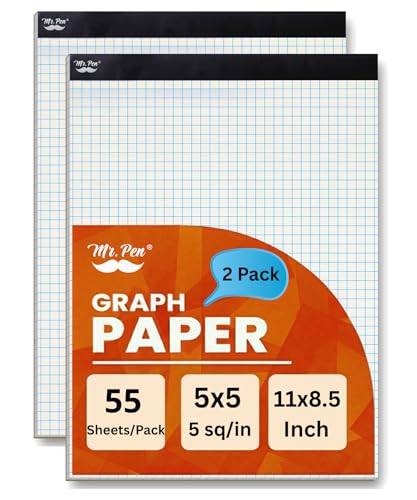
Product details outline a two-pack of 55-sheet pads, each sheet measuring 11″ by 8.5″ with a 5×5 grid (5 squares per inch). The paper is unpunched, offering flexible storage options beyond standard binders. This configuration supports detailed diagrams and calculations while allowing users to file or stack sheets freely. Thick paper helps prevent ink bleed and supports both sides of the page when used with appropriate markers.
iScholar Quad Filler Paper

Quad ruled paper is suitable for graphing, lab work, and notes. This 8″ x 10.5″ sheet size comes with 80 sheets per package and includes 3-hole punching to fit standard binders, making it convenient for organized coursework or project documentation. The 5-squares-per-inch grid offers a solid balance between detail and readable spacing for calculations and diagrams.
Mr. Pen Graph Paper Pad 11″x8.5″ 3-Hole Punched

This variant presents a 55-sheet pad with 5×5 grid on standard 11″ x 8.5″ paper, designed for use in loose-leaf binders due to its 3-hole punch. It is positioned as ideal for note taking, technical, and engineering drawings, with paper thick enough to minimize bleed and allow double-sided use under appropriate conditions.
KOKUYO 5×5 Graph Paper Loose Leaf

Japan-imported 5×5 graph paper with 100 sheets. The 5×5 grid is suitable for precise mathematics, engineering diagrams, and technical drawings. The paper surface is described as silky smooth, aiding comfortable long writing sessions, and the thin yet durable sheets resist ink bleed-through when used on both sides.
Oxford Spiral Notebook 5×5 Graph Paper (2 Pack)

This two-pack includes 70 perforated sheets per notebook, totaling 140 double-sided pages. With 5×5 graph paper, the notebooks suit math, science, and art projects. The microperforation enables clean removal of pages, and the 8″ x 10.5″ dimensions fit easily in backpacks and folders.
Five Star Graph Ruled Filler Notebook Paper

Five Star reinforced filler paper is designed for durability with standard 8.5″ x 11″ sheet size. The product is graph-ruled and intended for long-term use in educational or professional settings. Each package contains 80 sheets, providing solid coverage for extensive coursework and projects while maintaining sturdy construction to resist wear and tear.
Grid Paper Pad 5×8 Inches

Compact 5×8 grid paper pad offers 100 perforated sheets, ideal for on-the-go graphing and quick sketches. The 4×4 grid layout provides smaller squares, suitable for more detailed work in math and engineering tasks. The pad is designed for easy tearing and clean quality writing with minimal bleed.
Buying Guide: Key Considerations For 5×5 Graph Paper
- Grid scale and size: A true 5×5 graph paper has five squares per inch, which balances detail with legibility. Confirm the grid density on each product to ensure it meets your precision needs.
- Paper weight and bleed resistance: Look for thicker sheets or bleed-resistant coatings to prevent ink from showing through on the opposite side, especially for double-sided use or markers.
- Punch and binding compatibility: If you prefer binders, choose 3-hole or pre-punched options. If you want maximum filing flexibility, unpunched sheets can be stored in envelopes or custom binders.
- Perforation and tearing: Perforated pages ease removal and sharing in classrooms or collaboration settings. Consider notebooks with perforation if you frequently detach sheets.
- Format variety: Loose-leaf sheets, pad formats, and spiral notebooks each offer different convenience. Align your choice with your workflow—field notes, desk work, or project planning.
- Size compatibility: Ensure the page dimensions fit your typical devices and storage solutions (binders, folders, or backpacks). Larger formats are better for diagrams; smaller formats are portable.
- Brand reputation and availability: Trusted brands often provide consistent grid accuracy and paper quality. Availability across retailers helps with reordering when supplies run low.
- Cost per page: Compare price per sheet across products to identify the most economical option for ongoing use without compromising quality.
Leave a Reply