Best Airbrush Cleaner for Acrylic Paint: Top 5 Solutions for Clean, Ready-to-Use Tools
Answer: Choose one of these five airbrush cleaners when working with acrylic paint to keep your tools free of pigment buildup and ready for quick color changes. The best option depends on your setup, whether you need a ready-to-use solution, a deep-clean kit, or a versatile cleaner for brushes and airbrushes. This guide highlights top picks for different buyers—pros, hobbyists, and students alike—so you can pick confidently. Below is a quick comparison to help you decide at a glance.
| Product | Best For | Why It Stands Out |
|---|---|---|
| Master Airbrush Cleaner (16 oz) | All-around cleaning for frequent color changes | Fast-acting, versatile, large bottle |
| Vallejo Airbrush Cleaner (200 ml) | Gentle, safe acrylic paint removal | Lubricates while cleaning, eco-friendly container |
| X ARTY HUB Airbrush Cleaning Kit | Thorough, precise cleaning with tools | Glass pot, multiple tools, effective pigment removal |
| Medea Cleanser (32 oz) | Heavy-duty, ready-to-use for multiple tools | Broad compatibility with paints and brushes |
| FansArriche Airbrush Cleaner (33.82 oz) | Heavy-duty, dried-paint removal | High-concentration formula, multi-surface use |
Master Airbrush Cleaner, 16-Ounce Pint Bottle
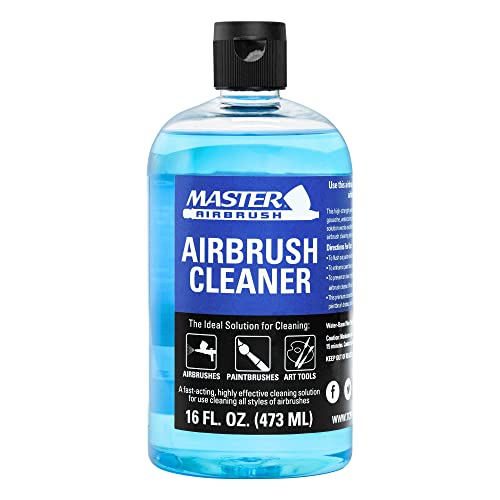
Product overview: A large, fast-acting cleaner designed for water-based acrylic paint, watercolor, makeup, and more. It’s suitable for all airbrush types and is also helpful for flush cleaning between color changes. The bottle size supports frequent use in studios or classrooms.
Best for: Frequent color changes and quick flushes. This cleaner is ideal for professional studios or hobbyists who need a reliable, high-volume solution to maintain airbrush performance.
Caution: For clogged airbrushes, disassemble the needle, nozzle, and air cap to clean separately to maximize effectiveness. Do not rely on this cleaner alone for severe blockages.
Vallejo Airbrush Cleaner for Acrylic Paints (200 ml)

Product overview: Specialized cleaner designed to remove acrylics while preserving airbrush mechanism lubricity. It works well for routine maintenance and can be used for extended soaking of valve and nozzle parts (not the whole airbrush) for deeper cleaning. The new recycled plastic container is available in 85 ml and 200 ml formats.
Best for: Clean, safe acrylic removal with occasional longer soaks for stubborn deposits. Suitable for builders focusing on acrylic workflows who want a gentler yet effective option.
Limitation: Soaking is recommended for valve and nozzle only, not the complete airbrush, to avoid overexposure of delicate components.
X ARTY HUB Airbrush Cleaning Kit

Product overview: A complete cleaning kit with a 4 x 4.05 fl oz cleaner, glass cleaning pot, and a stand to secure the airbrush during cleaning. It includes various tools to thoroughly remove pigments and ensure deep cleaning of all airbrush parts.
Best for: Artists who want a dedicated cleaning system with multiple tools and a stable cleaning pot for precise operations. It’s a strong pick for those who value thorough, hands-on maintenance.
Caution: Soaking tools and parts can help dissolve stubborn pigments, but follow component-specific guidance to avoid damaging delicate seals or nozzles.
Medea Airbrush Cleaner (32 oz)

Product overview: A ready-to-use, general-purpose cleaner compatible with water-based, acrylic, oil, inks, and dyes. It’s designed for airbrushes and brushes alike, aiding in deep cleans and post-use flushes.
Best for: Environments needing a flexible cleaner that covers acrylics and other media. This option is suitable for multi-media studios where brushes and airbrushes share cleaning tasks.
Limitation: The broad compatibility means it’s not specialized for extreme resin or enamel cleanup; consider a dedicated solvent for those tasks if needed.
FansArriche Airbrush Cleaner, 33.82 Oz

Product overview: A high-capacity cleaner designed to tackle dried-on acrylic paints. It offers multi-surface compatibility with paints, gouache, watercolor, tempera, and other water-based options, helping to keep tools clean and ready for reuse.
Best for: Artists dealing with heavy buildup or frequent long sessions. The large bottle is cost-effective for studios or schools with multiple users.
Limitation: Concentration may be heavy; use in well-ventilated areas and rinse as needed to avoid over-saturation of bristles or seals.
Roizefar Airbrush Cleaning Kit
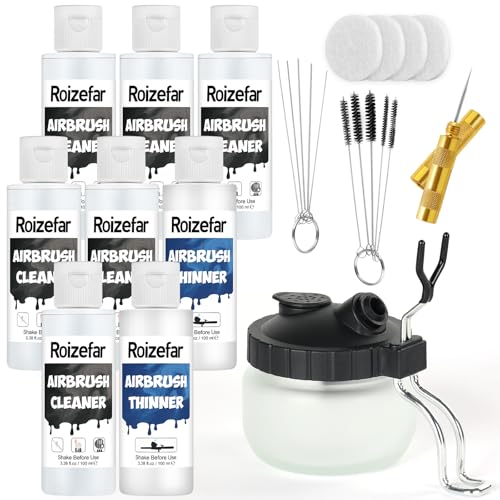
Product overview: A cleaning kit with six 3.38 fl oz cleaners, two thinners, a cleaning pot with holder, brushes, and filters. It supports water-based and acrylic paints with a focus on airbrush maintenance and tool cleaning.
Best for: Builders who want a broad kit including multiple tools and accessories to tackle different cleaning tasks across airbrushes and related tools.
Limitation: The kit focuses on water-based and acrylic paints; for solvent-based systems or other media, verify compatibility before use.
Buying Guide
What should you consider when choosing an airbrush cleaner for acrylic paint?
- Volume vs. frequency: Large bottles are cost-effective for shops or classrooms; smaller bottles suit occasional hobbyists.
- Brush compatibility: If you also clean brushes, consider multi-surface formulas that work on airbrushes and brushes without harsh effects.
- Soak vs. flush: Some cleaners excel at quick flushes between colors; others support longer soaks for stubborn buildup.
- Resource sustainability: Containers with recycled or recyclable packaging benefit eco-conscious studios.
- Safety and ventilation: Use in well-ventilated spaces; check labels for safety guidance and disposal instructions.
How to use airbrush cleaner effectively
- Rinse the airbrush with cleaner between colors to minimize cross-contamination and pigment buildup.
- Disassemble heads, needles, and caps when clearing clogs, following manufacturer guidance.
- Soak removable parts separately when recommended to maximize pigment dissolution.
- Finish with a final flush using clean water or plain cleaner to remove residual pigments.
Choosing the right kit for your setup
- Solo hobbyist: A ready-to-use 16–32 oz cleaner with straightforward use is typically enough.
- Studio or classroom: A large-volume cleaner plus a cleaning kit with tools helps multiple users stay productive.
- Multi-media artist: A versatile cleaner that works for acrylics, inks, and gouache, plus a brush restorer, offers the most value.
FAQ
- What is the best cleaner for acrylic airbrushing?
Look for a product labeled as acrylic-friendly, with broad pigment removal power and airbrush compatibility across models.
- Can I use water-based airbrush cleaner on brushes?
Yes, many formulas are designed for both airbrushes and brushes, but check the label for brush safety.
- Do I need a deep-cleaning kit or just a rinse cleaner?
Deep-cleaning kits are beneficial for frequent sessions or stubborn buildup; casual users can start with a rinse-focused cleaner.
- Is soaking parts safe for all airbrush models?
Soaking is helpful for some components but can damage seals; follow product-specific guidance to avoid harm.
- How should I dispose of used cleaner?
Follow local regulations and product label instructions. Many cleaners are household-safe but still require proper disposal.
- Can I use these cleaners on both acrylic and oil-based paints?
Some cleaners are multi-media, but others are optimized for water-based acrylics. Check the label to confirm compatibility.
Leave a Reply