Best Canvas Pads for Painting: A Quick Guide to Top 5 Options
Artists seeking portable, canvas-like surfaces for acrylics, oils, or mixed media will find canvas pads an excellent alternative to traditional stretched canvases. This guide highlights five highly regarded options, focusing on texture, priming, thickness, and portability. Each product offers a canvas-textured surface on heavyweight paper, enabling layering, blending, and bold strokes without warping. Read on to compare features and find the pad that best fits your technique and travel needs.
| Product | Size | Sheets | Priming | |
|---|---|---|---|---|
| Strathmore 300 Series Canvas Paper Pad | 9×12 in | 10 | Coated, canvas-textured surface | Acrylic & Oil Practice |
| AETEXA Canvas Paper Pad | 9×12 in | 10 | Pre-primed with acrylic gesso | Acrylic & Oil, portable |
| Hapikalor Canvas Painting Sketch Book | 9×12 in | 20 | Canvas-like surface, acid-free | Acrylic, Oil, Mixed Media |
| ARTEZA Canvas Pad 9×12 | 9×12 in | 20 | Pre-primed with acrylic gesso | Acrylic & Oil, Mixed Media |
| Prudiut 12 Sheets Canvas Paper Pad | 9×12 in | 12 | Glue-bound, canvas paper | Acrylic & Oil, Travel |
The following sections present each product with a concise overview, key features, and practical notes for painters evaluating texture, priming, and portability. All summaries reference the products’ listed features and surface descriptions to help you compare performance across media and working styles.
Strathmore 300 Series Canvas Paper Pad
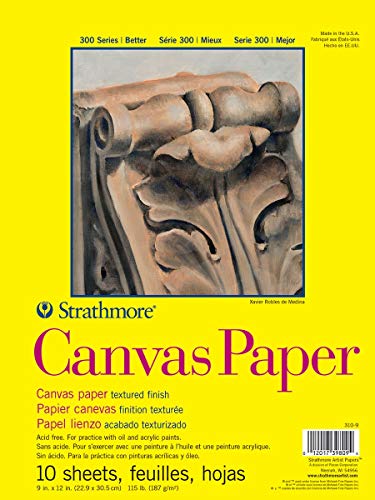
The Strathmore 300 Series Canvas Paper Pad provides a canvas-textured surface that emulates canvas while using heavyweight paper. With 10 sheets per pad, it is designed for practicing oil and acrylic techniques, offering a coated texture that resists bleed-through and captures brushwork with a canvas-like feel. This student-grade option is suitable for quick studies, warmups, or classroom exercises where portability and surface consistency matter.
AETEXA Canvas Paper Pad

AETEXA’s canvas paper pad mimics traditional canvas texture on lightweight paper, offering 10 sheets per pad and a pre-primed surface with acrylic gesso. This makes it a convenient, portable choice for artists who want to start painting immediately without extra preparation. The glue-bound design facilitates easy page removal between projects, making it well-suited for studios and classrooms alike.
FREDRIX Creative Series White Canvas Pad

The Fredrix Creative Series Canvas Pad offers 9×12 inches of real canvas mounted on paper, featuring a US-based manufacture claim and a focus on painting and drawing tools. With 10 sheets per pad, it presents a straightforward surface for artists working with acrylics and oils who want a reliable, canvas-like feel in a portable format. The pad’s surface is designed for stable application and easy handling during practice or study sessions.
Canvas Painting Sketch Book by Hapikalor

The Hapikalor canvas pad emphasizes a canvas-like surface with 20 sheets, offering a substantial amount of material for ongoing projects. The 115lb/187gsm weight enhances durability for acrylics, oils, markers, and mixed media. The paper resists warping under layering and allows for repeated corrections while maintaining color integrity, making it a versatile option for students and hobbyists who value a robust surface without excessive bulk.
Strathmore 300 Series Canvas Pad, 9×12

This Strathmore 300 Series canvas pad uses 100% cotton, acid-free, triple-primed canvas attached to paper. With eight-ounce weight, the surface is designed for acrylics, oils, and water-mixable oils. The pad’s strong, ready-to-use surface is intended for plein air or studio use, offering a practical solution for creatives who want a portable canvas substitute that’s easy to transport and display when finished.
Buying Guide: Canvas Pads For Painting
- Surface texture and priming: Real canvas pads mimic the tooth and grip of stretched canvas. Look for triple-primed or acrylic-gesso surfaces if you plan to work with oils or heavy acrylics. A canvas-like texture can affect brush work, blending, and layering.
- Weight and durability: Heavier paper (measured in gsm or weight like 115lb/187gsm) minimizes bleed-through and warping when multiple layers are added. For travel or plein air, lighter weights may be more portable but require careful layering.
- Binding and page removal: Glue-bound pads allow for easy removal of sheets without tearing. For portfolio work or framing, consider tear-out or perforated edges that preserve the integrity of the finished piece.
- Size considerations: Common sizes like 9×12 are versatile for studies, thumbnails, or small finished pieces. Larger pages offer more room for detail but increase portability concerns.
- Media compatibility: Check whether the surface is suitable for acrylics, oils, markers, or mixed media. Some pads are designed to work across multiple media types, while others excel with a specific medium.
- Archival properties: For long-term preservation, choose acid-free papers and canvases to prevent yellowing over time and maintain color fidelity.
- Portability vs. studio use: Travel-friendly options are lighter and glue-bound, while studio-heavy pads may provide richer textures and more sheets per pad.
When selecting a canvas pad, consider your typical painting style, the thickness of glazes you apply, and how frequently you switch between media. For students or hobbyists, a padded pad with a canvas-like surface and glue-bound pages often offers a balanced blend of usability and durability. For professionals working on studies or plein air pieces, pads that replicate canvas texture and provide stable, warp-resistant surfaces can help you achieve consistent results across sessions.
Leave a Reply