Best Cement and Plaster for Molding and Casting Crafts
Yes—these cement and plaster formulations are designed for molding, casting, and decorative sculpture projects. This guide highlights five top options that balance detail, setting speed, and durability, helping you pick the right material for beginners, pros, and hobbyists. Best for quick-turn projects, best for fine-detail molds, and best for durable final pieces, these picks cover a range of common crafting needs. Read on to find the right cement or plaster for your next diorama, jewelry mold, or sculpture.
| Product | Best For | Key Benefit |
|---|---|---|
| Falling in Art 5 Lb Plaster of Paris | Detail-focused casting | Fast set, versatile for molds |
| ULTRACAL 30 Gypsum Cement (10 lb) | Professional mold making | Low expansion, strong detail |
| Cement for Silicone Molds 3 kg | General casting with bubble control | Zero bubbles, easy-flow, high strength |
| Perfect Cast Mold Casting Powder (2 lb) | Beginner to advanced sculpting | Fast-curing, high-detail finish |
| USG Hydrocal White Gypsum Cement (2.5 lbs) | Small-scale projects | High strength, porous for molds |
Falling in Art 5 Lb Plaster of Paris For Molds

Best for: hobbyists who need quick-drying plaster with good surface detail. This 5-lb bag is designed for molds and small sculptures, suitable for dioramas, home decor, and craft projects. The material is described as safe and non-toxic, with a straightforward 3:4 water-to-plaster mixing ratio. It solidifies in minutes and can be painted after drying. Consider this option if you want a lightweight plaster that dries solidly for decorative pieces.
Why chosen: It emphasizes safety and ease of use, making it approachable for beginners while still delivering reliable detail for molds. Its waterproof packaging helps preserve powder quality for crafts stored between sessions.
Caution: Drying time can vary with thickness. Very thick pours may take longer to cure fully, so plan for additional drying time on larger pieces.
ULTRACAL 30 Gypsum Cement For Molding

Best for: professional mold makers and serious hobbyists who need high-detail plaster casting. Ultracal 30 is noted for very low expansion and durability, making it a preferred choice for latex or gelatin molds and museum-quality castings. The 10-lb quantity provides ample material for multiple projects.
Why chosen: Its low expansion helps preserve sharp mold details, which is critical for intricate textures and fine lines. This makes it a reliable baseline for precise reproductions in both small-scale and display pieces.
Caution: As with many gypsum cements, accuracy in measuring and mixing affects final detail. Ensure consistent ratios and thorough mixing to minimize surface defects.
Cement For Silicone Molds 3 kg
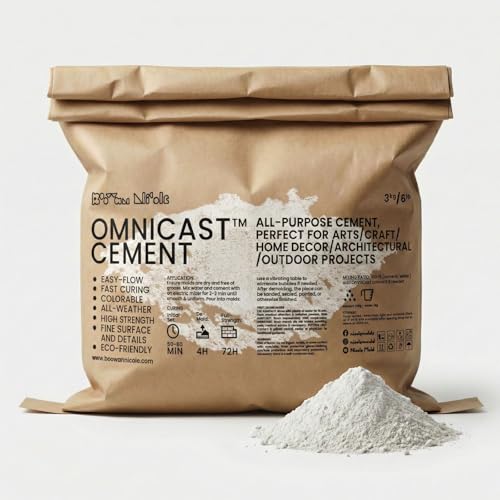
Best for: crafters who need smooth flow into silicone molds with high detail and minimal bubbles. This 3 kg casting powder claims zero bubbles and fast initial set, suitable for a wide range of projects from decorative statues to functional pieces.
Why chosen: The combination of zero bubbles and easy-flow properties helps reduce defects in complex mold geometries, which is especially important for small or intricate parts. It also promises a relatively quick turnaround from pour to demold.
Caution: While faster curing is convenient, ensure you pour in a clean, level mold to avoid trapped air pockets in tight areas.
Perfect Cast Mold Casting Powder

Best for: beginners and mixed-media artists seeking a user-friendly, water-based casting powder. This 2-lb bag is designed for a variety of projects, including sculptures, jewelry molds, and tabletop minis, with a focus on sharp detail and a smooth finish.
Why chosen: It emphasizes ease of use—just add water and pour—without harsh odors or long drying times, making it suitable for classrooms and home studios where quick setup is essential.
Caution: For very large pieces, multiple pours may be needed to prevent heat buildup and ensure uniform curing throughout the model.
USG Hydrocal White Gypsum Cement

Best for: small to medium projects where high strength and good mold release are important. Hydrocal is porous and suitable for latex masks and other detailed casts. The 2.5-lb size allows quick experiments without large inventory.
Why chosen: It provides a solid option for projects that benefit from a lighter, more porous gypsum, which can hold fine details and be shaped easily after demolding.
Caution: Porosity can affect finishing techniques; you may need surface sealing or paint-ready primers to achieve a uniform final look on certain pieces.
Buying Guide: Cement And Plaster For Molding And Casting
What to consider when choosing a cement or plaster for molding:
- Detail vs. strength: If you need ultra-fine details, choose low-expansion gypsum cements or plaster designed for high fidelity. For durable display pieces, select stronger mixes with good hardness after curing.
- Setting time: Quick-setting powders speed up projects but may limit working time. For complex molds, a slower-setting option offers more time to refine details.
- Bubble control: Some formulas advertise zero bubbles or low bubble formation. Bubble-free pours improve surface finish, especially in fine molds.
- Pourability and flow: Ultra-fine powders that flow easily into molds reduce air pockets. Consider additives or lower viscosity mixes for intricate molds.
- Ease of use: Water-based and non-toxic options with simple mixing ratios are ideal for classrooms and hobby spaces.
- Finish and painting: Some products take paint and sealants well; others may require sealing coats to prevent moisture damage or surface staining.
- Project size and storage: Larger projects demand bigger bags or bulk mixes. Store materials in breathable, sealed containers to maintain consistency.
Frequently Asked Questions
- How do I prevent air bubbles in cement casting?
- What is the best cement for silicone molds?
- How long does it take to demold?
- Can I paint plaster or cement casts?
- Are these materials safe for beginners?
- What moisture considerations should I know?
Choose bubble-free or low-bubble formulas, pour slowly into the mold, tap the mold gently to release trapped air, and consider degassing steps if your process allows.
Look for products described as suitable for silicone or latex molds with low expansion and good flow, such as cement powders formulated for mold making.
Most plaster and gypsum cements demold within a few hours, but full strength may take longer. Follow product-specific instructions for safe handling times.
Yes. Most plaster and gypsum casts accept paint after a light sanding and a suitable primer. Some surfaces benefit from a sealant before painting.
Most products in this category are non-toxic and designed for consumer use, but always read the label and work in a well-ventilated area.
Store powders in dry conditions. Moisture can cause clumping and affect setting times or cure quality.
Leave a Reply