Best Clay for Wheel Throwing: Top Picks for Pottery Enthusiasts
Choosing the right clay for wheel throwing affects workability, texture, and the final glaze result. This guide highlights five well-regarded clays ideal for wheel throwing, hand building, and sculpting, spanning mid-high fire stoneware and versatile low-fire options. Each product is evaluated for plasticity, firing range, and suitability for learners and experienced potters alike.
| Product | Clay Type | Firing Range | Best For |
|---|---|---|---|
| Deouss Mid High Fire White Stoneware | Stoneware | Cone 5-10 | Wheel throwing, versatility |
| Deouss Terra Cotta Pottery Clay | Terracotta | Cone 06 | Beginner to intermediate, hand shaping |
| Old Potters Mid High Fire White Stoneware | Stoneware | Cone 5-10 | Wheel throwing and detailed work |
| WABAFL White Stoneware Clay | Stoneware | Cone 5-10 | All skill levels, sculpture and wheel |
| Old Potters Low Fire White Clay | Low Fire | Cones 04-06 | Beginner to intermediate, quick firing |
Deouss Mid High Fire White Stoneware Clay

This mid-range stoneware clay supports a wide glaze palette and is suitable for wheel throwing, hand building, and sculpting. Its firing range spans cone 5 to cone 10, with a recommended glaze firing temperature around cone 5 to cone 6. Ideal for creating tiles, pots, beads, figurines, and functional forms. It’s designed for users of various skill levels and accommodates both functional and decorative pieces. The 5-pound package offers manageable batches for practice and small-scale production.
Deouss Terra Cotta Pottery Clay

Natural red terra cotta clay with kaolin as a fine, uniform base provides strong plasticity and non-sticky handling. This low-fire clay is well-suited for wheel throwing, hand building, sculpting, and molding. Its easy molding properties support beginners and experienced potters alike. For firing, bisque to cone 04 and glaze to cone 06 is advised. The clay’s straightforward texture makes it a reliable choice for a wide range of clay projects.
Old Potters Mid High Fire White Stoneware

This white stoneware is designed for high-fire versatility with cone 5-10 firing. It offers plasticity ideal for wheel throwing, hand building, slab work, and sculpture. Its formulation emphasizes strength and flexibility, making it suitable for artists at any skill level. Low iron content helps limit glaze interaction, enabling clearer glaze results and greater creative control over surface decoration.
6 Lb White Stoneware Clay for Pottery

This white stoneware clay is suited for wheel throwing and hand-building, offering a balance of plasticity and resilience for all skill levels. Each piece is individually sealed for storage and convenience. It supports air-drying and can be glazed and kiln-fired, making it versatile for different finishing approaches. The clay is well-suited for a range of projects from functional ware to decorative sculptures.
ZEHIQ Premium Air Dry Clay
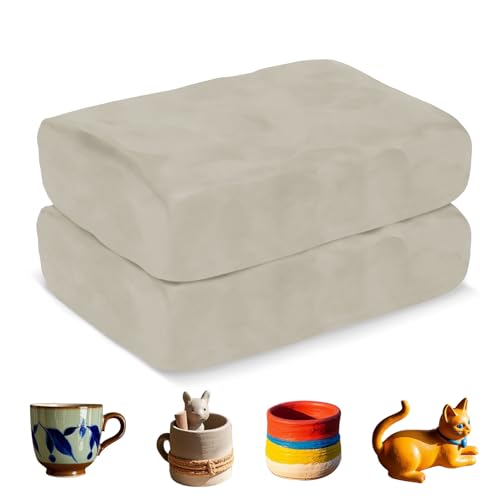
ZEHIQ Premium Air Dry Clay comes in two 1.1-pound bags, offering air-drying capability without firing. Made from natural kaolin and clay, it’s free of talc and additives, with no odor. It suits modeling, carving, and wheel-related projects when air drying is preferred, and it remains a practical option for beginners and professionals seeking low-fire alternatives or quick turnarounds.
Old Potters Low Fire White Clay
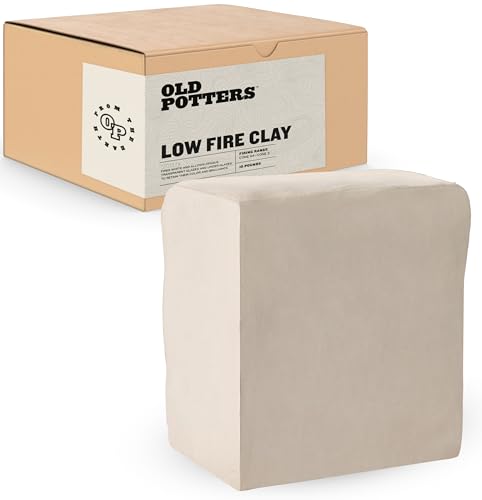
This low-fire white clay is a USA-made, non-toxic option ideal for beginners and advanced users. Its smooth, plastic texture makes it easy to cut, shape, and join for wheel throwing, hand building, sculpting, and modeling. The formulation supports reliable plasticity and durability at lower firing temperatures, enabling practical and straightforward firing schedules.
Buying Guide: Key Purchase Considerations
- Clay type and firing range: Stoneware clays (cone 5-10) offer strength and glaze compatibility for functional wares, while terracotta and low-fire clays favor quick projects and beginner-friendly handling.
- Plasticity and workability: Look for clays described as highly plastic for wheel throwing and hand-building, especially if you plan to create complex shapes or thin-walled ware.
- Texture and impurities: Clays with kaolin or low iron content often glaze more predictably; ensure the clay’s texture matches your preferred cutting, pinching, or throwing techniques.
- Drying and firing considerations: Air-dry options vary in strength and finish. If you intend to glaze and fire, choose clays explicitly designed for kiln firing rather than air-dry only.
- Skill level and project scope: For beginners, low-fire or mid-range clays with forgiving plasticity reduce the learning curve. Advanced users may benefit from high-fire stoneware with tighter glaze control.
- Storage and packaging: Some clays come in sealed pieces or pre-mixed forms; consider packaging size and storage ease to fit your studio workflow.
- Safety and non-toxicity: Most pottery clays are non-toxic, but always verify manufacturer guidance, especially for classroom use or kiln environments.
When selecting clay, consider your typical projects, firing capabilities, and preferred finishing techniques. The listed options cover wheel throwing, hand building, and sculpting across a spectrum of firing ranges, enabling a well-rounded starter set or an expansion for a growing studio.
Leave a Reply