Best Cold Pressed Watercolor Paper for Vibrant, Layerable Artwork
Looking for the right cold press watercolor paper to balance color vibrancy with subtle texture? This guide highlights five excellent options that suit different artists and projects. Best for beginners and students who want reliable performance, best for travel and plein air painters, best for mixed media, and best for archival quality work. Each pick is evaluated for texture, weight, handling, and overall value so you can choose confidently.
| Product | Texture | Weight | Best For |
|---|---|---|---|
| Arches 9×12 Cold Press 12 Sheets | Cold Press | 140 lb / 300 gsm | Professional and traditional artists |
| Pacocoast 9×12 Cold Press Pad | Cold Press | 140 lb / 300 gsm | Students and sketchers |
| Canson XL Series 9×12 Pad | Cold Press | 140 lb / 300 gsm | Budget-friendly projects |
| Fuumuui 9×12 Cold Press Block | Cold Press | 140 lb / 300 gsm | Serious artists with damp-wet technique |
| Fingraspuro 9×12 Pad | Cold Press | 140 lb / 300 gsm | Durable for practicing and studies |
Arches Watercolor Paper Pad, 140 lb Cold Press, 9×12

The Arches pad uses 100% cotton, long-fiber paper with natural white coloring for a refined texture and timeless beauty. Cold press texture offers balanced tooth for even pigment uptake and blending. This option is prized for its archival feel and reliable surface performance. Best for professional practitioners and serious students who want durable, high-end paper that holds up to lifting, layering, and multiple washes.
Best for: Artists prioritizing traditional cotton paper, smooth color transitions, and longevity. Not ideal for very heavy scrubbing or aggressive scraping on a budget.
Pacocoast Watercolor Paper, 9×12 Cold Press, 140 lb
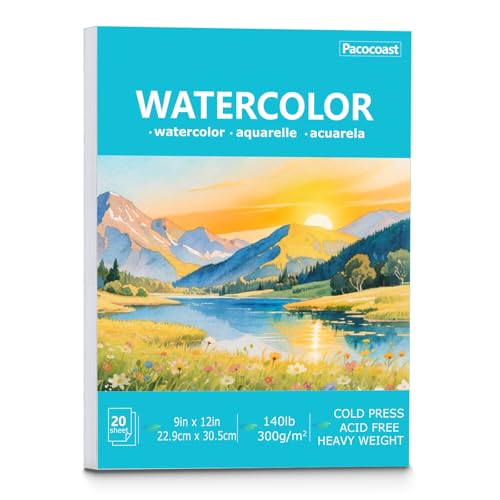
Pacocoast offers a heavyweight 140 lb / 300 gsm paper with a cold-press texture. It’s designed to resist warping and buckling, performing well with wet-on-wet, dry brush, and mixed media. The glue-bound notebook design allows removable pages for easy sharing or portfolio presentations. This makes it a solid choice for artists beginning to explore washes and glazing without breaking the bank.
Best for: Students, hobbyists, and artists who want a portable, sturdy pad with removable pages for quick demonstrations or displays. Caution: glue-bound bindings may affect sheet handling if you prefer a loose-leaf experience.
Canson XL Series Watercolor Pad, 9×12
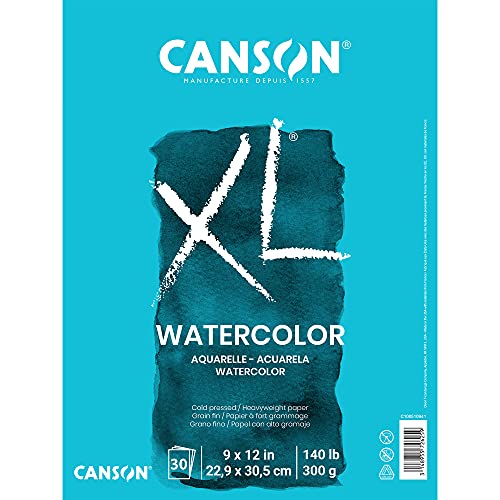
The Canson XL Series pad balances cost and performance with a cold press surface, 140 lb weight, and a generous 30 sheets. This option is a practical choice for everyday practice, school projects, and entry-level work. It provides reliable texture and color absorption without excessive paper buckling, making it a common go-to for learning the medium.
Best for: Beginners and budget-conscious artists who want dependable paper for routine practice. Choose this if you need a larger sheet supply without compromising basic quality.
Fuumuui Watercolor Paper Block, 9×12 Cold Press, 22 Sheets
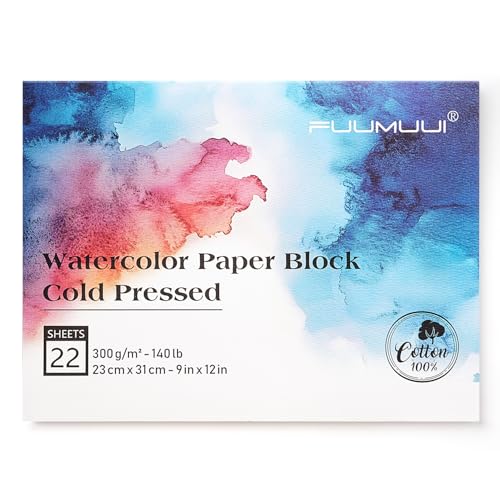
Fuumuui’s block consists of 140 lb / 300 gsm 100% cotton paper with a cold-pressed texture and cylinder mold construction. Its design emphasizes even fiber distribution and resistance to tearing when multiple color layers are applied. The 22 sheets provide a compact, portable option for dedicated study and field work. This pad suits painters who value controlled wetting and even color pickup.
Best for: Artists seeking durable, high-quality paper in a bound format for travel or compact studios. Limitation: fewer sheets than some pads, which might be a constraint for larger projects.
Fingraspuro Watercolor Paper Pad, 9×12, 30 Sheets

Fingraspuro uses 100% cotton with a 140 lb / 300 gsm weight and a cold-pressed texture. The 30 sheets provide substantial practice material for artists who like to experiment with various strokes, scrubbing, and masking. The paper’s pH-neutral composition helps ensure long-term color fidelity and resistance to yellowing. It’s a solid choice for learners or ongoing study with a focus on pigment control.
Best for: Students and hobbyists who want a durable, affordable option for practice and study. Caution: sheet counts may require restocking sooner for larger projects.
Buying Guide: Key Considerations For Cold Pressed Watercolor Paper
- Weight and texture: 140 lb / 300 gsm cold press is a versatile default that holds washes well while keeping some tooth for color control. Heavier papers minimize buckling when applying multiple layers.
- Cotton content: 100% cotton papers typically offer better texture, color absorption, and longevity than wood pulp blends. This matters for glazing, lifting, and archival needs.
- Block vs. pad vs. loose sheets: Blocks stay flat and warp-resistant during wet work, but loose sheets offer flexibility for framing or sharing. Pads provide tidy storage but may require tearing out sheets.
- Bleaching and sizing: Gelatin sizing in higher-end papers helps color slide and blend smoothly while protecting the surface. pH neutrality is important for long-term color stability.
- Budget vs. performance: Premium papers deliver superior texture and color response but come at a higher price. For practice or school use, budget-friendly pads can be a practical choice.
- Best usage scenarios: For watercolor glazing and lifting, choose papers with uniform fiber distribution and little warping. For mixed media or dry media, ensure compatibility with pencils, inks, and markers.
FAQ
- What is cold press watercolor paper?
Cold press refers to a slightly textured surface that balances smoothness with tooth, good for both washes and fine line work.
- Why choose 140 lb / 300 gsm weight?
This weight handles multiple layers with less buckling and provides durability for long-term works.
- Are cotton papers worth the extra cost?
Yes, 100% cotton papers generally offer better color absorption, blending, and archival stability.
- What is the benefit of a paper block?
Blocks stay flat when wet and are less prone to warping, making them ideal for soaking techniques and layered washes.
- How many sheets should I start with?
Beginners may start with 20–30 sheets per pad; ongoing studies can justify 30–60 sheets or more depending on usage.
- Can I use markers or inks on cold press paper?
Water-based markers and ink work well on cold press, but expect some texture to influence line quality.
Leave a Reply