Best Color Wheel for Art: Essential Tools for Color Theory Mastery
Color wheels are foundational tools for artists, designers, and makers who want to master color relationships. This guide reviews five highly relevant color wheels that support painting, makeup, tattoo design, and classroom instruction. Each selection helps visualize color harmonies, complementary tones, and practical mixing outcomes, making it easier to plan palettes and communicate color concepts with students or clients.
| Product | Brand | Size | Amazon Page |
|---|---|---|---|
| Creative Color Wheel, 9.25 inch | JimKing | 9.25″ diameter | View |
| JimKing Creative Color Wheel, 9.25 inch | JimKing | 9.25″ diameter | View |
| Mcbazel 3 Pieces Color Mixing Wheels | Mcbazel | Three sizes (large & pocket) | View |
| Mini Artist COLOR WHEEL | Daler Rowney | Various compact sizes | View |
| Outus 2 Pcs Color Wheel, 5.5 Inch | Outus | 5.5″ diameter each | View |
Note: The table above summarizes the selected products with quick references to brand, size, and a direct link to each item. Sizes vary to accommodate both classroom use and portable personal study.
Creative Color Wheel By JimKing

The 9.25-inch color wheel from JimKing provides a straightforward, visually rich way to study color relationships. Its dual presentation includes a standard wheel and a grayscale/ tint guidance to illustrate how tints, tones, and shades interact. This wheel helps identify complementary colors and demonstrates practical mixing outcomes, making it a solid option for art classrooms, makeup artistry, or hobbyists learning color theory.
JimKing Creative Color Wheel: Advanced Guide
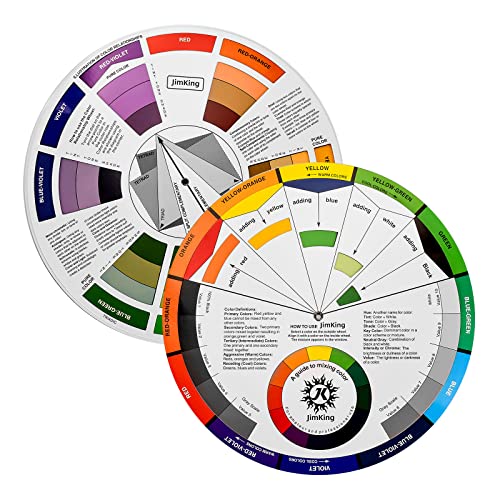
This two-sided rotating wheel showcases color relationships with a larger 230mm diameter and a dual-pack option. It helps organize colors for clearer decision-making, defines color terms, and supports understanding of color interactions across painting, makeup, crafting, and design projects. Its portability makes it suitable for on-site teaching and studio work alike.
Mcbazel Color Mixing Wheel Set

This three-piece set offers both large and pocket-size wheels, combining a dynamic front wheel for instant color mixing results with a back-side guide to advanced harmonic relationships, triads, and color schemes. The set is designed for studio use, classroom instruction, and on-the-go learning, enabling artists to explore color theory through hands-on spinning and flipping.
Mini Artist COLOR WHEEL By Daler Rowney

This compact color wheel from Daler Rowney highlights color harmonies with clear illustrations of complementary and split-complementary relationships. It defines primary and secondary colors and is ideal for students, hobbyists, and professionals seeking an easy reference during quick color decisions or field work.
Outus Color Wheel Duo, 5.5 Inch
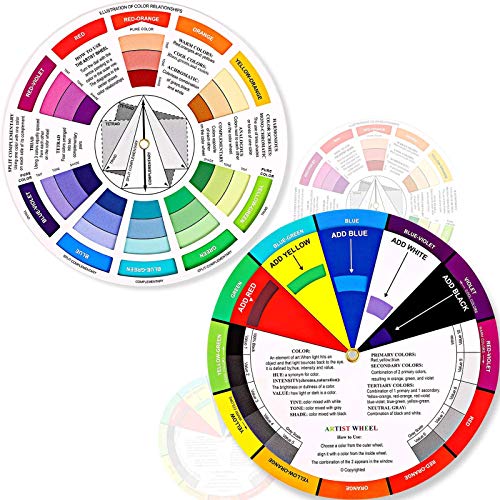
Outus offers two 5.5-inch color wheels in one package, featuring front-side color mixing guidance and back-side relationships, including grayscale and triad concepts. The compact design suits travel, classroom activities, and quick palette planning for makeup or art projects, helping learners grasp basic color theory through interactive spinning.
Outus 2 Pcs Color Wheel, 9.06 Inch

This pair of large 9.06-inch wheels is designed for in-depth color exploration. It shows primary-to-advanced color relationships, enables direct mixing demonstrations in the windows, and supports explanations of grayscale, tints, tones, and triads. The set is well-suited for classrooms, studios, and individual artists seeking a broader view of color dynamics.
Buying Guide: Key Purchase Considerations
When choosing a color wheel for art, consider size, front/back design, and user needs. A larger wheel offers more detail for teachers and students, while pocket or small wheels support on-the-go learning. Dual-sided wheels with clear explanations of color terms, grayscale, tints, and tones provide deeper context. For makeup, tattoo design, or painting, ensure the wheel demonstrates practical mixing results and color pairings relevant to your medium. Rotating or spinning wheels can aid visual learners by revealing color outcomes in real time. Portability, durability, and price are additional factors to balance against the depth of color theory covered.
In mixed-media workflows, it helps to pair a larger, information-dense wheel with a compact reference for quick palette decisions. If you teach or workshop with others, consider sets (two or three wheels) to encourage collaborative exploration of color strategies. For digital or print design work, align color wheel learning with common industry color systems (e.g., RGB, CMYK) to ensure real-world applicability. Finally, check for clear labeling of color relationships (complementary, analogous, triadic) and easy-to-read diagrams that translate across lighting conditions and mediums.
Leave a Reply