Best Core Wool for Felting: Top 5 Roving Picks for Needle and Wet Felting
Core wool roving is a key material for felting, spinning, and craft projects. This article highlights five highly suitable options, covering ethical sourcing, softness, durability, and ease of use for beginners and seasoned crafters alike. Each product below aligns with common felting needs—core wool for core projects, needle felting, wet felting, and bulk crafting. The selection emphasizes natural, undyed fibers when possible and products designed to retain shape and handle through multiple passes of felting or spinning.
Quick Reference Buying Guide
- Product: Desert Breeze Corriedale 8 OZ – Natural Core Wool
- Brand: Desert Breeze Distributing
- Type: Carded core roving suitable for needle and wet felting
- Micron: Approximately 29.5
- Best for: Beginner to intermediate felters; good shape retention
Note: The following sections summarize five hand-picked options. They provide a range of weights, carded or top roving, and color options to suit different felting styles and projects.
Desert Breeze Corriedale Core Wool – 8 OZ Natural

This premium roving is processed in the USA from Corriedale sheep, delivering a soft, clean, minimally processed natural ecru color. It’s ideal for core wool projects, needle felting, wet felting, and spinning, with a 29.5-micron thickness and a 90 mm staple length. The product emphasizes humane sourcing—sheep raised without mulesing or other harmful practices—making it a favored choice for planet-friendly crafters seeking reliable shaping and fiber consistency.
Woolbuddy Core Wool – Carded White, 8 OZ

Woolbuddy’s carded core roving is designed for ease of use in both dry and wet felting. The wool is handmade and clean, with packaging aimed at protecting the fibers from moisture and mold. It offers wide suitability for needle felting, dryer balls, craft pads, and chunky yarn. The roving is described as smooth and forgiving, helping beginners avoid needle breakage while providing reliable felting performance for more complex pieces.
Woolbuddy Needle Felting Wool – Carded White, 15.7 OZ

This Woolbuddy option provides a larger bulk size for more extensive projects, including needle and wet felting, hand spinning, and crafting. Like other Woolbuddy offerings, it emphasizes easy felting, compact fiber cleanliness, and absence of synthetic materials. The carded white roving is praised for smooth work with felting needles and compatibility with a broad range of crafts—from toy making to blending with other fibers.
Wool Roving Kit – 40 Colors by Woolbuddy
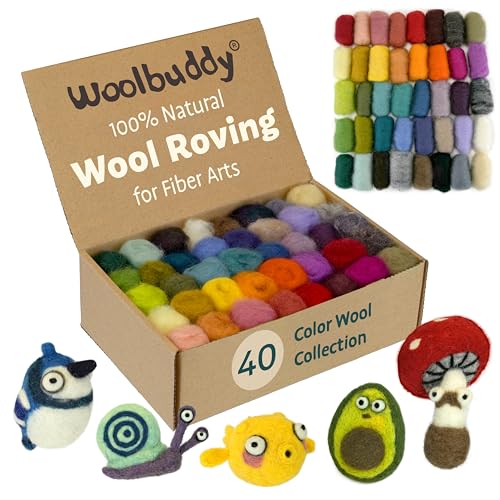
This kit provides a spectrum of 40 Corriedale colors suitable for both wet and dry felting. The roving is soft, carded, and designed for straightforward sculpting and control. It is particularly helpful for color-mixing, gradient effects, and beginner to intermediate projects seeking vibrant felted characters, animals, or abstract forms.
QMNNMA Bulk Wool Roving – 8.82 OZ

QMNNMA’s bulk roving emphasizes a soft, luxurious feel with easy color management. The packaging includes separate pouches to minimize color mixing during use. The roving is suitable for needle felting, wet felting, blending, weaving, and hand spinning. The company notes color variation across monitors, highlighting the importance of selecting multiple shades for cohesive projects.
Buying Guide
- Fiber type and micron: For needle felting, a fiber around 29–30 microns provides good shape retention without excessive stiffness. For wet felting, slightly finer fibers often yield smoother surfaces, but bulk roving around 25–30 microns is common.
- Carded vs top roving: Carded roving is typically easier to work with for beginners, while top roving offers more uniformity for detailed sculpting and smoother spinning results.
- Color and undyed natural fibers: Undyed natural colors (ecru, beige, white) are versatile for dyeing and layering. Natural fibers are often derived from humane farming practices; verify sourcing if animal welfare matters to you.
- Weight and bulk: For large projects like dryer balls or blankets, consider bulk options (8 oz to 1 lb and above). For samples or small accents, test with smaller packs (3.5 oz to 8 oz).
- Storage and packaging: Vacuum-sealed or moisture-protective packaging helps maintain fiber quality during shipping. Consider resealable packaging when purchasing multiple colors.
- Compatibility with tools: Check compatibility with your felting needles, carders, and spinning equipment. Coarseness and staple length affect how easily the fiber felts and shapes.
- Ethical sourcing: If animal welfare is a concern, prioritize roving described as ethically sourced or free from practices like mulesing. Look for mills that emphasize humane husbandry and sustainable processing.
- Project planning: For beginners, select a single color or a small kit to practice needle felting shapes before expanding into multi-color scenes or characters.
Overall, the five options above provide a balanced mix of natural undyed roving and color-ready kits. They are suitable for core felting projects, including core Wool Felting, wet felting, and spinning. When choosing, weigh weight, micron range, and whether you prefer carded or top roving to match your intended projects and skill level.
Leave a Reply