Best Cutting Mats for Sewing: Top Picks for Precision, Durability, and Comfort
Finding the right cutting mat can transform sewing, quilting, and craft projects by protecting work surfaces and extending blade life. This guide highlights five top mats that balance size, self-healing performance, and grid accuracy for American makers. Each option is suitable for rotary cutters and straight blades, with sizes that fit small studios to full-sized sewing tables.
Summary of selected products:
| Product | Brand | Size (inches) | Type | Key Benefit |
|---|---|---|---|---|
| Aneuzs Self Healing Cutting Mat | anezus | 12 x 18 | Double-sided, 5-ply | Compact, portable cutting area with long blade life |
| Fiskars Self Healing Cutting Mat (24 x 36) | Fiskars | 24 x 36 | Grid with bias lines | Large workspace for full fabric widths |
| Idemeet Density-Enhanced Mat (24 x 36) | Idemeet | 24 x 36 | 5-ply, high density | Extended durability and blade protection |
| WORKLION Large Cutting Mat (24 x 36) | WORKLION | 24 x 36 | Multi-size options | Versatile sizes with durable PVC surface |
| Fiskars 18 x 24 Cutting Mat | Fiskars | 18 x 24 | Grid with angle guides | Compact but precise for smaller projects |
Aneuzs Self Healing Cutting Mat, 12 x 18

The Aneuzs mat uses a 5-layer PVC construction to protect work surfaces while resisting thick cuts. Its self-healing surface reseals after blades pass, maintaining a smooth top for repeat cutting. At 12 x 18 inches (A3 size), it’s a practical size for hobbyists and small studios that need a reliable rotary cutter partner without sacrificing portability. The mat supports standard rotary blades and straight blades, helping keep blade life intact for diverse sewing tasks.
Fiskars Self Healing Cutting Mat for Quilting, 24″ x 36″

Fiskars offers an oversized 24 x 36 mat with easy-to-read grids and bias lines at 30, 45, and 60 degrees. This large surface accommodates full-width fabrics, making it ideal for quilting, dressmaking, and scrapbooking. The mat’s self-healing surface helps preserve blade sharpness while providing dependable measurements for precise cuts, backed by Fiskars’ reputation for durable sewing tools.
Density-Upgraded 24″ x 36″ Idemeet Cutting Mat

The Idemeet mat emphasizes density and durability. Weighing around 2600g for the A1 size, its dense construction enhances self-healing performance and blade buffering. Under the surface, thickened buffer layers cushion blades, while a robust white interlayer resists cuts. It’s compatible with rotary cutters and straight blades and designed to protect desks from damage during multi-layer fabric work and modeling projects.
WORKLION 24″ x 36″ Large Self Healing PVC Cutting Mat
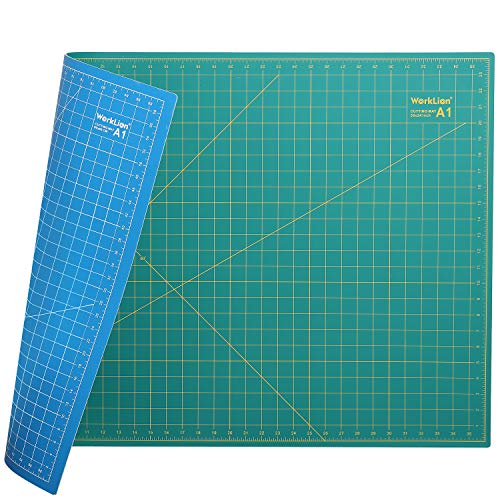
WORKLION’s mat offers a broad cutting surface with multiple size options and a durable PVC surface that resists deep cuts. The mat is designed to protect worktables during heavy-duty cutting and remains self-healing for repeated use. It’s compatible with standard rotary blades and straight blades, making it a versatile choice for sewing rooms, classrooms, or craft spaces that handle large patterns and multiple fabric layers.
Fiskars 18 x 24 Cutting Mat

This mid-size Fiskars mat provides reliable grid lines and 30, 45, and 60-degree bias lines for precise angle cuts. Its self-healing surface expands durability while the 18 x 24 footprint fits compact sewing spaces. It pairs well with Fiskars’ ergonomic rotary cutters, delivering accuracy and comfort for everyday sewing, scrapbooking, and small fabric projects.
Buying Guide: Key Purchase Considerations
- Size and layout: Choose a mat that matches your workspace and project scale. Full-width fabric cutting benefits from larger mats (24 x 36 inches or bigger), while smaller studios can start with 12 x 18 inches.
- Self-healing performance: Look for multi-ply construction and a cushioned interlayer to preserve blade sharpness and extend mat life. Higher density mats tend to resist deep cuts longer.
- Grid clarity and angles: Clear grid lines and bias marks (30°, 45°, 60°) enable accurate patterns, especially for quilting and complex sewing layouts.
- Blade compatibility: Ensure the mat tolerates rotary cutters and straight blades without tearing or excessive wear.
- Durability and surface feel: A smooth, consistent cutting surface reduces fabric snags and extends the mat’s usefulness across multiple projects.
- Portability vs. workspace: Smaller mats are portable and easy to store; larger mats maximize creative space but require more room.
- Price vs. longevity: Higher-density mats may be more expensive upfront but can offer longer life and better blade protection, reducing replacement frequency.
- Double-sided usefulness: Some mats provide different scales or measurements on each side, offering versatility for mixed projects or metric/imperial conversions.
- Maintenance: Keep mats clean from fabric fibers and dust; avoid heat sources that could warp the surface over time.
The right cutting mat blends durability, scale, and grid accuracy to fit your sewing workflow. For hobbyists crafting small garments or accessories, a compact mat paired with a quality rotary cutter may be sufficient. Quilters and crafters tackling full-width fabrics often benefit from a large, sturdy mat with clear angle guides. Professionals working with multiple layers and intricate patterns should prioritize density, interlayers, and precise measurement aids to minimize rework and improve consistency across projects.
Leave a Reply