Best Digital Art Pads for Creators: Smooth Tablets for Drawing and Teaching
Finding the right digital art pad depends on your needs: whether you want a compact, portable drawing tablet, a screen-enabled experience, or a standalone device. This guide highlights five reliable options, detailing who they’re best for and why each stands out. The top picks are suited for students, freelance designers, educators, hobbyists, and professionals who want precise input, responsive styluses, and customizable shortcut keys. Use the comparison table to quickly analyze features, then dive into detailed product sections to understand practical trade-offs.
| Product | Best For | Key Benefit |
|---|---|---|
| HUION Inspiroy H640P | Budget-friendly portability | Battery-free stylus with 8192 levels and hot keys |
| XP-Pen Deco 01 V3 | Beginner to intermediate, ergonomic design | 8 shortcuts, 16384 pressure levels, tilt support |
| UGEE M708 | Large drawing space on a budget | 10 x 6 inch active area, 16384 pressure levels |
| Frunsi RubensTab T11 Pro | Standalone portability | Self-contained with built-in display and battery |
| GAOMON PD1161 | On-screen drawing with full HD display | 11.6-inch screen, tilt support, on-screen sketching |
HUION Inspiroy H640P Drawing Tablet

The HUION Inspiroy H640P is a compact drawing tablet designed for artists who value portability and simplicity. It includes a battery-free PW100 stylus with 8192 pressure levels for precise input and natural pen control. Six customizable keys streamline common actions, helping you speed up workflows across different apps when using the Huion driver. Best for students, travelers, or designers who need a lightweight companion for sketches, note-taking, and quick design tweaks.
Who it’s best for: occasional to mid-level artists who want a budget-friendly, portable tablet without a screen. It’s also suitable for teachers and hobbyists who rely on quick shortcuts during teaching or brainstorming sessions.
Selected reasons: compact size (0.3 inch thick, 1.41 lbs), battery-free stylus, and customizable shortcuts improve efficiency on the go. A potential limitation: it may require external display work or a computer for full functionality, since it lacks a built-in display.
XPPen Artist 13.3 Pro Drawing Tablet
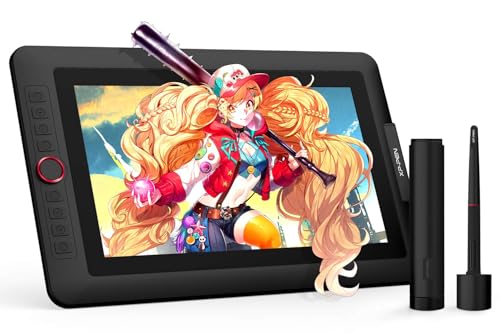
The XPPen Artist 13.3 Pro is a drawing tablet with a full-laminated 13.3-inch display. It supports up to 60-degree tilt and 88% NTSC (Adobe RGB ≈ 91%, sRGB ≈ 123%) color, delivering vivid visuals and nuanced shading. It emphasizes color-rich output and natural brush dynamics through its tilting functionality, making it a strong choice for artists who want screen-based drawing on a mid-to-large display. Best for digital painters and concept artists who need accurate color and shading in one device.
Who it’s best for: artists who want a larger, color-accurate drawing surface with tilt-sensitive brushes. It pairs well with desktop setup and requires a computer connection. Caution: the listed data notes the device needs a computer to run, so it’s not a standalone tablet.
XPPen Deco 01 V3 Drawing Tablet

The Deco 01 V3 brings 16,384 pressure levels with a battery-free stylus and tilt support for natural shading. It includes eight customizable shortcuts for both hands, streamlining common actions during drawing and design work. It’s noted as beginner-friendly, helping new artists build confidence while exploring a wide range of tools. Best for learners and hobbyists who want a comfortable, affordable path into digital drawing with ample shortcut customization.
Who it’s best for: beginners seeking easy entry with ergonomic shortcuts. Choose this if you want a large active area and no battery management. Limitation: some users may prefer a standalone device, but Deco 01 V3 relies on a computer for operation and software control.
UGEE M708 10×6 Inch Drawing Tablet

The UGEE M708 offers a 10 x 6 inch active drawing space with a paper-like surface texture and 16384 levels of pressure sensitivity on a passive stylus. It supports Windows, macOS, Android, Linux, and Chrome OS, aligning well with diverse workflow setups. This makes it a practical option for students and professionals who need a larger drawing area without a heavy investment. Best for: creators who want a sizable drawing surface and broad OS compatibility at an affordable price.
Best for: those who need a large space for sketches and designs and value compatibility with multiple systems. Limitation: being non-screen, it requires looking at the connected display while drawing, which some users may find less intuitive than a screen tablet.
Frunsi RubensTab T11 Pro Standalone Tablet

The Frunsi RubensTab T11 Pro is a standalone 10.1-inch drawing tablet with a pre-installed suite of drawing apps and tutorials. It runs without a computer and offers a 5800mAh battery providing up to 5 hours of continuous use. It supports USB-C charging and multi-touch functionality for intuitive zooming, panning, and scrolling. Best for artists, students, and travelers who need a portable, self-contained drawing solution with training resources.
Who it’s best for: users who want a completely self-contained device that can handle creative work away from a computer. Caution: standalone devices may have limited software depth compared with full desktop apps on a laptop or desktop environment.
GAOMON PD1161 Drawing Tablet With Screen
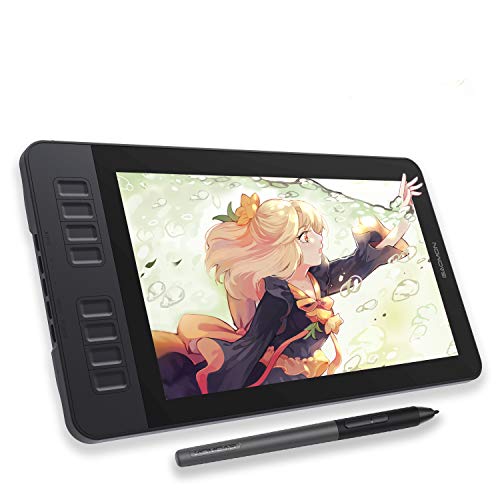
The GAOMON PD1161 combines an 11.6-inch full HD display with a battery-free stylus and tilt support. It emphasizes direct on-screen drawing with a pre-installed matte film to reduce glare and enhance a paper-like feel. The combination of 72% NTSC color and 16.7 million colors supports smoother color transitions for digital illustration. Best for professionals and students who want on-screen drawing with decent color fidelity in a larger tablet format.
Who it’s best for: users who prefer on-screen drawing and want a larger, color-accurate canvas. Caution: it requires a computer connection to operate, so it’s not a standalone device.
Buying Guide
What should you consider when choosing a digital art pad?
- Screen or no screen: Do you prefer drawing directly on a display or off-screen with a tablet and separate monitor?
- Size and portability: Is a compact device essential for travel, or do you need a larger drawing area for detailed work?
- Stylus and pressure sensitivity: Look for at least 8192 levels if you want nuanced brush control. Battery-free styluses reduce charging interruptions.
- Shortcut keys: Are customizable hotkeys important to your workflow for faster tool switching?
- Compatibility: Check operating systems and software compatibility to ensure smooth integration with your current setup.
What scenarios fit which type of device?
- Screen tablets (like Artist 13.3 Pro, PD1161): Great for beginners and professionals who want direct drawing on screen and accurate color when paired with a capable computer.
- Non-screen tablets (like H640P, Deco 01): Ideal for portability and budget-focused users who already own a display or workstation.
- Standalone tablets (like Frunsi RubensTab T11 Pro): Best for mobility and on-the-go sketches without needing a computer.
FAQ
- What should I consider first when choosing a digital art pad?
Answer: Decide if you need a screen, how large you want the drawing area, and whether you require standalone operation or must connect to a computer. - Is a battery-free stylus worth it?
Answer: Yes for uninterrupted drawing without charging, but ensure the stylus pressure and tilt meet your artistic needs. - Do these tablets work with both Mac and Windows?
Answer: Most listed models provide broad OS compatibility, but verify driver support for your specific OS version. - Is color accuracy important for me?
Answer: If yes, choose a model with a wide color gamut (e.g., NTSC/Adobe RGB coverage) and a high resolution display for on-screen work. - Can I use these for teaching or e-learning?
Answer: Yes, devices with reliable stylus input, multiple shortcuts, and screen drawing capability are suitable for online teaching and presentations. - Do I need a powerful computer to run these tablets?
Answer: Most non-screen tablets require a computer; screen tablets depend on system performance but share similar driver requirements.
Leave a Reply