Best Flexible Filament for 3D Printing: Top TPU and Flexible Filaments for Versatile Prints
Flexible filaments open new possibilities for 3D printing, from soft, resilient grips to wearable parts. This guide highlights five reliable options that balance elasticity, durability, and print reliability across common FDM printers. Each option features a 1.75 mm diameter, typical Shore hardness around 95A, and strong layer adhesion to minimize warping and delamination.
| Product | Brand | Approx. Hardness | Diameter | Notes |
|---|---|---|---|---|
| SUNLU TPU Filament | SUNLU | 95A | 1.75 mm | Fast printing, good dimensional accuracy |
| OVERTURE TPU Filament | OVERTURE | 95A | 1.75 mm | Drying, vacuum-sealed packaging |
| Geeetech TPU Filament (Clear) | Geeetech | 95A | 1.75 mm | Strong layer adhesion, smooth finish |
| FLASHFORGE PLA Flexible | FLASHFORGE | Flexible PLA type, high elasticity | 1.75 mm | Beginner-friendly and easy printing |
| WISDREAM FlexiTough | WISDREAM | Flexible, high rebound | 1.75 mm | Designed for airless basketball projects |
Note: The table provides a snapshot of key attributes. Individual spool handling, printer calibration, and drying can influence performance. Always store filament in a dry environment to maximize print quality and filament life.
SUNLU TPU 3D Printer Filament — 1.75mm, 95A, 1KG
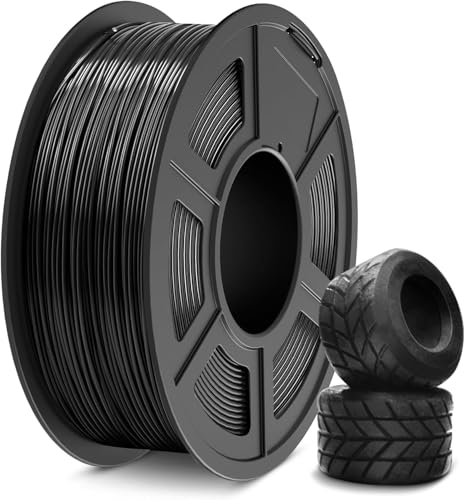
SUNLU offers a 1.75 mm TPU filament with a Shore hardness around 95A, designed for fast printing without sacrificing flexibility. The filament balances softness and resilience, making it suitable for flexible applications, robotics, and fashion projects. It emphasizes excellent layer adhesion and a smooth finish to minimize print defects.
OVERTURE TPU Filament 1.75mm — 95A, 1kg

OVERTURE’s TPU filament is engineered for flexibility and durability with a 95A hardness. It features excellent layer adhesion and a patented clog-free formula to reduce jams. Spools are dried for 24 hours and vacuum-sealed to preserve performance, with storage recommendations to maintain results.
Geeetech TPU Filament 1.75mm — 95A, Clear/Transparent

Geeetech’s 95A TPU filament emphasizes high elasticity and wear resistance. It supports a range of flexible applications such as phone cases and wearables, while its patented clog-free formula and pre-drying process aim to deliver smooth extrusion. Vacuum-sealed packaging with desiccants helps maintain dryness between prints.
FLASHFORGE PLA Flexible 1.75 mm — 4x Stretch
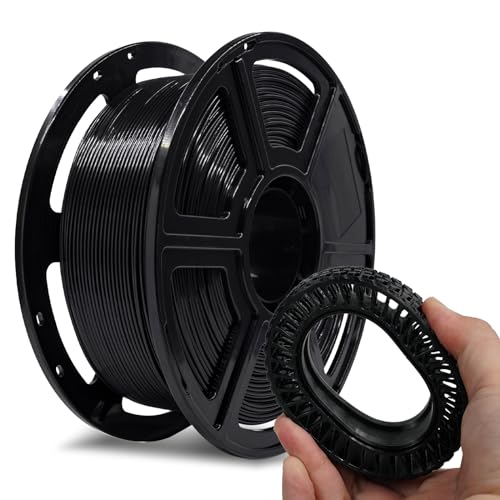
FLASHFORGE Flexible PLA filaments offer high elasticity, reportedly stretching up to four times their original length. This makes them suitable for soft accessories and projects requiring extra give. It is designed for ease of printing, compatible with both Bowden and direct-drive setups, and is dried before packaging for reduced humidity-related issues.
WISDREAM FlexiTough 1.75mm — 1KG, Orange

Designed for high-rebound performance, WISDREAM’s FlexiTough filament targets sports-related applications like airless basketballs. It blends durability with elasticity, offering compatibility with most FDM printers and both Bowden and direct-drive configurations. The material aligns with projects requiring a strong yet flexible print surface.
AMOLEN Multicolor TPU Bundle — 1.75mm, 4x 200g

AMOLEN bundles offer a multicolor TPU option with 1.75 mm filament and four spools of 200 g each. The set emphasizes high-speed printing with smooth feeding and minimal clogging, compatible with a wide range of FDM printers. Multicolor capability supports creative and visual variety in flexible prints.
AMOLEN 95A TPU — Glow in the Dark Green
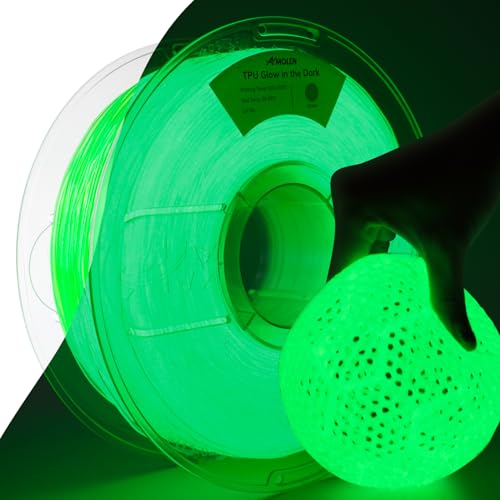
AMOLEN’s glow-in-the-dark TPU filament adds an eye-catching feature for prints that need visibility in low light. With a 95A hardness, it balances flexibility and resilience, and is sized at 1.75 mm with a 1 kg spool. Advanced diameter control helps maintain consistent extrusion on compatible printers, while compatibility spans many common FDM setups.
Buying Guide: Key Purchase Considerations For Flexible Filaments
- Filament Type And Hardness: TPU vs flexible PLA or other flexible variants affects elasticity, memory, and wear resistance. Most consumer-friendly options hover near 95A Shore hardness, offering good stretch without excessive softness that can cause jams. Consider your project needs: soft grips versus durable, high-stretch parts.
- Print Settings And Compatibility: Flexible filaments often require dialed-in extrusion pressure, slower travel speeds, and sometimes direct-drive extruders to prevent grinding. Some brands promote clog-free formulas; still, pre-drying and proper storage are crucial to prevent moisture-related issues.
- Drying And Storage: Many TPU spools are pre-dried and vacuum-sealed. If your printer environment is humid, use a desiccant storage method and dry the filament if you notice bubbling or inconsistent extrusion.
- Printer Calibration: For best results, calibrate retraction, temperature, and bed adhesion. Flexible filaments often benefit from modest bed temperatures, good first-layer adhesion, and adjusted nozzle temperature to minimize jams.
- Color And Aesthetics: Multicolor bundles and translucent or glow-in-the-dark options enhance design versatility. Consider whether color stability and finish quality meet your project needs.
- Reliability And Brand Support: Reputable brands with documented drying, storage recommendations, and consistent diameters help ensure fewer print failures and better repeatability across prints.
- Application Fit: If you’re printing functional elastic parts, ensure the material’s elasticity, fatigue resistance, and surface finish align with your use case, whether it’s wearable prototypes, soft grippers, or decorative pieces.
When choosing a flexible filament, balance print reliability with elasticity. For beginners, starting with a well-documented 95A TPU from a trusted brand, drying as recommended, and printing with gradual tuning provides a solid path to consistent results. More advanced users may experiment with glow-in-the-dark or multicolor options to expand design opportunities without compromising performance.
Leave a Reply