Best Marine Vinyl Glue for Repairs and Flooring Projects
Answer: For marine vinyl repair and flooring projects, choose products that bond strongly, remain flexible in damp conditions, and cure without strong solvents. This guide highlights five reliable options and explains who each is best for. Ideal buyers include boat owners, RV travelers, marina maintenance teams, and DIY enthusiasts tackling tarps, covers, or vinyl flooring aboard boats or campers.
| Product | Best For |
|---|---|
| RecPro RV Roll On Floor Adhesive | Marine flooring in RVs and boats; easy application |
| RH HH-66 Toluene Free Vinyl Cement 4 oz | Tough, flexible vinyl repairs; underwater or damp conditions |
| Bellisinno Vinyl Cement | Underwater and outdoor vinyl repairs; wide material compatibility |
| Marine Adhesive for Boat Carpet & Pontoon Vinyl Flooring | Vinyl flooring on boats with large areas |
| J-B Weld MarineWeld Syringe | Small, precise bonds needing waterproof, UV-resistant adhesive |
RecPro RV Roll On Floor Adhesive

Brand: RecPro
Features: This water-based adhesive penetrates plywood to form a secure bond with flooring. Best applied between 65-75°F. Comes in 1-gallon buckets, covering about 100 square feet with a notched trowel. Allows 24 hours cure time for optimal results. Rollers help eliminate wrinkles and air pockets for a seamless finish in RVs or boats.
Best for: RV and boat flooring projects where a user-friendly, water-based option is desired. The product suits installers and DIYers who need a straightforward, durable bond without harsh solvents. It is particularly suitable for large-area floor jobs in controlled temperatures.
Caution: Ensure temperature is within the optimal range during application. Substrates should be clean, dry, and free of dust for best results. Not ideal for direct permanent exposure to water before full cure.
HH-66 Toluene Free Vinyl Cement 1 oz
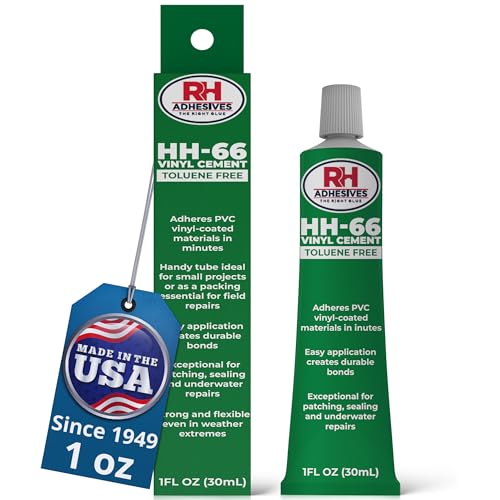
Brand: RH Adhesives
Features: Industrial-strength vinyl adhesive that bonds from 35°F to 95°F and can be applied underwater. Cures to a flexible, durable bond and remains serviceable from -30°F to 150°F. Penetrates PVC and vinyl surfaces for a long-lasting hold. Versatile for repairs on tarps, pool liners, inflatables, marine vinyl, and more.
Best for: Marine vinyl repairs where a water-friendly, flexible seal is essential and environmental or user-safety considerations favor toluene-free formulations. Suitable for underside damp conditions and ongoing flexibility after cure.
Caution: May require careful handling due to its strong bonding properties. Ensure surfaces are prepared and aligned before joining, as repositioning can be difficult after contact.
HH-66 Vinyl Cement 4 oz

Brand: RH Adhesives
Features: Original, professional-grade vinyl adhesive. Bonds 35°F to 95°F and can be applied underwater. Cures to a flexible bond that remains serviceable from -30°F to 150°F. Versatile for repairing rips, patches, decals, and moldings on PVC vinyl, vinyl-coated fabrics, canvas, fiberglass, neoprene, leather, EVA and nitrile foams, cork, and wood.
Best for: Repairs requiring a robust, flexible bond across a wide temperature range, especially on marine vinyl surfaces, tarps, and inflatables. Good for proprietors who need a durable seal with various substrates.
Caution: Like all solvent-light vinyl cements, ensure proper ventilation and follow curing instructions for best results in damp environments.
Vinyl Cement By Bellisinno

Brand: Bellisinno
Features: Provides a strong bond suitable for underwater and outdoor use. Forms a flexible, water-resistant seal resistant to salt, chemicals, and hot water after curing. Compatible with PVC, ABS, EVA, rubber, and other vinyl materials. Suitable for repairs on inflatable beds, pools, hot tubs, boats, canvas, kayaks, and more, including complex materials like fiberglass and foam.
Best for: Versatile repairs on a wide range of vinyl materials in marine or outdoor settings. Choose this if you need a single product that performs underwater and in sunlight with long-term resilience.
Caution: For large surface areas, confirm adhesion across dissimilar substrates; prepping substrates improves bond strength.
Marine Adhesive for Boat Carpet & Pontoon Vinyl Flooring

Brand: BoatCarpetCentral
Features: Sold in 2 gallon pails; each 1 gallon covers roughly an 8′ x 10′ area. Water-based; adheres to rubber-backed flooring and does not deteriorate backing like alcohol-based glues.
Best for: Large vinyl flooring projects aboard boats or pontoons where water-based adhesion and coverage efficiency matter. Avoid this if you require ultra-fast cure times or if interior temperature control is limited during application.
Caution: Ensure proper ventilation when using large volumes and allow adequate time for full cure before foot traffic or water exposure.
J-B Weld MarineWeld Syringe
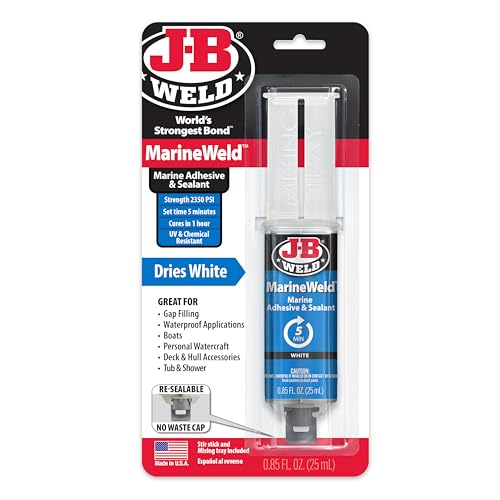
Brand: J-B Weld
Features: Two-part adhesive and sealant designed for a strong, flexible, waterproof bond with UV resistance. Comes in a convenient syringe for a precise 1:1 mix ratio.
Best for: Small, precise repairs on marine vinyl surfaces where a watertight seal and UV resistance are priorities. Choose this for targeted fixes rather than large area flooring projects.
Caution: The syringe format is ideal for small repairs; for large-area flooring, consider other products with wider coverage or faster workflow.
Buying Guide
What should you consider when choosing marine vinyl glue?
- Bond strength versus flexibility: Marine vinyl varies in substrate flexibility. Look for adhesives that offer a strong but flexible hold to resist cracking and peeling.
- Water exposure and cure time: Boats and damp environments require water-friendly formulations and predictable cure times. Toluene-free options can be safer for indoor use.
- Substrate compatibility: Vinyl, PVC, canvas, fiberglass, and wood all respond differently to adhesives. Select a product designed for your primary materials.
- Area coverage: For large floor projects, choose products sold in gallons or multi-gallon pails with clear coverage estimates.
- Application method: Consider whether you need easy application (roll-on or syringe) versus precise, controlled application for patches and seams.
- Environmental and safety considerations: Toluene-free options reduce exposure to solvents; ensure proper ventilation during use.
FAQ
- What glue is best for marine vinyl flooring? — For large areas, RecPro adhesive or BoatCarpetCentral’s water-based glue offer practical coverage and strong bonding in marine environments.
- Can vinyl cement be used underwater? — Some formulations (like HH-66 TF) can cure while submerged, but always check product specifications for your exact scenario.
- Is 1 oz or 4 oz vinyl cement better for repairs? — Smaller tubes or syringes are ideal for precise repairs; larger tubes suit patches and larger areas. Choose based on project size.
- Are solvent-free options as strong as solvent-based ones? — Toluene-free formulations can deliver comparable strength with added safety, especially in enclosed spaces.
- Can I mix products from different brands? — Mixing adhesives is not recommended; use a single product type compatible with your materials for best results.
- How long should vinyl adhesive cure before use? — Cure times vary by product; follow the manufacturer’s guidelines for handling, weight, and exposure.
Leave a Reply