Best Gold Glaze for Ceramics: Shiny Finishes for Pottery
Gold glazes add luxury and depth to ceramic surfaces, ranging from bright metallics to warm, antique tones. This guide highlights top gold-focused glazes available on Amazon, with practical notes on firing ranges, application methods, and compatibility. Learn which glazes best suit bisque pottery, stoneware, and kiln-fired projects, and compare key factors before you buy.
| Product | Brand | Firing Range | Notes |
|---|---|---|---|
| Pasler Gold Glaze for Ceramic Pottery Bisque | Pasler | Cone 6–9 (1222°C–1280°C) | Can be applied by sponge, dip, or pour; fire directly; may be mixed with water. |
| Colorobbia Liquid Bright Gold Overglaze 8% | Hobby Colorobbia | Approximately 1166°F | Brilliant 8% gold film; 2 g bottle; for kiln-fired ceramics. |
| AMACO Potters Choice Glaze, Saturation Gold PC-02 | AMACO | Cone 5–6 | Opaque glaze; ACMI compliant; versatile for pottery. |
| Plaid Glaze, Classic Gold 6110 | Plaid | Cone not specified on listing | One-step leafing paint style glaze with gold finish. |
| Mayco Stoneware Classic Glaze – Fool’s Gold | Mayco | Cones not specified on listing | Classic gold shade for stoneware; pint size. |
Pasler Gold Glaze for Ceramic Pottery Bisque
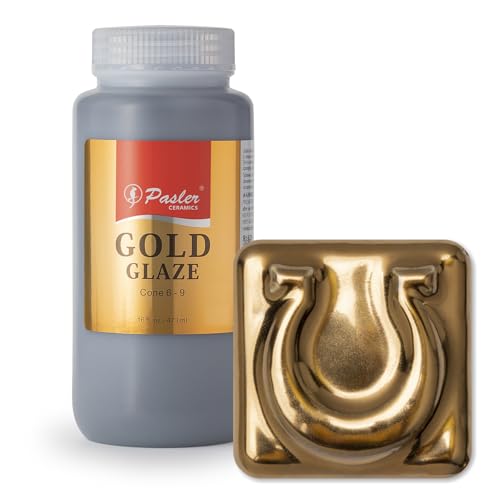
Pasler’s gold glaze is designed for bisque and can be applied by sponge, dip, or pour. It fires in the cone 6–9 range (1222°C–1280°C). The glaze is recommended to be fired directly and not used with clear glaze. It can be used as-is or diluted with water to adjust viscosity. Ideal for bold, reflective gold finishes on pottery and sculpture.
Colorobbia Liquid Bright Gold Overglaze 8%

Colorobbia’s 8% liquid bright gold overglaze offers a premium Italian formulation for kiln-fired ceramics. Fired at about 1166°F, it yields a film of 18–23 karats. The 2-gram bottle provides a concentrated gold result, ideal for artists seeking a vivid metallic accent on functionalware or decorative pieces. Proper application is essential for a even, lustrous finish.
AMACO Potters Choice Glaze, Saturation Gold PC-02

AMACO’s Potters Choice Glaze in Saturation Gold PC-02 offers an opaque gold finish suitable for Cone 5–6 firing. It conforms to ACMI CL, making it a reliable option for studio pottery and classroom projects. The glaze provides consistent coverage and a rich gold appearance when fired to the recommended cone range. Helpful for obtaining a classic clay-bodied gold surface.
Plaid Glaze, Classic Gold 6110

Plaid’s Classic Gold Glaze combines the ease of a one-step leafing paint with a metallic gold finish. Supplied in a small bottle, it’s designed for craft and hobbyist ceramic projects, delivering a bright, decorative gold tone without extensive firing requirements. Best for accentuating details on bisque and low-fire pieces.
Mayco Stoneware Classic Glaze – Fool’s Gold

Mayco’s Stoneware Classic Glaze in Fool’s Gold delivers a traditional gold finish tailored for stoneware. The glaze is formulated to produce a warm, shimmering surface suitable for functional ware and decorative pieces. Available in a pint size, it provides repeatable results across multiple firing sessions and is a staple for studios pursuing a timeless gold look.
Buying Guide
- Firing compatibility: Gold glazes vary by cone range. Check your kiln setup (bisque, stoneware, or porcelain) and choose glazes within your firing capabilities (common cones range from 5 to 9).
- Application method: Some glazes are versatile (dip, brush, sponge, pour), while others are formulated as overglazes or decorative finishes. Consider your technique and equipment when selecting a glaze.
- Finish and color: Gold finishes range from bright, reflective gold to warm, muted tones. If you want high reflectivity, prioritize overglaze formulas or high-gold-content glazes; for heirloom looks, consider copper-toned or antique gold alternatives.
- Vessel compatibility: Ensure the glaze is labeled for the type of ceramic you work with (stoneware, porcelain, or earthenware). Opaque vs transparent gold glazes affect how the underlying color shows through.
- Mixing and consistency: Some products are pre-mixed; others require dilution with water. Follow manufacturer guidelines to achieve the desired viscosity and coverage.
- Safety and standards: Look for glazes that meet safety certifications (e.g., ACMI compliance for dinnerware) if you plan to use coated wares for food service.
- Storage and shelf life: Metallic glazes can be sensitive to moisture and separation. Store tightly sealed and shake or stir before use to maintain even color.
- Cost and packaging: Compare bottle sizes (pints, 2 gins, or small bottles) and consider how many pieces you plan to glaze to estimate total cost per project.
- Test tiles: Before committing to a full project, test the glaze on a ceramic sample to verify color, texture, and firing response in your kiln.
- Environmental impact: If available, review labels for non-toxic endorsements and low-odor formulations to suit studio environments.
Leave a Reply