Best Heat Press Machines for T-Shirts in 2026
For anyone looking to create professional-looking transfers on T-shirts and other fabrics, a reliable 15×15 heat press is essential. This guide highlights five top options that balance speed, consistency, and user-friendliness. Each model is evaluated for auto-release features, temperature control, and suitability for HTV, sublimation, and vinyl transfers. Use the buying guide to compare capabilities and choose the best fit for your budding or established pressing needs.
Summary Table of Selected Products
| Product | Brand | Key Benefit | Platen Size | Notes |
|---|---|---|---|---|
| HTVRONT Auto Heat Press Machine for T Shirts – 15×15 with Auto Release | HTVRONT | Auto down and auto release; fast heat-up | 15×15 | Ideal for beginners and small batches |
| OLIXIS Heat Press, 15×15 with LCD Display & Memory Mode | OLIXIS | Memory mode for repeat jobs; precise control | 15×15 | Great for home businesses |
| VEVOR 2 in 1 Heat Press, 15×15 & 6×3 Cap Platen | VEVOR | Two platens; quick heat-up with alarm | 15×15 | Versatile for shirts and hats |
| HTVRONT Auto Heat Press 2 – Adjustable Pressure | HTVRONT | Pressure up to 80 kg; higher clearance | 15×15 | Suitable for thicker items |
| OLIXIS Heat Press, 15×15 with LCD Display & Memory Mode (Second Model) | OLIXIS | Same reliable controls; durable build | 15×15 | Alternative OLIXIS option |
HTVRONT Auto Heat Press Machine for T Shirts — 15×15 Auto Release
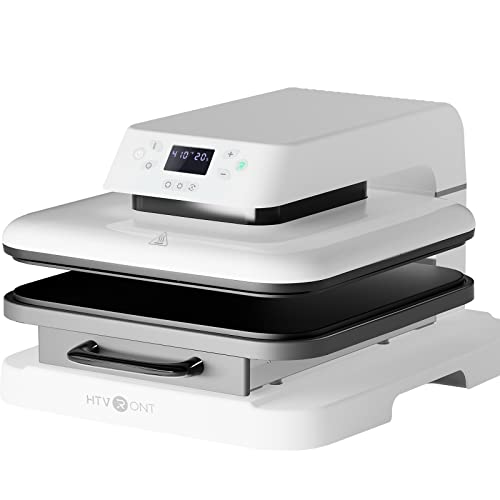
The HTVRONT 15×15 auto heat press offers hands-free operation with auto-down and auto-release features. It automatically adjusts for project thickness up to 1 inch, simplifying transfers and reducing the risk of scorching. The machine heats to common temps quickly and maintains even heat thanks to a dual-tube heating system and NTC thermistor technology. Multiple modes—including auto and custom presets—help streamline transfers for apparel, accessories, and decor projects. This model is well-suited for hobbyists and small-scale producers seeking consistent results with minimal supervision.
OLIXIS 15×15 Heat Press With LCD Display & Memory Mode
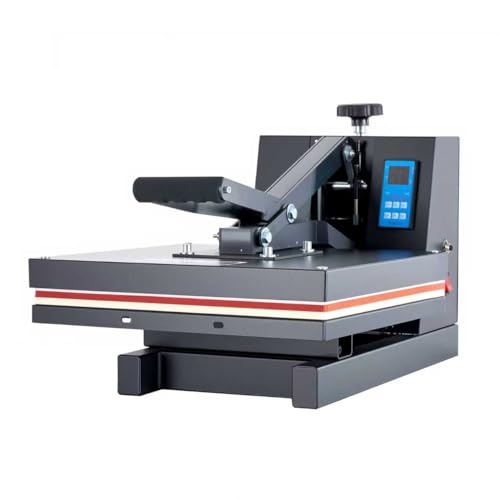
OLIXIS delivers a 15×15 heat press with a user-friendly LCD panel and Memory Mode for storing favorite settings. The 1200W unit provides stable, even heat, essential for durable transfers across T-shirts, bags, pillows, and more. The memory feature is particularly helpful for repetitive runs, saving you from re-entering settings. This press balances performance with a straightforward interface, making it a practical choice for home studios and small businesses focused on consistent results.
VEVOR 2 In 1 Heat Press — 15×15 Plus Cap Platen

VEVOR’s 2-in-1 design includes a 15×15 flat platen and a 6×3 inch curved cap platen. The system uses silica-gel and sponge layers to promote even heat distribution and fast heating while the soft liner accommodates a variety of materials. A built-in alarm notifies when transfers are complete, reducing the chance of over-pressing. Teflon insulation coating minimizes surface temperature and protects fabrics from scorching, making this press suitable for both apparel and cap projects.
HTVRONT Auto Heat Press 15×15 — Auto Release & Fast Heat
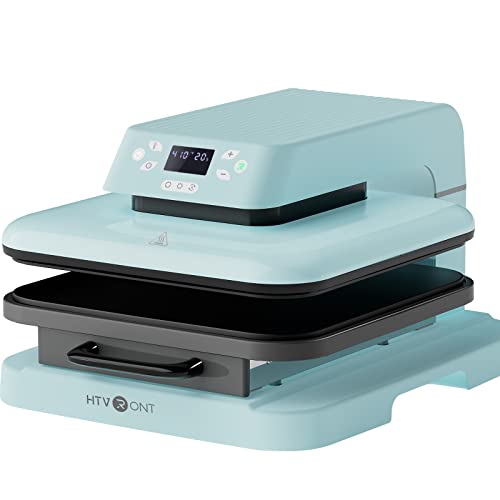
This HTVRONT model emphasizes automated workflow with an auto release as soon as the timer ends. Heating is fast and even, with the dual-tube heater and NTC thermistor technology keeping temperatures stable during transfers. The adjustable modes—four quick presets, two custom settings, and an auto mode—support a range of project types from HTV to sublimation. The unit is designed for hands-free operation, making it suitable for small-scale production or craft studios.
Buying Guide: Key Purchase Considerations
- Platen size and shape: A 15×15 inch flat platen is standard for T-shirt transfers, while a cap platen (usually 6×3 inches) supports hats and similar items.
- Heat and time controls: Look for accurate digital control panels with adjustable temperature ranges (ideally 0–570°F) and precise timers to avoid scorching and imperfect transfers.
- Automation features: Auto-down, auto-release, and memory presets can save time and reduce mistakes, especially in multi-item projects or small businesses.
- Pressure customization: Models with adjustable pressure help accommodate different fabrics and transfer types (HTV, sublimation, DTG, DTF). Higher pressure is useful for thicker items but should not crush delicate garments.
- Safety and build quality: A sturdy frame, heat-resistant handle, and proper insulation reduce heat loss and improve user safety during extended sessions.
- Versatility: Some presses offer dual platens or additional accessories (cap platens, extended timetables) that broaden usage to bags, pillows, aprons, and other textiles.
- Maintenance and reliability: Look for durable components (ceramic-coated plates, non-stick coatings) and easy replacement parts to extend the life of the machine.
- Support and warranty: A manufacturer that offers clear documentation and a solid warranty reduces risk for new buyers.
Comparison at a Glance
- Automatic operation: Available in several HTVRONT models, enhancing workflow and reducing manual effort.
- Temperature stability: All five options emphasize consistent heat with thermistor or advanced sensors for even transfer results.
- Memory and presets: OLIXIS units provide memory mode for repeat jobs, helping maintain identical outcomes across projects.
- Capability range: VEVOR’s 2-in-1 design adds cap transfers; other presses stay focused on T-shirts but support various materials with proper settings.
- Ease of use: Most units feature intuitive controls, clear displays, and alarms to signal transfer completion.
Notes on Usage and Best Practices
Before each project, verify the fabric type and transfer material compatibility. Pre-press garments to remove moisture, align transfers carefully, and avoid overcrowding the work area. Respect the recommended time and temperature for your specific transfer type, and perform a test on a scrap piece to dial in settings. Regularly inspect the platen for wear and replace non-stick coverings as needed to preserve transfer quality. For batches, set up presets to minimize setup time between items and maintain consistent results.
Leave a Reply