Best Home Quilting Sewing Machines for 2026: Top Picks for Crafters
Answer: For serious home quilters, these machines combine sturdy frames, versatile stitches, and roomy work surfaces to handle quilting, patchwork, and garment tasks. The best options vary by user need: beginners benefit from intuitive controls and guided features, while experienced quilters want speed, precision, and advanced stitch libraries. Below are five strong choices that balance performance, usability, and value, with quick notes on who they suit and potential limitations to consider.
| Product | Why It Stands Out | Best For |
|---|---|---|
| Brother XR3774 | 37 built-in stitches, wide table, included feet, easy threading | Beginners and casual quilters who want versatility and a large workspace |
| Brother XR9550 | 165 stitches, LCD display, wide table, protective hard cover | Quilters who want a broad stitch library and durable housing |
| Brother CS7000X | 70 stitches, quilt guide, wide table, hard case | All-purpose quilters seeking portability with quilting capability |
| Brother HC1850 | 185 stitches, advanced needle threader, wide table | Comprehensive stitch variety for garments and light quilting |
| Juki TL-2010Q | High-performance, automatic thread trimmer, knee lifter | Quilters who need speed, precision, and heavy-duty fabric handling |
Brother XR3774: 37 Stitches With Wide Table

The XR3774 offers 37 built-in stitches including decorative and quilting stitches, plus a 1-step buttonhole. It features an automatic needle threader and a drop-in top bobbin for smoother setup, along with a wide table and eight included feet. This model is best for: beginners and casual quilters who value a straightforward setup and a larger workspace for quilting blocks. Caution: the stitch library is robust but not as expansive as higher-end computerized models, which may limit fancier quilting options over time.
Brother XR9550: Computerized With 165 Stitches

The XR9550 is a computerized machine with a broad stitch library, including utility, decorative, heirloom, and alphanumeric stitches. It provides an automatic needle threader and a drop-in top bobbin, plus a wide table and protective hard cover. This choice is best for: quilters who want variety and features that support both quilting and garment projects. Caution: the size and weight may be less portable than compact machines, and some users may rely on a display for stitch selection rather than tactile dials.
Brother CS7000X: 70 Stitches With Quilt Guide
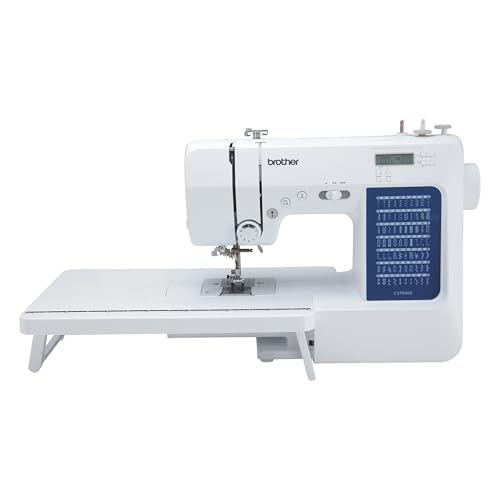
The CS7000X provides 70 stitches, a wide table, and a quilt guide, along with 10 included feet and a protective hard case. It’s best for: quilters who want a bargain yet still crave dedicated quilting features and a solid table workspace. Caution: the machine is still a domestic model, so extremely heavy quilting sessions may require periodic rest periods or a more industrial option for heavy use.
Brother HC1850: 185 Stitches For Variety
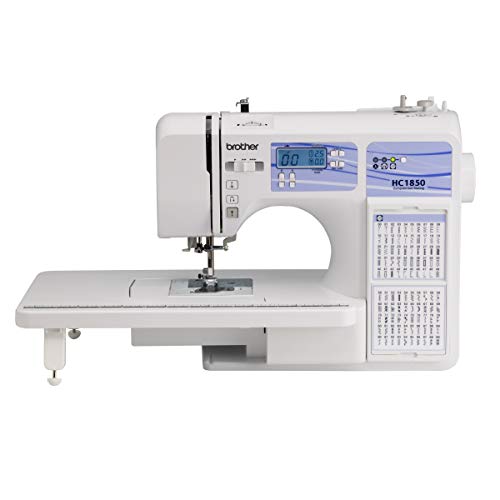
The HC1850 includes 185 stitches and an advanced needle threader with a wide table and eight feet. This model is best for: quilters who want broad stitch versatility for garments, décor, and light quilting, with straightforward threading and an intuitive interface. Caution: the high stitch count can be overwhelming for absolute beginners who prefer a simpler, fewer-stitch setup.
Juki TL-2010Q: High-Performance Quilting
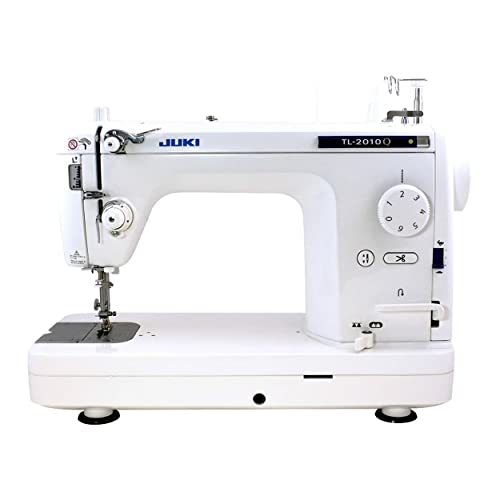
The Juki TL-2010Q is designed for high performance with features like an automatic thread trimmer and knee lifter lever, enabling smooth quilting and garment projects. This choice is best for: quilters who need speed, precision, and handling of heavier fabrics. Caution: it’s a more specialized machine and may require a steeper learning curve for beginners, particularly those new to free-motion quilting or advanced controls.
Buying Guide
- Stitch Library vs. Specialization: If you primarily quilt, look for machines with ample quilting stitches and a wide table. If you also sew garments, prioritize broader stitch options and a robust needle threading system.
- Workspace and Table Size: A wide table helps manage larger quilts. Consider models with extendable or detach-able tables for flexibility.
- User-Friendliness: Beginners benefit from automatic needle threaders, drop-in bobbins, and clear LCD displays. Experienced users may value advanced controls and faster speed settings.
- Portability vs. Stability: Lighter machines are easier to move, but heavier frames often provide steadier stitching and fewer skipped stitches on thick fabrics.
- Durability and Maintenance: Machines with solid internal frames and reliable support communities reduce maintenance concerns during ongoing quilting projects.
Frequently Asked Questions
- What is the best beginner quilting machine? A machine with a wide table, a good number of built-in stitches, and an automatic needle threader helps new quilters start quickly and efficiently.
- Do I need a computer-controlled machine for quilting? Not necessarily. Computerized machines offer many stitches and patterns, but mechanical machines with a solid stitch quality can also handle most home quilting tasks well.
- Should I buy a dedicated quilting machine or a general sewing machine? A dedicated quilting machine provides features tuned for quilting, like larger tables and quilting stitches, but a versatile home sewing machine with a quilting mode can suffice for occasional projects.
- Is a heavy machine better for quilters? Heavier machines tend to be more stable on thick fabrics, reducing vibrations and skipped stitches during long quilting sessions.
- What maintenance is essential for quilting machines? Regular bobbin cleaning, oiling per the manual, and checking needle seating help ensure consistent stitches and machine longevity.
- Can I quilt on a domestic machine without special feet? Yes, but specialized quilting feet (like walking feet) improve fabric feed and even stitching on layered quilts.
Leave a Reply