Best Japanese Sushi Knife for Precision Sashimi
Choosing the right yanagiba knife can elevate sashimi and sushi prep by delivering ultra-thin, pristine slices. This guide highlights top Japanese sushi knives, focusing on blade material, edge retention, and ergonomic handles to help American cooks achieve restaurant-quality cuts at home.
Summary of Selected Products
| Product | Brand | Key Benefit | Blade Type | Link |
|---|---|---|---|---|
| HOSHANHO Sushi Knife | HOSHANHO | Premium layered steel with durable edge | 10-inch Yanagiba | Amazon |
| SHAN ZU 10 Inch Sushi Knife | SHAN ZU | Anti-rust stainless steel with ultra-thin edge | 10-inch Yanagiba | Amazon |
| KYOKU Samurai Series 10.5″ | KYOKU | Cryogenically treated steel with great edge retention | 10.5-inch Yanagiba | Amazon |
| Dalstrong Phantom 9.5″ | Dalstrong | High-end AUS-8 steel, precise balance | 9.5-inch Yanagiba | Amazon |
| Sunnecko 10.5″ | Sunnecko | High carbon stainless steel with ergonomic handle | 10.5-inch Yanagiba | Amazon |
HOSHANHO Sushi Knife: 10-Inch Yanagiba

The HOSHANHO 10-inch yanagiba knife features a flat blade designed to produce ultra-thin sashimi slices without compromising the integrity of the fish. Its blade is forged from resilient 10Cr15CoMoV steel, shielded by eight layers of composite steel to maintain durability and sharpness. The octagonal rosewood handle, accented with copper wires, offers a secure grip and a refined appearance.
SHAN ZU 10 Inch Sushi Knife

This knife uses Japanese stainless steel with a hardness around 57 HRC for rust resistance and easy maintenance. The ultra-thin edge at a 12° bevel on each side delivers sharpness suitable for slicing delicate sashimi. Its octagonal red sandalwood handle, combined with a full tang design, provides comfortable control and balance during extended use.
KYOKU Samurai Series Yanagiba
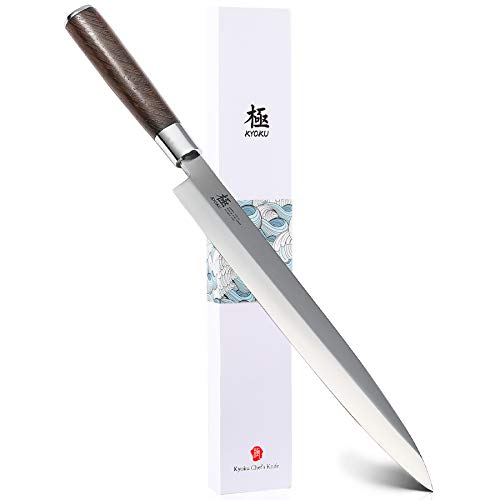
The KYOKU 10.5-inch yanagiba uses a cobalt-added, cryogenically treated steel core with a hardness of 56-58 HRC for remarkable edge retention. The blade is well-balanced to reduce fatigue, and the wenge wood handle provides an authentic, traditional look with solid grip and control.
Dalstrong Yanagiba Phantom Series

The Dalstrong Phantom Series yanagiba uses high-carbon AUS-8 steel and a full tang design for strength and balance. The blade is honed to a 13-15° edge, nitrogen-cooled for improved hardness and corrosion resistance. A pakkawood handle with a full tang and an ergonomic bolster provides a secure pinch grip for precise slicing.
Sunnecko 10.5″ Sashimi Knife

The Sunnecko sashimi knife is crafted from high carbon stainless steel with an HRC around 58, designed for sharpness and edge retention. Its handmade Pakkawood handle offers comfort and durability, while the blade’s traditional Japanese technique aims to produce clean, smooth cuts for sashimi and sushi.
Buying Guide: Key Purchase Considerations
- Blade Material and Hardness: Higher hardness generally improves edge retention but may require more careful maintenance and sharpening.
- Steel Type: Carbon steel vs. stainless steel affects corrosion resistance, rust protection, and sharpening ease. Stainless variants are easier to maintain in busy kitchens.
- Blade Geometry and Bevel: A single bevel vs. double bevel influences slicing behavior; traditional yanagiba blades are typically single-bevel for delicate cuts.
- Handle Material and Design: Octagonal or D-shaped handles (e.g., rosewood, wenge, Pakkawood) offer grip stability and comfort during long prep sessions.
- Balance and Weight: A well-balanced knife reduces fatigue and enhances precision, especially for thin-slice work.
- Maintenance and Care: Some blades require oiling to prevent rust; stainless options are more forgiving for home cooks.
- Warranty and Service: Look for brands offering blade tang guarantees and customer support for sharpening and repairs.
- Case and Accessories: Some sets include sheaths or gift boxes, which can be convenient for storage or gifting.
When selecting a sushi knife, consider your typical tasks—slicing sashimi, filleting fish, or preparing sushi rolls—and the environment of your kitchen. For beginners, stainless steel variants with good rust resistance and straightforward maintenance may be ideal, while experienced cooks may prefer carbon steel or multi-layer constructions for ultra-thin precision. Ergonomic handles and balanced feel are essential for long sessions, ensuring controlled, clean cuts. The five knives listed here offer a range of materials and designs to suit different preferences and routines while delivering consistent performance for sushi and sashimi preparation.
Leave a Reply