Best Knife Steel for Bushcraft: Top Fixed-Blade Picks for the Wild
For bushcraft enthusiasts, a reliable fixed-blade knife with the right steel makes all the difference in endurance, edge retention, and ease of maintenance. This guide highlights five strong options, focusing on steel type, blade geometry, and overall build. Each product below is designed to perform in backcountry tasks ranging from batoning and carving to skinning and fire-starting support. Consider your typical terrain, climate, and carried weight when choosing your ideal blade.
| Product | Brand | Notable Steel | Key Benefit |
|---|---|---|---|
| BPSKNIVES Adventurer | BPSKNIVES | 1066 Carbon | High hardeness and great edge retention |
| MOSSY OAK 8 Inch Fixed Blade | Mossy Oak | D2 | Exceptional edge retention for tough tasks |
| Cold Steel Bowie Blade Bushman | Cold Steel | SK-5 High Carbon | Single-piece durability, rugged resilience |
| FLISSA 9″ Fixed Blade Knife | FLISSA | D2 | Full-tang strength with sharp edge |
| Holtzman’s Gorilla Survival Bloodline | Holtzman’s Gorilla Survival | 1095 High Carbon | Robust fixed blade with reliable edge |
BPSKNIVES Adventurer Bushcraft Knife

The BPSKNIVES Adventurer is a full-tang fixed-blade designed for serious outdoor use. It features a carbon steel blade with a true Scandi grind for efficient wood carving and baton work. Hardened to 56-57 HRC, the 1066 carbon steel offers strong edge retention and straightforward maintenance in the field. The walnut handle, finished with Danish oil, provides balanced ergonomics and moisture resistance. The knife ships with a leather sheath and includes a practical firestarter accessory. This tool is positioned as a dependable companion for camping, hunting, or survival scenarios where a reliable edge is critical.
Key points:
– Carbon steel for a robust blade and repairability in remote settings.
– Scandi grind optimizes wood work and ease of sharpening.
– Full tang construction with a walnut handle for durability and balance.
– A practical gift choice for outdoor enthusiasts who value traditional knife aesthetics.
Specifications to consider
- Blade length and thickness suitable for controlled cutting and heavy tasks.
- Sheath quality and accessibility for rapid deployment.
- Maintenance needs of carbon steel in humid or salty environments.
MOSSY OAK 8-Inch Fixed Blade Knife
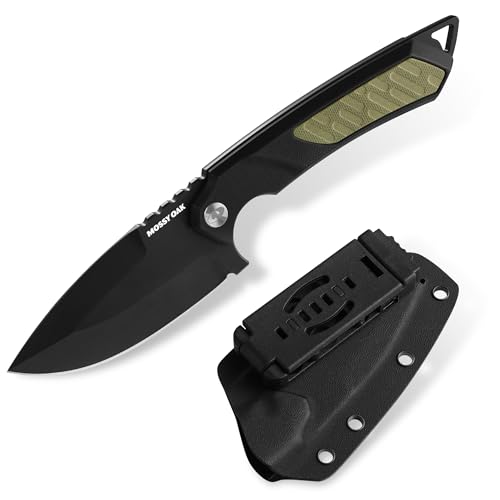
The Mossy Oak 8-Inch Fixed Blade Knife uses D2 steel, renowned for excellent edge retention and sharpness. Its full-tang construction delivers maximum strength for demanding bushcraft tasks, from chopping stubborn branches to processing shelter materials. The ergonomic G10 handle offers a secure, slip-resistant grip in various conditions, which helps maintain control during extended use. The knife is designed for outdoor reliability, with an emphasis on solid performance across camping, survival, and hiking scenarios.
Highlights:
– D2 steel balances hardness and ease of maintenance in field conditions.
– Full tang design enhances durability and control in tough tasks.
– G10 handle provides comfort and a confident grip when wet or dirty.
– The 8-inch blade length is versatile for a wide range of field tasks without being overly heavy.
Usage considerations
- Edge care: maintenance is simpler when fitted with a protective sheath and regular honing.
- Weight and balance: a full-tang build improves maneuverability for slicing and batoning.
- Environment: ensure corrosion resistance through cleaning after exposure to moisture.
Cold Steel Bowie Blade Bushman

The Cold Steel Bowie Blade Bushman is forged from a single piece of SK-5 high-carbon steel, delivering exceptional durability with no seams or joints. Heat-treated and tempered to RC54, this knife remains reliable in harsh outdoor environments. The blade is ground to a razor-thin edge for precise cutting, skinning, and carving. A hollow handle design adds versatility by accommodating survival gear or extensions, which can extend reach or leverage for various bushcraft tasks. The Secure-Ex sheath ensures safe transport.
Considerations:
– Seamless construction minimizes failure points during heavy work.
– A thin edge profile supports precise work while maintaining overall strength through alloy choice.
– Hollow handle capability adds practical storage for survival items in emergencies.
Pros and limitations
- Pros: Robust single-piece blade, reliable edge, flexible hollow handle.
- Limitations: Heavier blade weight may affect fatigue over long sessions; care required to avoid corrosion on carbon steel.
FLISSA 9″ Fixed Blade Knife

The FLISSA 9″ Fixed Blade Knife uses D2 steel with a full-tang construction for rugged field use. The drop-point blade design provides a versatile cutting edge suitable for hunting, camping, and bushcraft tasks. With a hardness of 61-63 HRC, this knife maintains a sharp edge under demanding use while remaining manageable to sharpen in the backcountry. The wood handle and leather sheath round out a classic, reliable kit ideal for long treks or survival drills.
Useful attributes:
– D2 steel offers a strong mix of edge retention and resilience.
– Full tang ensures a solid, unified blade-and-handle feel.
– Drop-point geometry balances control and versatility for various tasks.
Care and handling
- Keep edge clean and dry to maintain corrosion resistance in storage.
- Regular sharpening with appropriate stones to sustain 61-63 HRC performance.
- Inspect sheath and mounting hardware to prevent looseness during transport.
Holtzman’s Gorilla Survival Bloodline

The Holtzman’s Gorilla Survival Bloodline is built with a full-tang 1095 high-carbon steel blade designed for demanding bushcraft and survival tasks. The blade’s rigidity supports heavy-duty cutting, batoning, and skimming through tough materials. The textured G10 handle provides a non-slip grip, reducing fatigue and improving control in wet or dry conditions. The knife is aimed at users seeking a robust tool capable of sustained field performance and reliable edge maintenance. A functional option for long expeditions and high-stress environments.
Key considerations:
– 1095 steel is known for toughness and ease of sharpening in the wild.
– G10 handle enhances grip security in adverse conditions.
– Full tang construction contributes to overall durability for tough tasks.
Buying Guide: Key Purchase Considerations And Comparisons
When selecting a bushcraft knife, consider steel type, blade geometry, tang construction, handle material, and sheath quality. Here are the main options and how they compare:
- Carbon steel vs. stainless: Carbon steels (like 1066, 1095, SK-5) generally offer easier sharpening and better edge retention under field conditions but require care to prevent rust. Stainless steels resist corrosion but may be more challenging to sharpen and can dull more quickly under heavy use.
- Blade geometry: Scandi grinds excel at wood processing and batoning; drop-point blades provide versatile general-use cutting for skinning and carving. Choose based on your primary tasks.
- Full tang vs. partial tang: Full tang knives offer superior strength and balance for heavy tasks; partial tangs may be lighter but can fail under serious leverage.
- Handle and grip: G10 handles offer durability and grip in wet conditions; wood handles provide traditional aesthetics but require more maintenance; ensure a secure grip to prevent slips during critical tasks.
- Maintenance needs: Carbon steel blades need drying and oiling after exposure to moisture, especially in humid environments. Proper cleaning and storage extend blade life.
- Sheath quality: A sturdy sheath protects the blade and enables safe carry. Leather and kydex are common, each with different weather resilience and maintenance needs.
Practical decision tips:
– For frequent woodwork and carving, prioritize Scandi-ground carbon steel with a full tang for reliable edge and control.
– For rugged survival use in harsh environments, prefer high-carbon or alloy steel with a robust tang and a non-slip handle.
– If corrosion resistance is critical, weigh stainless options or treat carbon blades with protective coatings and diligent maintenance.
Leave a Reply