Best Lavender Oils for Soap Making: Top DIY Picks for Soaps
Lavender essential oil is a popular choice for handmade soaps due to its calming aroma and potential skin-friendly properties. This guide highlights five lavender products that are commonly used in soap making, emphasizing purity, concentration, and practical features for DIY projects. Each product has been evaluated for suitability in cold process soaps and bath formulations, with attention to bottle quality, proof of purity, and user-friendly packaging.
| Product | Brand | Size | Key Benefit |
|---|---|---|---|
| Majestic Pure Lavender Oil | Majestic Pure | 4 Fl Oz | 100% pure, lab-tested, glass amber bottle with dropper |
| Handcraft Blends Lavender Essential Oil | Handcraft Blends | 4 Fl Oz | Undiluted, glass bottle with dropper, ideal for soaps |
| Handcraft Blends Lavender Essential Oil | Handcraft Blends | 16 Fl Oz | Bulk size for high-volume soap projects |
| MUNUSNA Lavender Essential Oil | MUNUSNA | 100 mL (approximately 3.4 Fl Oz) | Pure, undiluted, versatile for hair, skin, and soap |
| Siva Lavender Essential Oil | SVA ORGANICS | 4 Fl Oz | Steam-distilled, dropper-equipped, reliable diffuser use |
Note: All selections are focused on pure lavender essential oils and oils suitable for soap making and related crafts. Each product’s features emphasize purity, packaging quality, and practical use in DIY projects.
Majestic Pure Lavender Essential Oil

Majestic Pure Lavender Essential Oil is marketed as 100% pure and natural, with independent lab testing to confirm purity and the absence of fillers. The oil is packaged in an amber glass bottle that protects from UV exposure, and a built-in dropper helps control usage. Such packaging is beneficial for soap making, where precise dosing matters to maintain fragrance balance and consistent curing. The product is described as suitable for diffusers, aromatherapy, and candle making, as well as soap production, making it a versatile option for DIY enthusiasts.
Key features include:
– 100% pure and natural lavender oil
– Lab-tested with quality guaranty
– Premium glass bottle with dropper for accurate dispensing
Soap makers can rely on the bottle’s reliability to measure small quantities precisely, reducing waste during batches. For best results, blend with a suitable carrier oil during mixing and test a small test batch to confirm fragrance strength and skin sensitivity before scaling up production.
Bramble Berry Lavender Fragrance Oil
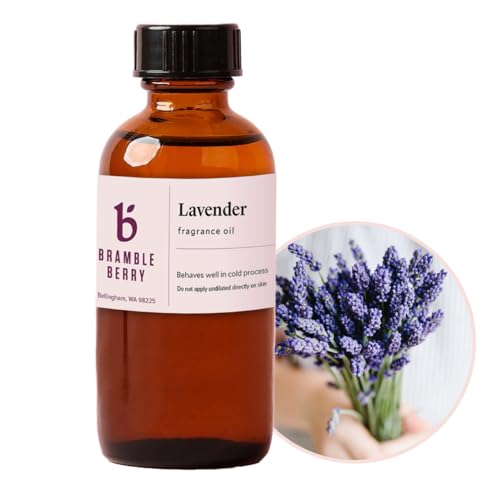
Bramble Berry Lavender Fragrance Oil is a fragrance oil rather than a pure essential oil. It provides a soft, true lavender aroma designed for soap making, candles, lotions, and other DIY projects. While fragrance oils can be used in place of essential oils in some soap formulas, they are synthetic and may have different performance in terms of lather and scent throw. This option is well-suited for crafters seeking a stable, predictable scent profile in batches where a floral lavender note is desired without the variability of essential oils.
Notable points:
– Calming, floral scent ideal for soaps and candles
– Suitable for skin-contact products when diluted properly
– Free from parabens and phthalates in the formulation
For soap making, fragrance oils can offer consistent scent across batches, though care should be taken to ensure compatibility with your soap base and to conduct a small patch test for skin compatibility. Always follow recommended usage rates for fragrance oils in cold process soaps to avoid issues like fragrance acceleration.
Natures-Star Lavender Essential Oil

Natures-Star offers a 16-ounce bottle of lavender essential oil described as therapeutic grade for aromatherapy, diffusion, and soap making. The larger size is attractive for hobbyists and small-scale sellers who need ample supply for larger batches or frequent use. The product’s emphasis on a revitalizing aroma makes it a strong candidate for scented soaps that aim to stimulate calming and relaxing experiences. Amber glass packaging helps protect the oil from light exposure, preserving its quality over time.
Key considerations include:
– Large 16-ounce bottle for cost efficiency on big projects
– Therapeutic-grade lavender scent suitable for diffusers and soaps
– Amber bottle to protect against UV light
In soap making, this oil’s potency should be tested in small test batches to calibrate fragrance load. Pair with a suitable emulsifier and ensure proper dilution when blending with soap bases to prevent skin sensitivity or scent overpowering the base fragrance.
KUKKA Lavender Essential Oils

KUKKA Lavender Essential Oils come in a 4-ounce bottle and are positioned for diffuser use as well as skin and soap applications. The product description emphasizes lavender’s calming aroma for aromatherapy and mentions diffuser blends as a primary use. While it covers multiple DIY applications, for soap making you’ll want to ensure the oil’s strength and blendening compatibility with your soap base. The packaging includes a dropper, enabling precise dosing during formulation.
Considerations for soap makers:
– Versatile lavender oil for diffusers and topicals
– Dropper-enabled bottle for accurate measuring
– Suitable for mixing with carrier oils in soap formulations
Handcraft Blends Lavender Essential Oil (4 Fl Oz)

Handcraft Blends presents a 4-ounce bottle of lavender essential oil with a focus on purity and lab testing. The product claims a guarantee of quality and emphasizes its suitability for soap making, skincare, and aromatherapy. The amber bottle with a glass dropper helps maintain oil integrity by reducing light exposure and enabling controlled application. The oil’s versatility makes it a practical choice for DIY soap projects that require consistent lavender notes.
Key details:
– 100% pure and natural lavender oil with lab testing
– Glass amber bottle with dropper for precision
– Suitable for soap making and skincare after proper dilution
Buying Guide: Key Purchase Considerations
Purity and grade: Look for 100% pure lavender essential oil with clear statements about distillation method (often steam distillation) and absence of fillers or additives. Independent lab testing reports or quality guaranties strengthen confidence in purity for soap making.
Packaging and dispensing: Amber glass bottles with droppers help protect from light and enable precise dosing. A dropper reduces waste and ensures you can measure small quantities accurately, which is important in soap formulations where fragrance load must be controlled.
Size and cost efficiency: For hobbyists, smaller bottles (2–4 oz) are common, while larger volumes (8–16 oz) reduce per-ounce cost for frequent soap makers. Consider your project scale and storage conditions when choosing size.
Purity vs. fragrance oils: Essential oils provide natural aroma and potential skin benefits, but some projects may use fragrance oils for a consistent scent profile. If you prefer natural ingredients, prioritize essential oils; for more robust or consistent scents, fragrance oils can be an option, keeping in mind skin compatibility and regulatory considerations in cosmetic products.
Skin safety and dilution: Always dilute essential oils with a carrier oil before topical application in soaps. Patch testing is recommended to rule out sensitivities, especially for formulations intended for sensitive skin or children’s products.
Compatibility with soap bases: Test fragrance load in small batches to avoid issues like acceleration or ricing in cold process soaps. Some essential oils may accelerate trace or react differently with various soap bases, so conduct a small test before scaling up.
Source transparency and labeling: Prefer brands that clearly state purity, extraction methods, and batch testing. This transparency helps ensure you’re getting quality lavender oil appropriate for soap making, rather than a blended or diluted product.
Leave a Reply