Best Markers for Architectural Rendering and Sketching
Looking for markers that deliver crisp lines, smooth blending, and professional results for architectural renderings? This guide highlights five top choices that suit students, professionals, and hobbyists alike. Each pick is assessed for how it helps with architectural drawings, rendering, and large-scale color work. The buyer’s intent is to find reliable markers that render clean lines, blend well, and work on suitable paper. Below is a quick summary to compare key attributes and suitability at a glance.
| Product | Best For | Why It Stands Out | Notes |
|---|---|---|---|
| Ohuhu 48-Color Marker Set | Beginners to Intermediate Architects | Dual tips for broad coverage and fine details; 48 colors for varied palettes | Blends well; non-toxic; use heavier paper to prevent bleed |
| Winsor & Newton ProMarker 6-Count | Professional-grade color work | Wide color range with layered blending; dual tips for versatility | Smaller color set; excellent for controlled palettes |
| ShinHan Touch Twin Marker GY48 | Precision rendering | Ergonomic grip; no smudging; dual nibs for control | Color selection varies by market; ensure stock |
| NUOBESTY Marker Paper Pad | Drafting and large-scale layouts | Durable surface; designed for marker rendering and architectural work | Paper quality is a factor; experiment with markers first |
| Mikikit Marker Paper Pad | Architectural sketching on paper | Tough, tear-resistant; suitable for markers and large drawings | Primarily paper, not marker itself |
Ohuhu Markers, 48-Color Set for Architectural Design

The Ohuhu 48-color marker set features dual tips: a 1–5 mm broad chisel for sweeping color lays and a 1–2.5 mm fine tip for precise lines and details. With 47 colors plus one blender, this kit covers a broad palette suitable for architectural renderings and landscape shading. Best for beginners who want a comprehensive starter set. A practical choice for quick shading and larger fills. The markers dry fast and blend smoothly for clean results. Use a heavier paper or a protective sheet to prevent bleed-through.
Who it’s best for: Students, hobbyists, or early-career designers needing a versatile, affordable set with a broad color range.
Why selected: The combination of wide chroma selection, dual tips, and easy blending makes it a solid all-around option for rendering and color-blocking in architectural sketches. The blender color adds flexibility in highlights and transitions.
Limitation: The fine tip is slightly larger than some premium lines, which may affect extremely fine detailing on very small areas.
Winsor & Newton ProMarker Set, Landscape (6)
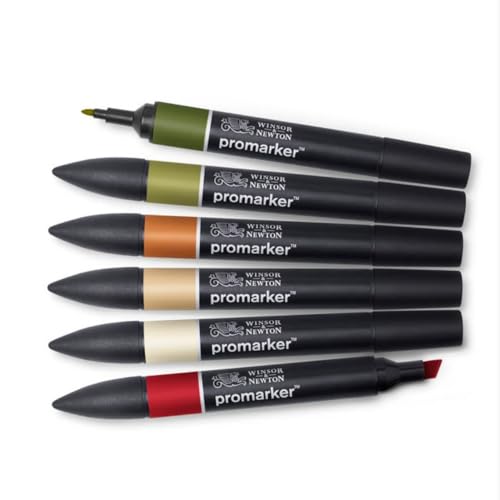
ProMarker Landscape offers dual-tipped markers with a fine bullet nib for precise lines and a broad chisel nib for broad coverage. The alcohol-based inks provide an expansive tonal range and smooth, streak-free application. Suitable for layering and blending, these markers work well on paper, acetate, glass, wood, and plastic, making them a versatile choice for architectural sketches and craft projects.
Who it’s best for: Professionals and serious students who want reliable color consistency and clean layering capabilities.
Why selected: The high-quality alcohol inks give consistent tones and smooth application, which is essential for architectural renderings that require precise shading and controlled washes.
Limitation: A six-color set may necessitate additional purchases for a full architectural palette, depending on project scope.
Sketching and Rendering of Interior Spaces

This Watson-Guptill title is a reference workbook rather than a marker set. It provides foundational techniques for sketching and rendering interiors, including perspective, light, shadow, and material representation. Best for learners and professionals who want structured guidance to improve architectural visualization and drafting skills.
Who it’s best for: Design students, architects, and interior renderers seeking methodical instruction to refine rendering approach.
Why selected: It complements marker work by offering proven techniques for accurate perspective, proportion, and shading in interior environments.
Limitation: It does not include markers or supplies; use it alongside marker sets for practical application.
ShinHan Touch Twin Marker GY48 Yellow Green

The ShinHan Touch Twin Marker offers ergonomic design and dual nibs for precise color control. It emphasizes excellent ink flow with minimal smudging or bleeding, making it a strong choice for architectural renderings where accuracy matters. The Yellow Green shade demonstrates the palette coverage available for natural landscapes and interior accents.
Who it’s best for: Architects and illustrators who value grip comfort and reliable ink performance for long sessions.
Why selected: The marker’s dependable ink flow and dual nibs support clean lines and efficient shading in architectural drawings.
Limitation: Availability and color range may vary by region, so verify stock before purchasing.
NUOBESTY Marker Paper Pad for Sketching and Drawing, A3

This A3 marker paper pad offers durability and a reliable foundation for marker rendering and architectural drafting. It’s designed to handle large-scale coloring and fine-line detailing, making it a solid option for architects and illustrators tackling complex design challenges. Use markers that are compatible with marker paper to prevent bleed-through.
Who it’s best for: Designers and architects who need sturdy paper for large renderings and precise line work.
Why selected: The paper’s toughness supports repeated layering and long sessions, which is valuable for rendering projects and presentations.
Limitation: Paper texture and marker compatibility vary; test markers on a small area first to avoid unexpected texture changes.
Mikikit 100 Sheets A3 Marker Paper Pad

The Mikikit A3 marker paper pad provides a smooth surface and tear resistance suitable for marker rendering and architectural sketching. It supports large-scale drawings and fine-line detailing, offering a practical foundation for architects and illustrators working on complex designs. Compatible with most alcohol-based markers.
Who it’s best for: Professionals and students needing reliable, durable paper to preserve architectural renderings over time.
Why selected: The durable paper helps maintain paper integrity under multiple passes of marker applications, which is ideal for drafting and rendering workflows.
Limitation: It is paper-focused; ensure your marker choice is compatible with marker paper to avoid feathering or bleed.
Buying Guide: Key Considerations For Marker-Based Architecture Rendering
- Paper compatibility: Marker paper, illustration boards, or heavyweight sketchbooks reduce bleed-through and feathering. Consider paper density and finish for your marker type.
- Tip choices: Dual-tip markers offer flexibility for broad shading and precise lines. Chisel tips excel at large fills, while fine tips work for details and textures.
- Color palette: A larger color selection enables nuanced shading, depth, and contrast in architectural renderings. Consider a blender for smooth transitions.
- Ink type: Alcohol-based markers dry quickly and blend well, but ensure proper ventilation if used indoors. Non-toxic options are preferable for classroom use.
- Durability and handling: Ergonomic grips and balanced weight reduce hand fatigue during long rendering sessions.
- Storage and organization: Color-coded cases or sleeves help maintain quick access to essential shades during work sessions.
- Sheet protection: Use a protector under your paper to prevent bleed-through on delicate layouts or multi-sheet projects.
Frequently Asked Questions
- What marker features matter most for architectural renderings?
Answer: Dual tips, quick-dry ink, and color range matter most for efficient shading, line work, and palette variety. - Are marker paper pads necessary for interior renders?
Answer: Yes, marker paper pads help prevent bleed-through and preserve line clarity during large-scale work. - Can these markers be used on other surfaces?
Answer: Many alcohol-based markers work on paper, acetate, glass, wood, and plastic, but always test on the target surface. - Is blending important for architectural rendering?
Answer: Yes, blending helps achieve depth and tonal transitions that resemble real-world lighting in drawings. - Which marker set is best for beginners?
Answer: A larger color set with dual tips, like the Ohuhu 48-color set, provides flexibility for learning shading and highlighting techniques. - Do these markers require special storage?
Answer: Store in a cool, dry place away from direct sunlight to maintain ink consistency and tip integrity.
Leave a Reply