Best Nomex Sublimation Pads for Beveled Edges and Irregular Surfaces
When selecting sublimation pads, choosing Nomex-based materials can improve transfer quality on beveled edges, irregular shapes, and delicate substrates. This guide highlights five top Nomex sublimation pads and related heat-safe options designed to withstand high temperatures while delivering consistent prints. Each product listing includes practical use cases, material compatibility, and performance notes to help you compare for home or small-business sublimation projects. The following picks emphasize temperature resistance, edge conformity, and durability for a range of common sublimation items, from ceramic tiles to glass cutting boards and decorative ornaments.
| Product | Size | Brand | Key Benefit |
|---|---|---|---|
| Nomex Sublimation Felt | 12″ x 14″ | Essentialware | Great for beveled edges and irregular surfaces |
| Nomex Sublimation Felt | 14″ x 16″ | Essentialware | Broad compatibility with multiple substrates |
| Nomex Sublimation Felt | 16″ x 20″ | Essentialware | Highest coverage for larger pieces |
| Silicone Heat Press Mat | 15″ x 12″ | LGIB | Heat distribution and safety for various crafts |
| Nomex vs Other Pads | — | Brand Comparison | Evaluate temperature tolerance and edge conformity |
Meta-Aramid Nomex Sublimation Felt 12″ x 14″

The Essentialware Meta-Aramid Nomex sublimation felt in a 12″ x 14″ size is designed to improve print quality on beveled edges and irregular surfaces. It supports high-temperature transfers up to 400° F, making it suitable for a range of substrates such as ceramic tiles, glass cutting boards, ornaments, and light switch plates. This pad is optimized for sublimation on uneven or contoured items, helping to maintain even pressure and reduce hot spots. Its Nomex composition contributes to durability and heat resistance, reducing risk of scorching on delicate corners and edges.
Key applications include ceramic tiles with beveled edges, glazed ceramics, and decorative items requiring uniform heat transfer around contours. The felt’s thickness and density are balanced to provide cushion without sacrificing heat conduction. While designed for elevated temperatures, users should ensure proper heat timing to avoid substrate damage. For best results, pair with a compatible heat press mat or silicone pad to manage pressure distribution and maximize transfer clarity.
Overall, this pad offers reliable performance for sublimation projects that involve non-flat surfaces, making it a strong candidate for studios focusing on customized home decor, ornaments, and specialty tiles. The 12″ by 14″ footprint fits common small-format sublimation tasks without excessive material bulk.
Nomex Sublimation Felt 14″ x 16″

The 14″ x 16″ Nomex sublimation felt from Essentialware expands coverage for mid-size projects, such as tabletops, plaques, and larger tiles. It shares the high-temperature tolerance up to 400° F with other Nomex pads, enabling consistent color transfer across irregular shapes and beveled edges. This size is well-suited for multi-item prints in a single press cycle or larger single-piece items requiring a stable, uniform heat source.
In practice, this pad supports a broad spectrum of sublimation media, including ceramic and glass substrates. The Nomex material helps resist deformation under pressure and maintains pad integrity after repeated high-heat cycles. As with other Nomex pads, pairing with an appropriate silicone or fibrous backing can improve edge-to-edge contact and minimize shifting during press cycles.
Workflow considerations include aligning the substrate to maximize contact with the heated surface, monitoring dwell time to prevent scorching, and selecting complementary heat press settings that balance color vibrancy with substrate safety. This size option provides versatility for small businesses handling mixed-substrate orders.
Nomex Sublimation Felt 16″ x 20″
The largest Nomex sublimation pad in this set, at 16″ x 20″, provides ample coverage for bigger projects, including isomorphic custom panels, large decorative tiles, or multi-item sublimation runs. The 400° F heat resistance remains a core feature, ensuring stable color transfer across complex shapes and beveled edges. This pad is especially valuable for shops that frequently produce larger-format sublimation pieces or combine several small items in a single press pass.
Practical tips for use include ensuring the substrate lies flat and evenly, using protective silicone mats to guard against direct contact with metal press surfaces, and verifying that the press platen delivers uniform heat to the entire pad. The Nomex composition supports repeated cycles with minimal compression or breakdown, contributing to longer pad life and consistent results across sessions.
Overall, the 16″ x 20″ option is a robust choice for production environments that prioritize scale, versatility, and durable heat performance with beveled and irregular substrates.
Silicone Heat Press Mat 15×12 Inch
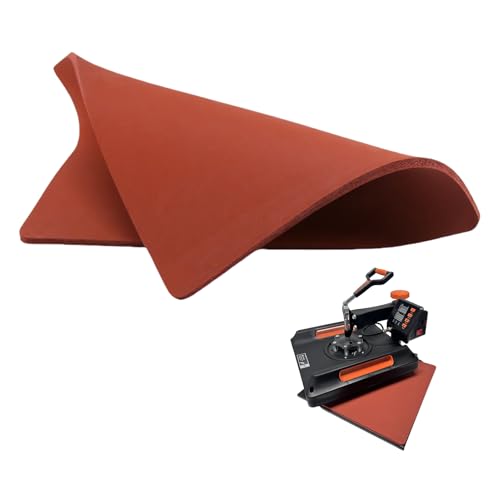
Although not Nomex-based, the Silicone Heat Press Mat from LGIB complements Nomex pads by offering even heat distribution, high temperature resistance up to 572°F (300°C), and a non-toxic, fireproof construction. It is designed to protect substrates and press platens while delivering consistent pressure across the surface. This mat is particularly useful for sublimation and HTV projects on textiles, cups, and other curved or detail-heavy items where edge contact can be uneven.
Benefits include a flexible, rollable design for easy storage and the ability to cut to size with scissors for customized projects. A non-porous surface helps prevent ink bleed-through, contributing to crisper images. While it works well with various substrates, it should be used in conjunction with padding materials (like Nomex pads) to ensure uniform force and to minimize shifting during press cycles.
Consider this mat when you need a versatile, reusable surface that can withstand high temperatures and maintain integrity under repeated use, especially in busy production settings.
Buying Guide: Key Purchase Considerations
- Temperature tolerance: Nomex pads generally endure up to 400° F, suitable for common sublimation settings. If you work with higher temps or longer dwell times, verify maximum ratings and substrate compatibility.
- Surface conformity: Beveled edges and irregular surfaces benefit from cushioned, well-damped pads. Look for pads with uniform thickness and dense felt to ensure consistent contact without creating air pockets.
- Size and coverage: Choose pad sizes that match your typical projects. Larger pads reduce the need to reposition substrates, while smaller pads excel at detail work.
- Substrate compatibility: Nomex pads are effective on ceramic tiles, glass boards, ornaments, and similar items. For textiles and cups, pair with silicone mats or backing to maintain flat contact.
- Durability and reuse: Felt and Nomex composites should resist compression over multiple cycles. Check customer reviews or product life expectations for guidance on longevity.
- Accessory ecosystem: A silicone heat press mat can complement Nomex pads by promoting even heat and protecting press surfaces. Consider a holistic kit for consistent results.
- Safety and maintenance: Ensure good ventilation and follow press manufacturer guidance. Clean or replace pads when they show visible wear or loss of cushion integrity.
- Value vs. performance: Compare sizes, temperature tolerance, and build quality. A larger pad with high heat resistance may offer better long-term value for higher-volume operations.
The selections highlighted here provide a balanced view of Nomex sublimation pads and compatible heat-press accessories. For projects involving beveled edges, irregular shapes, and multi-substrate items, these pads can help achieve even color transfer while protecting the substrate. When evaluating options, consider project size, substrate variety, and your preferred press workflow to choose the right combination of Nomex pads and supporting mats for reliable, repeatable results.
Leave a Reply