Best Non Woven Fusible Interlining for Quick, Clean Sewing Projects
Discover top non woven fusible interlining options that deliver stability, shape retention, and clean finishes for garments, crafts, and quilting. This guide highlights five reliable choices, all designed to bond with heat and provide steady support without adding bulk. Use the summary table below to compare core specs at a glance, then explore detailed product sections to see how each option fits common sewing needs, from lightweight garments to quilting projects.
| Product | Width / Size | Fusible? | Highlights |
|---|---|---|---|
| Quilax 20 Sheet Medium Weight Interfacing | 11.8″ × 7.9″ sheets | Yes | Reliable bond, medium weight, versatile for hems and appliqué |
| Bruislard Interfacing Fabric for Sewing | 59″ × 79″ roll | Yes | Double-sided fusible, large sheet for DIY projects |
| Bias Bespoke Light Black Non-Woven Fusible Interlining | 40″ wide | Yes | Black, fusible for dark fabrics, stable bonding |
| Bias Bespoke White Non-Woven Fusible Interlining | 40″ wide | Yes | White, reliable adhesion, smooth finish |
| YLM1991 Light Weight Iron-On Fusible Interfacing | 39″ × 78″ (approx.) | Yes | One-sided fusible, lightweight, easy to trim |
Quilax 20 Sheet Medium Weight Interfacing

Quilax’s medium-weight non-woven fusible interlining provides a dependable stabilizing layer for a range of sewing tasks. The 11.8×7.9 inch sheets are color-neutral and easy to bond with heat. It supports hems, appliqué, and fabric reinforcement without adding bulk, making it suitable for garments and craft projects. The white non-woven fabric is designed to deliver durable adhesion while staying comfortable to work with.
Bruislard Interfacing Fabric For Sewing
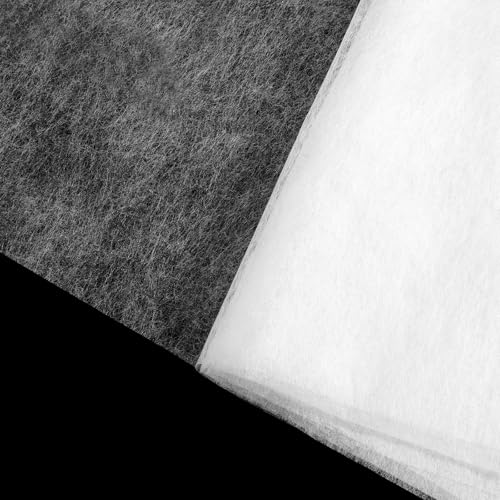
This 59×79 inch white iron-on fusible web provides a strong bond across fabrics with double-sided adhesion. Designed for appliqué, hems, and general fabric reinforcement, it reduces the need for stitching where a firm hold is required. The fusible web is suitable for durable crafts and home sewing projects, offering a clean, concealed finish on the reverse side after bonding.
Bias Bespoke White Non-Woven Fusible Interlining

Bias Bespoke’s white fusible interlining is crafted from a non-woven base designed for clean bonding and stable structure. Its 40-inch width makes it convenient for garment linings, crafts, and home décor projects that require precise stabilization. The white finish helps maintain a crisp look on light fabrics and hems that demand a smooth surface.
Bias Bespoke Black Non-Woven Fusible Interlining

The black version of Bias Bespoke’s fusible interlining offers a discrete, stable bond for dark or black fabrics. It minimizes show-through and helps maintain a clean silhouette in outerwear, dresses, and crafts where a subtle, solid foundation is beneficial. Ideal for projects that require a dependable heat-activated bond without bulky layers.
YLM1991 Light Weight Iron-On Fusible Interfacing

YLM1991’s lightweight iron-on fusible interfacing provides a simple, one-sided bonding option. Sized at 39 inches by roughly 78 inches, it is ideal for quick applications on garments, crafts, and home décor fabrics. The item is designed to melt and fuse at typical iron temperatures, enabling strong adhesion with minimal thickness for a clean finish.
Buying Guide
Non woven fusible interlining choices vary by weight, width, and bonding method. Consider these key factors when selecting an interfacing:
- Bond strength vs. bulk: Fusible interlinings add support without excessive stiffness. Choose medium to lightweight options for apparel; heavier weights suit structured items like collars or cuffs.
- Fusible vs. non-woven base: For crisp edges and less stretch, prefer fusible interlinings. Non-woven bases offer breathability and comfort in softer fabrics.
- Fabric compatibility: Check compatibility with delicate silks, knits, or heavy denim. Test a small swatch to confirm adhesion and finish on your chosen fabric.
- Width and length: Wider rolls are economical for large projects; smaller sheets suit patchwork, appliqué, and quilting tasks.
- Application method: Heat-activated bonding usually requires a pressing cloth and set temperature. Follow manufacturer guidelines to avoid scorching or adhesive bleed-through.
- Durability and care: Some interlinings withstand washing and ironing better than others. Match care instructions to your project’s needs (garments vs. home décor).
Across these options, users benefit from a mix of white and black finishes, varying sheet sizes, and both iron-on and sew-in capabilities. For best results, run tests on scraps before applying to final projects. Consider project goals—garment linings, quilting stabilizers, or craft embellishments—when weighing weight, width, and bond strength.
Leave a Reply