Best Paper for Oil Painting: Top Pads for Artists
Choosing the right paper for oil painting can influence how colors blend, how layers dry, and how durable a finished piece feels. The following selections prioritize heavyweight, acid-free papers with canvas-like textures or true canvas substitutes that support oils and oil pastels. Each option is suited for beginners exploring oils and for professionals seeking reliable surfaces for experiments, practice, and final works. The list features a range of formats, weights, and textures to help you compare and select the best paper for your technique.
Summary table of selected products:
| Product | Brand | Surface/Weight | Sheets | Format |
|---|---|---|---|---|
| Canson XL Series Oil and Acrylic Paper | Canson | 136 lb / 290 gsm, bleed-proof | 24 | Foldover Pad, 9×12 |
| Strathmore 400 Series Oil Painting Pad | Strathmore | 215 lb / 350 gsm, linen texture | 10 | Pad, 9×12 |
| Arches Oil Pad | Arches | 140 lb / 300 gsm, 100% cotton | 12 | Pad, 12×16 |
| Arches Huile Oil Pad | Arches | 140 lb / 300 gsm, 100% cotton | 12 | Pad, 9×12 |
| U.S. Art Supply 9×12 Premium Heavy-Weight Pad | U.S. Art Supply | 90 lb / 190 gsm | 30 (2 pads) | Pad, 9×12 |
The following sections provide concise details on each option, focusing on attributes that influence oil painting results, such as surface texture, weight, and suitability for multiple layers. Each entry keeps to a practical, objective tone with considerations for different painting styles and experience levels.
Canson XL Series Oil and Acrylic Paper

The Canson XL Oil and Acrylic Paper is a bleed-proof, canvas-like textured surface ready for oil or acrylic without priming. Each 9×12 pad holds 24 sheets of 136 lb/290 gsm acid-free paper, providing a sturdy base that can handle multiple passes with brushes or palette knives. The texture helps pigment grip and can facilitate blending while resisting grease marks and haloing that sometimes occur with lower-weight papers. This option suits students and adults who want a ready-to-use surface without the extra prep work of priming or gessoing.
Key considerations:
- Strong, bleed-proof surface reduces pigment seepage to the other side for cleaner practice pieces.
- High weight supports thin glazes, washes, and dry brush techniques without excessive buckling.
- Ideal for practice sketches, studies, and color tests that may later be transferred to a different support.
Strathmore 400 Series Oil Painting Pad

Strathmore’s 400 Series Oil Painting Pad uses a linen-textured surface designed to mimic canvas. The pad is lightweight yet capable of holding multiple layers of oil paints or oil pastels. With 215 lb (350 gsm) weight, it provides a substantial feel without the bulk of a stretched canvas. It’s intended for the creation of final pieces and blends well with thin washes and textured strokes, offering a tactile experience similar to working on canvas. This makes it a versatile choice for more deliberate, studio-based work.
Key considerations:
- Textured linen surface helps with pigment adherence and brush control.
- High weight reduces warping and allows for extended drying times without tearing the sheet.
- Well-suited for artists who want a canvas-like feel in a portable pad format.
Arches Oil Pad

Arches Oil Pad is a premium option featuring 100% cotton paper with a 140 lb (300 gsm) weight. The long cotton fibers lend timeless beauty and a refined touch, with a cylinder mold process ensuring uniform fiber distribution for scratch resistance and stable rendering. The 12×16-inch bound pad is praised for its durability and suitability for thin washes as well as thick impasto techniques. It’s designed for both indoors and out and supports a wide range of oil painting methods, from glazing to texture-rich applications.
Key considerations:
- Premium cotton surface with excellent texture and color retention.
- Strong resistance to buckling and greasy rings, enabling multiple layers.
- Versatile for different oil techniques, including impasto and glazing.
Arches Huile Oil Pad

Arches Huile Oil Pad uses the same 100% cotton foundation as the standard Arches Oil Pad, but is specifically marketed for oil paints. The 140 lb (300 gsm) weight and long-fiber cotton deliver a subtle surface with good bite, ideal for multiple layers and nuanced color transitions. This pad supports a wide range of techniques, from delicate glazes to bolder strokes, and remains durable under repeated rework. Its portability makes it suitable for plein air studies or studio practice where a robust, canvas-like surface is desired.
Key considerations:
- Excellent surface stability for layering and blending oil paints.
- Portable pad format with strong fiber structure for long color development sessions.
- 100% cotton provides consistent response to brushwork and palette knife marks.
U.S. Art Supply 9×12 Premium Heavy-Weight Pad
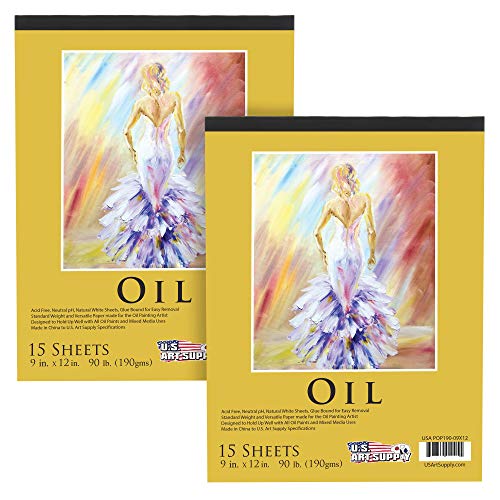
This two-pad value pack offers a total of 30 sheets of heavy-weight 90 lb (190 gsm) paper, designed for oil paint and acrylics. It provides a versatile texture suitable for both oil pastels and wet media. Its mid-weight profile makes it a practical choice for beginners learning brushwork, color mixing, and layering while maintaining a manageable surface that won’t overwhelm new artists with weight. The pad format is well-suited for practice pages, color tests, and ideas that you might transfer later to more durable surfaces.
Key considerations:
- Value pack provides ample sheets for ongoing practice and experimentation.
- Balanced weight supports a range of techniques without excessive buckling.
- Suitable for mixed-media experiments alongside oil techniques.
Buying Guide: Key Purchase Considerations for Oil Painting Paper
- Weight and texture: Heavier papers (200+ gsm) with canvas-like textures typically handle oil media better, resisting bleed-through and warping. Lighter papers can work for studies and initial sketches but may buckle with heavy oil layers.
- Cotton content: 100% cotton provides superior hold, tooth, and archival stability. Papers labeled as “oil” or “huile” are often formulated specifically for oil paints, offering better compatibility and fewer priming requirements.
- Surface texture: Linen textures mimic canvas and help with brush grip and blending. Smooth surfaces can be useful for fine detail, but oils may sit on top rather than absorb evenly, depending on the finish.
- Architectural considerations: Pads vs. bound sheets—pads are convenient for on-the-go practice, while bound pads keep sheets organized and flat for longer sessions or studio use.
- Compatibility with techniques: Consider whether the surface supports thin glazes, impasto, or oil pastels, and whether you plan to mount or frame works created on paper.
- Durability and archival quality: Acid-free, high-quality papers avoid yellowing over time and maintain color integrity, which is crucial for finished pieces intended for display or sale.
- Value vs. performance: For beginners, value packs offer affordability for exploration; for serious practice, investing in a premium pad may yield more consistent results and satisfaction with color response and layering.
- Practical considerations: Availability, size variety, and portability matter for studio setups, classroom use, or plein-air sessions. Choose formats that align with your typical workspace and travel needs.
Leave a Reply