Best Pattern Boards for Sewing: Top Cutting Mats and Guides
Sewing pattern boards, cutting mats, and related accessories help machinists and hobbyists achieve precise, repeatable cuts. This guide highlights five essential pattern boards and mats that work across fabrics, leather, scrapbooking, and quilting. Each pick offers self-healing surfaces, clear measurement grids, and portable designs to fit different workspaces. Readers will find options ranging from large, studio-ready mats to compact, on-the-go cutting surfaces, plus a classic pattern reference that expands project possibilities.
Summary of Selected Products
| Product | Brand | Size/Type | Key Feature |
|---|---|---|---|
| Anezus Self Healing Sewing Mat, 12×18 inches | Anezus | 12 x 18 inches (A3) | 5-layer PVC self-healing surface; compatible with rotary cutters |
| Fiskars Self Healing Cutting Mat, 24×36 inches | Fiskars | 24 x 36 inches | Double-sided self-healing surface; clear grid and bias lines |
| The Pattern Making Primer: All You Need to Know About Designing, Adapting, and Customizing Sewing Patterns | Sourcebooks, Inc. | Reference book | Design and customization guidance for sewing patterns |
| Teenyyou 24″ x 36″ Self Healing Folding Cutting Mat | Teenyyou | 24 x 36 inches (folding) | Folding, portable cutting mat with grid |
| McCall’s Patterns M6051 Apron and Accessory Pattern | McCall’s | Pattern envelope | Includes pattern pieces and sewing instructions |
Anezus Self Healing Sewing Mat, 12×18

The 12 x 18 inch Anezus Self Healing Sewing Mat provides a compact, portable cutting surface suitable for mid-sized sewing projects. Its five-layer PVC construction includes a central white core to prevent deep cuts, helping preserve rotary blades and straight blades alike. The mat’s self-healing surface reseals minor cuts, maintaining a smooth workspace for ongoing tasks such as fabric cutting, scrapbooking, and light crafting. This mat is ideal for crafters who need a reliable on-table cutting surface without occupying excessive studio space.
Key features include compatibility with rotary cutters and straight blades, blade preservation benefits, and a durable A3-sized work area. Users can rely on the mat for quilting, garment construction, or classroom crafting sessions where a stable cutting plane is essential. While not as expansive as the larger studio mats, its portability supports mobile sewing stations, sewing clubs, and small home workspaces.
Fiskars Self Healing Cutting Mat, 24×36

The Fiskars 24×36 inch cutting mat combines a large, workhorse surface with a double-sided, self-healing finish designed for heavy use in quilting rooms, classrooms, or home studios. Its generous dimensions support full-width fabric cutting, long strips, and multiple pattern layouts. The mat includes clearly printed grids, plus bias lines at 30, 45, and 60 degrees to assist precise angle cuts. This mat excels in projects requiring long straight lines and accurate seam allowances, such as garment sewing, home decor items, and theater costume work.
Users benefit from a durable cutting surface that resists gouges and a grid system that minimizes measurement errors. The large size makes it well-suited for multi-pattern layouts, while the self-healing property reduces blade chatter and prolongs the mat’s lifespan. For serious sewists or educators hosting sewing labs, this mat offers a reliable core tool that improves efficiency and consistency in pattern layout and fabric preparation.
Teenyyou 24×36 Self Healing Folding Cutting Mat
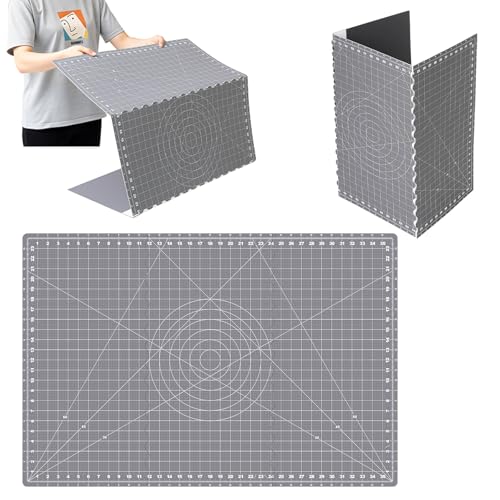
The Teenyyou 24×36 inch folding cutting mat offers portability without sacrificing cutting surface. Its folding design makes it easy to store in smaller workspaces while still providing a full 24×36 inch cutting area when opened. The self-healing surface maintains durability through repeated use, and the included grid lines guide straight cuts and angular measurements. This mat suits quilters, garment makers, scrapbookers, and students who need a large cutting area that can be folded for transport or storage between projects.
Beyond fabric cutting, the mat supports leatherwork, craft hobbies, and classroom activities. Its versatility helps consolidate tools into one surface, reducing the need for multiple mats. The folding mechanism should be handled with care to maintain the surface integrity over time, but it provides a practical balance of size and portability for hobbyists and professionals alike.
McCall’s Patterns M6051 Apron And Accessory Pattern

McCall’s Patterns M6051 delivers a complete, all-in-one sewing project set with patterns, instructions, and the specific pieces to assemble an apron plus related accessories. This product aligns with pattern board users who want to apply measurements, layout guidance, and step-by-step assembly to a practical sewing project. While it isn’t a cutting mat, its inclusion complements the broader pattern-board ecosystem by providing ready-to-sew templates and comprehensive guidance for garment and accessory construction.
Pattern sheets come with sizing options and clear instructions, which helps sewers of various skill levels understand how patterns translate into fabric pieces. The package includes the necessary guidance for fabric selection, cutting, and assembly, offering a reliable source for learning and applying sewing construction techniques. For beginners, this pattern set presents a straightforward way to practice pattern translation from paper to fabric.
Buying Guide: Pattern Boards And Related Tools For Sewing
When selecting pattern boards, cutting mats, and related sewing aids, consider the following perspectives to optimize your setup and workflow.
- Work surface size: Larger mats offer more layout flexibility for big projects like quilts and full-width fabric cuts, while smaller mats fit compact studios or mobile setups. Choose based on your typical project scale and workspace.
- Self-healing quality: A durable self-healing surface reduces blade wear and preserves smooth cutting areas over time. Look for mats with multiple layers and a clear core or reinforcement to maximize longevity.
- Measurement grids and guidelines: Clear, high-contrast grids, bias lines, and angle guides (30°, 45°, 60°) improve accuracy for pattern placement and seam allowances. Ensure lines are durable and resistant to fading with use.
- Portability vs. stability: Folding or portable mats offer easy storage and transport but may require careful handling to preserve surface integrity. Fixed mats provide stability for large, repeated cuts but demand more space.
- Material compatibility: Confirm mat compatibility with rotary cutters, straight blades, and other tools you regularly use. Some mats are optimized for specific blades or thicknesses.
- Pattern resources: In addition to mats, reference pattern books and pattern sheets can guide layout and garment construction, especially for beginners or learners expanding into new techniques.
- Storage considerations: When space is limited, prioritize mats with folding features or integrated storage options for tools and accessories to maintain an organized workspace.
- Durability and cleanup: Look for mats that resist staining and are easy to clean. Some surfaces reseal after cuts, reducing the need for frequent replacement.
Overall, the best choice depends on your typical project size, space, and whether you value portability or maximum cutting area. A combination of a large studio mat for major projects and a compact or portable mat for on-the-go tasks often provides a balanced sewing toolkit. Pattern reference guides complement mats by providing structured instructions, improving the efficiency of translating patterns into finished garments or crafts.
Leave a Reply