Best Plastic Glue Epoxy Solutions for Strong, Quick Repairs
When you need a durable, fast-setting bond for plastics, epoxy and plastic glue options are essential. This guide highlights five top acrylic-epoxy products that deliver strong adhesion for thermoplastics, coated metals, and composites. Best for DIY repairs, auto body fixes, and hobby projects, these selections balance speed, strength, and usability. Read on to see which product fits your material, curing needs, and bond strength expectations. Below, a quick summary table helps compare core details at a glance.
| Product | Best For | Key Strength | Typical Set Time |
|---|---|---|---|
| J-B Weld 50139 Plastic Bonder | Rigid plastics, bumper repairs | 3770 PSI | 15 minutes |
| Gorilla 2 Part Epoxy | Household & automotive repairs | Very strong | 5 minutes |
| J-B Weld 50133 Plastic Bonder (Tan) | Plastic repairs & dents | 3770 PSI | 15 minutes |
| J-B Weld 50132 PlasticWeld | Plastic & PVC bonds | 3900 PSI | 5 minutes |
| J-B Weld 50112 ClearWeld | Clear, visible repairs | 3900 PSI | 5 minutes |
J-B Weld 50139 Plastic Bonder Body Panel Adhesive and Gap Filler Syringe
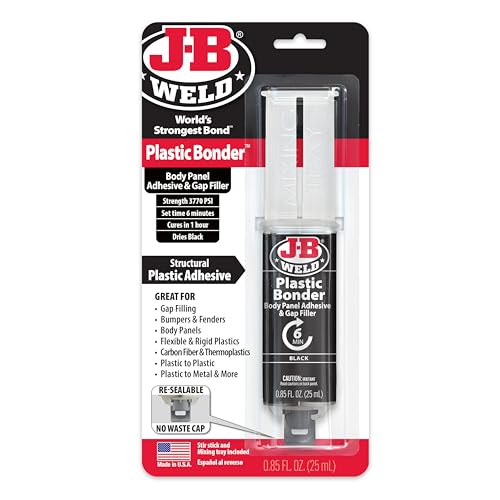
Best for: DIY plastic repairs, bumper fixes, and gap filling on thermoplastics and coated metals. This two-part urethane adhesive system offers a 1:1 mix, sets in 15 minutes, and cures to a tough, sandable bond with a tensile strength around 3770 PSI. The syringe format minimizes mess and supports precise application. A solid choice for projects demanding a fast return to service and a durable, permanent bond.
Why chosen: Its quick setup, strong bond, and versatile plastic compatibility make it a reliable workhorse for automotive and home repairs. The 25 ml syringe provides convenient, repeatable use across multiple repairs. Cautions: Work in a well-ventilated area; avoid skin contact and follow safety data sheet guidelines for curing times and sanding after full cure.
Gorilla 2 Part Epoxy, Clear Epoxy
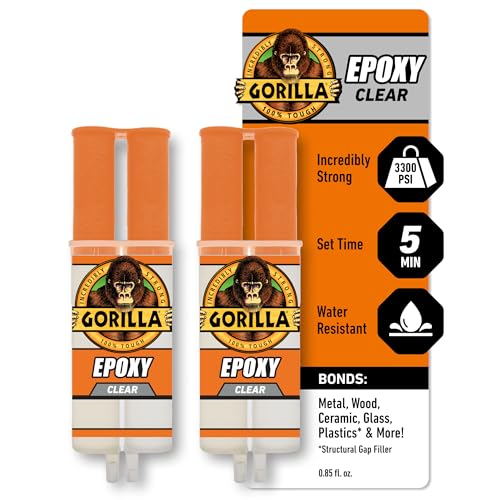
Best for: Household and automotive repairs that require a transparent finish. This 0.85 ounce syringe set cures to a clear, durable bond and provides a 5-minute set time, allowing for quick repositioning. It also serves as a gap filler for uneven or vertical surfaces, increasing versatility on complex projects.
Why chosen: It balances speed and clarity, producing a clean appearance on repairs where visible adhesive edges are undesirable. Caution: While fast-setting, it may require clamps or support to maintain alignment during curing, especially on vertical applications.
J-B Weld 50133 Plastic Bonder Structural Adhesive Syringe
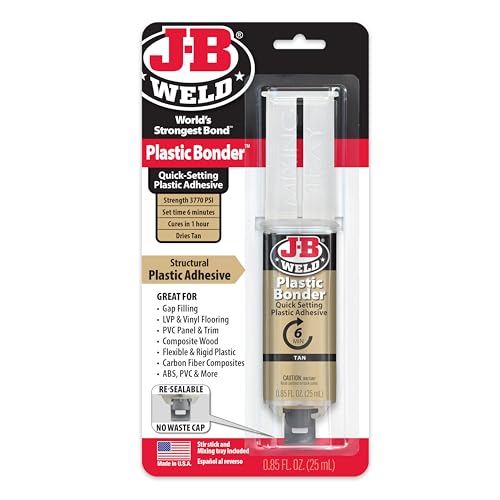
Best for: Medium-strength plastic repairs, dents, and bumper fixes where a tan bond is preferable for disguise or aesthetic blending. The 1:1 syringe facilitates handling, with a cure time around 30 hours for full strength. It delivers a strong, lasting bond with a tensile strength around 3770 PSI.
Why chosen: The resealable syringe helps prevent drying out between uses, making it practical for multiple repairs. Caution: The tan color may require color matching or paint over for cosmetic work; plan for finish steps if visiblebonding surfaces are part of the project.
J-B Weld 50132 PlasticWeld Quick-Setting Epoxy Syringe
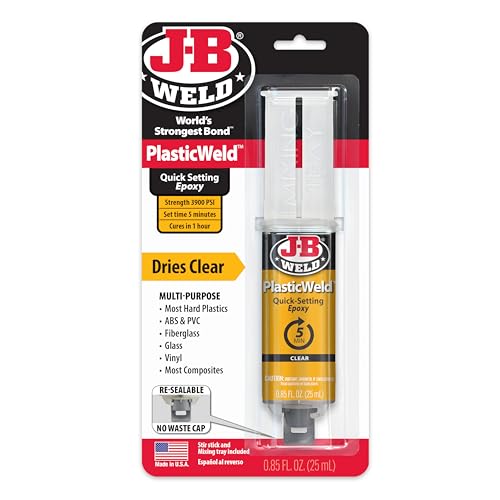
Best for: Quick repairs on a range of plastics, including ABS, PVC, fiberglass, and vinyl. This syringe-based epoxy sets in 5 minutes and cures in about 1 hour, delivering a strong bond with a typical tensile strength around 3900 PSI. It is suited for projects requiring a fast fix with reliable strength.
Why chosen: The fast-set capability suits time-sensitive repairs and adjustments. Caution: For deeper gaps, consider surface prep and clamping to minimize voids and maximize contact during cure.
J-B Weld 50112 ClearWeld 5 Minute Set Epoxy Syringe

Best for: Clear repairs on metal, tile, most plastics, glass, and ceramic where a transparent bond is preferred. With a 5-minute set and 1-hour cure, ClearWeld provides a nearly invisible finish and a tensile strength around 3900 PSI.
Why chosen: The clear epoxy is ideal for visible seams or decorative pieces where color-matched glue is important. Caution: While clear, surface imperfections can still show unless surfaces are well-prepped and aligned before curing.
Buying Guide
What to consider when choosing plastic epoxy glue
- Material compatibility: Confirm plastics like ABS, PVC, and polyolefins, plus metals or composites, are listed as bonding surfaces.
- Set time vs. cure time: Quick-set formulas help with repositioning, while longer cure times may improve final strength. Decide which matters most for your project.
- Bond strength: Look for tensile strength numbers (PSI) to estimate how much load the bond can handle.
- Finish and appearance: Clear or tan colors affect aesthetics; clear epoxies are preferred for visible seams.
- Application format: Syringes enable precise, 1:1 mixing and repeatable use; consider if cap seals aid reuse.
- Gap filling: Some products double as gap fillers, useful for uneven surfaces or large joints.
- Safety: Work in a ventilated area, use gloves, and follow curing recommendations to avoid skin or respiratory irritation.
FAQ
- What is the best epoxy for plastic repairs?
- How quickly does plastic epoxy set?
- Can epoxy be used on automotive plastics?
- Should I sand epoxy after it cures?
- Is a clear epoxy better for visible repairs?
- Do epoxy bonds last under heat or moisture?
Answer key points: For fast, visible repairs on plastic, Quick-Setting Epoxies like PlasticWeld or ClearWeld are advantageous. Many epoxies set in 5 minutes and cure within an hour, but full strength may take longer. Automotive plastics benefit from high-strength formulations (3770–3900 PSI). Always prep surfaces, mix accurately, and use clamping or support as needed. Clear epoxies reduce visibility, while tan or colored variants blend better with certain plastics.
Leave a Reply