Best Polymer Clay Machine Options for Crafters and Jewelry Makers
If you’re looking to streamline clay blending, rolling, and texturing, a polymer clay machine can save time and improve consistency. This guide highlights top machines that suit different makers—from beginners to seasoned crafters—so you can pick the best fit for your projects. The featured picks cover manual rollers, dual-mode machines, and reinforced stainless-steel designs for durable DIY work. The buyer-intent table below helps compare key options at a glance.
Summary of chosen products
| Product | Best For | Notes |
|---|---|---|
| Makin’s Professional Ultimate Clay Machine | Beginner to intermediate, color blending | Wide clay path with multiple thickness settings |
| Yofuly Polymer Clay Machine Set | All-in-one kit, varied shapes | Cutters, press, extruder, and accessories |
| Foifatt Polymer Clay Press Machine | Budget-friendly rolling and mixing | 6 thickness options, stainless steel |
| WECLAYER Clay Press Machine | Versatile thickness control | 7 settings, includes clamp and hand crank |
| Zorvexis Electric Polymer Clay Roller | Large batches, hands-free rolling | Dual modes, 16 thickness settings |
Makin’s Professional Ultimate Clay Machine
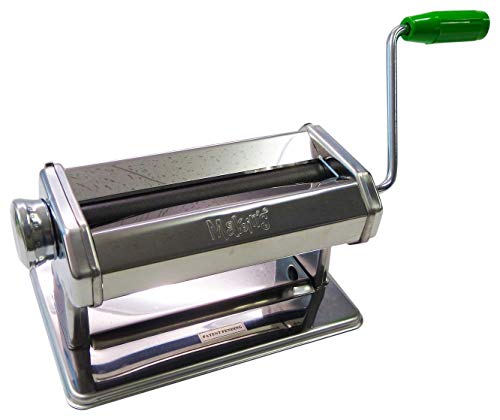
The Makin’s Professional Ultimate Clay Machine from Loew-Cornell is designed for effortless mixing and blending of colors. It features a wide clay path and nine thickness settings, making it suitable for artists who need consistent sheets and smooth textures. Best for crafters who work with multiple color blends and require steady output across sessions.
Best for: Beginners upgrading from a basic rolling pin or hobbyists who value ease of use and reliable texture control. Why selected: this model’s durable construction and wide clay path help maintain uniform color when combining shades.
Caution: Some users may find the device bulkier on small work surfaces; ensure you have adequate bench space for clamping and operation.
Yofuly Polymer Clay Machine Set

The Yofuly set is a comprehensive kit that includes a press, roller, extruder, 40 circle cutters, and 120 earring accessories. It combines a stainless steel clay cutter set with a clamp-fixed rolling and pressing system. This option suits makers who want an all-in-one solution to cut shapes, extrude ribbons, and roll uniform sheets in one workflow.
Best for: Makers who prefer an expansive accessory range to support jewelry and decor projects. Why selected: the inclusion of cutters and an extruder increases versatility beyond simple rolling and flattening.
Limitations: The extensive accessory set may require more storage space and organization to keep everything easily accessible.
Foifatt Polymer Clay Press Machine

The Foifatt clay press combines folding and flattening with color mixing capabilities. It offers six thickness settings and is built from stainless steel to resist sticking and corrosion. This option is well-suited for crafters who want reliable sheet formation without resorting to a rolling pin, all at a reasonable price point.
Best for: Budget-conscious users who want a robust, multi-function press. Why selected: the design emphasizes uniform thickness and clean sheets, which helps reduce color drag between batches.
Caution: Assembly and knob adjustments require careful handling to avoid misalignment when changing thickness settings.
WECLAYER Polymer Clay Press Machine

The WECLAYER press provides seven precise thickness settings and includes a clamp for bench mounting. The stainless steel build resists scratches and makes cleaning easier, while smooth rollers help minimize color transfer between batches. It’s a strong choice for jewelry makers who require predictable thickness control across multiple projects.
Best for: Crafters who need reliable, repeatable thickness control for delicate pieces. Why selected: the seven thickness settings cover a broad range of project needs from petals to earring bases.
Limitation: As with many steel presses, users should dry and store the unit properly to prevent corrosion in humid environments.
Zorvexis Electric Polymer Clay Roller

The Zorvexis electric model offers two operation modes: manual and electric, with a powerful 60W motor for hands-free rolling on large batches. It features 16 adjustable thickness settings, spanning from ultra-thin for petals to thicker sheets for sturdy components. This option is ideal for high-efficiency studios and color-blending experiments.
Best for: Makers who frequently work with large batches or need hands-free operation for long sessions. Why selected: dual-mode operation and a wide thickness range maximize productivity and control.
Caution: Electric operation requires a power source and may add noise and heat during extended runs; consider workspace placement accordingly.
Buying Guide
What should I consider when choosing a polymer clay machine?
Material: Stainless steel builds resist corrosion and are easier to clean, but they can be heavier. Stability: A bench clamp helps prevent movement during use. Thickness range: More settings provide flexibility for delicate petals and thick earrings. Modes: Manual, electric, or dual-mode options affect control and batch size. Accessories: Some sets include extruders, cutters, and embossers, which add value for jewelry makers.
Manual vs. electric vs. dual-mode
Manual machines offer precise control and quiet operation for small batches. Electric machines speed up production and reduce repetitive motion, ideal for larger projects. Dual-mode devices combine both benefits for versatility in a single tool.
Which features improve color blending?
Wide clay paths and smooth rollers minimize color drag and ensure uniform mixing. Embossing tools and extruders help create texture and ribbons, enhancing design possibilities for jewelry and crafts.
Storage and maintenance considerations
Look for a machine with a stable base and a clamp to secure it when in use. Stainless steel surfaces are easier to wipe clean, and removable parts simplify cleaning between batches. Dry storage and occasional lubrication of moving parts help extend life.
Best practice tips
- Always secure the unit to a stable work surface before rolling or pressing.
- Wipe rollers after use to reduce color transfer between colors.
- Dial in thickness settings progressively to achieve consistent sheets.
Short FAQ
- What thickness setting is best for delicate petals? Answer: The thinnest settings, typically around 0.6 mm to 0.8 mm, are ideal for petals and fine details.
- Is an electric roller worth it for small projects? Answer: It can save time on larger batches but may be unnecessary for occasional, small-scale work.
- Do I need a clamp? Answer: A clamp stabilizes the machine on a desk, which helps maintain even pressure during use.
- Can I use any clay with these machines? Answer: Most polymer clays are compatible, but check softening temperatures and recommended uses for specialty brands.
- Will the machine affect color blending? Answer: Yes, machines with smooth rollers and wide paths help reduce color transfer and produce uniform sheets.
- Are replacement parts available? Answer: Replacement components vary by brand; consult the manufacturer or seller for availability.
Leave a Reply