Best Professional Sewing Machines for Home, Studio, and Craft Rooms
Looking for a reliable professional-grade sewing machine? This guide highlights five top options that balance power, versatility, and ease of use. The machines below are well-suited for thick fabrics, quilting, and complex projects, making them ideal for serious hobbyists, small studios, or crafters who value consistent results. Each product section explains who it’s best for, why it was chosen, and a practical limitation to consider. Use the buying guide at the end to compare features and decide which model fits your workflow.
| Product | Best For | Key Benefit |
|---|---|---|
| SINGER Heavy Duty 4411 | Heavy fabrics and fast projects | High power, 69 stitches, 1100 spm |
| Brother CS7000X | Quilting and light embroidery | 70 stitches, wide table, LCD display |
| SINGER Heavy Duty 4452 | Thick seams and multiple layers | 1100 spm, 110 stitch applications |
| Brother CS5055 | Beginner-to-intermediate with versatility | 60 stitches, user-friendly |
| SINGER Quantum Stylist 9960 | Quilting, decorative sewing, lettering | 600 stitches, comprehensive accessories |
SINGER Heavy Duty 4411: 50% More Power, 69 Stitches

The SINGER 4411 is built for tough fabrics with a heavier motor and a robust metal frame. It offers 69 stitch applications, covering basic seams through decorative stitches, making it suitable for home decor and fashion projects that demand durability. With a top speed of 1,100 stitches per minute, it supports quicker completion of dense tasks like denim seams or leather accents. This model is best for sewers who regularly work with heavy materials and need reliable, consistent results.
Best for: experienced hobbyists and small studios needing reliable performance on thick fabrics. Better for projects requiring speed and power. Caution: some advanced decorative stitches are basic compared to high-end embroidery-focused machines.
Brother XM2701: Lightweight Versatility

The XM2701 features 27 built-in stitches with decorative, blind hem, zigzag, and stretch options plus an auto-size buttonhole. An automatic needle threader and a jam-resistant drop-in top bobbin simplify setup and operation. It comes with six sewing feet and assorted accessories, making it a strong choice for beginners who want versatility in a lightweight package. However, it may be less ideal for heavy fabric work compared with dedicated heavy-duty models.
Best for: beginners or crafters who need portability and a broad stitch range. Choose this if you value ease of use and light to medium-weight projects. Caution: less suited for frequent heavy fabric sewing or high-volume quilting.
Brother CS7000X: Computerized Quilting Machine
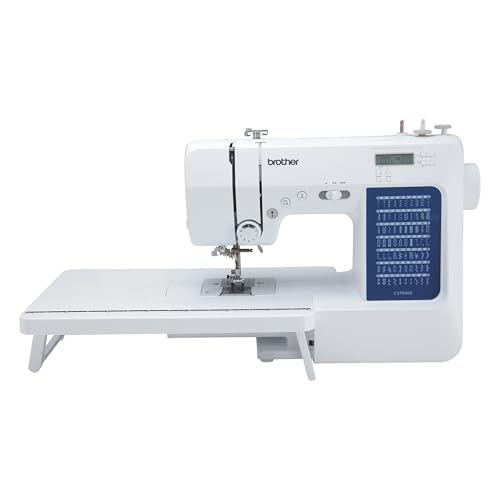
The CS7000X is designed for sewing and quilting with 70 built-in stitches and an LCD display for easy stitch selection. It includes a wide table and 10 feet for quilting, utility, and decorative application, plus a protective hard case. The improved needle threader and top drop-in bobbin help streamline setup. This model suits sewists who frequently combine general sewing with quilting and want a larger workspace and clear design interface.
Best for: quilters and craft enthusiasts who need a dedicated sewing-and-quilting experience with guided options. Caution: may feel complex for absolute beginners who only need basic stitching.
SINGER Heavy Duty 4423: 97 Stitch Applications

The 4423 combines a strong motor with 1,100 stitches per minute and 60% more piercing power. It offers 23 built-in stitches that unlock 97 stitch applications, enabling versatility across basic, decorative, and functional sewing. The automatic needle threader reduces setup strain, and the machine’s metal frame adds durability for frequent use. This model is well-suited for those who handle multiple layers and thick fabrics while needing dependable speed.
Best for: sewers who frequently switch between basic repairs and decorative projects on heavier material. Caution: fewer stitch options than some computerized models; consider a newer machine if you need extensive decorative features.
Brother CS5055: Solid Beginner-To-Intermediate Choice

The CS5055 provides 60 built-in stitches with a straightforward interface and 7 auto-size buttonholes. An improved needle threader and a drop-in top bobbin simplify setup, while the included accessories—feet, bobbins, and a user manual—support a broad range of projects. This machine balances ease of use with enough versatility for home decor, garment sewing, and crafts. It’s a practical choice for users who want reliable results without a steep learning curve.
Best for: hobbyists advancing from basic machines who want reliable performance with a wide stitch library. Caution: not the top choice for heavy embroidery or long-arm quilting tasks.
SINGER Quantum Stylist 9960: Advanced Stitch Library

The Quantum Stylist 9960 offers 600 built-in stitches and 1,172 stitch applications, including mirror imaging and stitch elongation for creative design work. It ships with a large extension table, hard case, and a broad set of presser feet, supporting quilting, lettering, and intricate decorative sewing. This model is best for dedicated hobbyists or small studios that need extensive design flexibility and professional finishing options.
Best for: quilters and designers who want broad stitch variety and advanced features. Caution: feature-rich machines can have a steeper learning curve for absolute beginners.
Buying Guide: How To Choose The Right Professional Sewing Machine
- What tasks will you perform most? If you regularly sew thick fabrics, prioritize models with strong motors and stable frames (like the 4411 or 4423).
- How important is quilting or embroidery? For quilting, a larger work surface (CS7000X) and more stitch options (Quantum Stylist 9960) can help.
- Do you need automation or a simple interface? Computerized machines offer many stitches and features, but a mechanical or semi-computerized model can be quicker to learn.
- Is portability a factor? Lightweight models (like XM2701) are easier to move but may sacrifice heavy-duty performance.
- What accessories matter? Look for included feet, buttonholes, needles, and extension tables that support your typical projects.
- Budget and upgrade path? If you plan to grow into more complex projects, consider a machine with a wide stitch library and robust build.
Frequently Asked Questions
- What is the difference between a heavy-duty and standard sewing machine? Heavy-duty models often have stronger motors and metal frames to handle thick fabrics and long sessions, improving durability and speed.
- Should I buy a machine with many decorative stitches? If you value versatility for fashion and home decor, yes, but ensure you can navigate the interface comfortably.
- Is a wide table important for quilting? Yes; a wide table provides more support for large quilt tops and even feeding of fabric.
- Do I need embroidery features? Embroidery adds design options but requires software and patience to learn. A separate embroidery-capable unit increases upfront cost.
- Are automatic needle threaders necessary? They reduce setup strain and are beneficial for frequent users or those who sew for long sessions.
- Can these machines handle leather or denim? Models with higher torque and sturdy frames—like the 4411 or 4423—are better suited for thick fabrics.
Leave a Reply