Best Professional Sewing Scissors for Precise, Durable Fabric Cutting
Answering the need for durable, precise cutting tools, these professional sewing scissors are built to handle heavy fabrics, multiple layers, and long crafting sessions. The top picks below are best for dressmakers, tailors, and crafters seeking high carbon steel, ergonomic grips, and long-lasting sharpness. The best buyer is a seamer who routinely works with denim, leather, or multiple fabric layers and wants reliable edge retention. See the quick reference table and then detailed sections to compare strengths, ideal uses, and cautions for each model.
| Product | Brand | Best For |
|---|---|---|
| Fabric Scissors Professional 10 Inch Heavy Duty | Proshear | General tailoring, multiple fabric layers |
| Fiskars RazorEdge Fabric Scissors, 8” | Fiskars | Smooth cuts, versatile fabrics |
| LIVINGO Premium Tailor Scissors | LIVINGO | Heavy-duty, long sessions, varied tasks |
| PRO-MASTER 9 Inch Sewing Scissors | PRO-MASTER SMART & SIMPLE | Advanced cutting, leather, denim |
| Gingher 8″ Dressmaker’s Scissors | Gingher | Professional dressmaking, long cuts |
Proshear 10 Inch Heavy Duty Fabric Scissors

Best for: professional seamstresses who cut multiple fabric layers and require strong edge retention. These high carbon steel scissors are noted for ultra sharpness and long-lasting cuts. The blade head uses a chamfering process to prevent cloth scratching and a bent handle to keep materials flat during top-down cuts. Caution: heavier weight may be less comfortable for very long, fine-detail work.
Fiskars RazorEdge Fabric Scissors, 8”

Best for: crafters who value a smooth cutting action and ergonomic control. These blades are premium stainless steel with a honing edge, providing precise cuts to the tip. The pivot design reduces resistance for steady performance. Caution: stainless blades may not hold an edge as long as certain carbon steel options under heavy use.
LIVINGO Premium Tailor Scissors
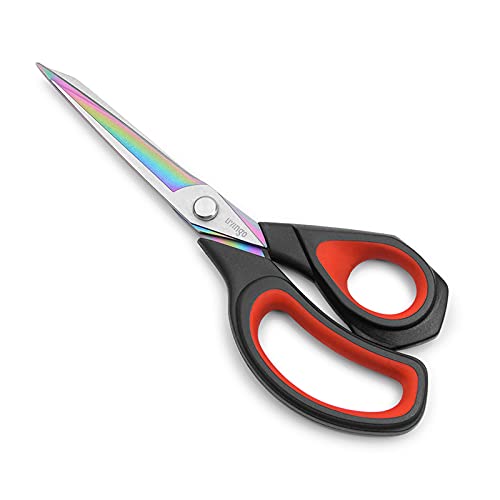
Best for: users needing heavy-duty versatility and rust resistance. These titanium-coated blades are forged stainless steel, three times harder than average stainless steel, and suitable for cutting more than 16 layers of fabric. They resist adhesives like glue and tape, which is helpful in mixed-media projects. Caution: titanium coating can wear with aggressive use on abrasive materials.
PRO-MASTER 9 Inch Sewing Scissors

Best for: professionals seeking industrial-grade sharpness across a range of materials, including leather. Forged high-carbon steel and precision-ground blades deliver clean cuts through multiple fabric layers. The ergonomic, rubberized handles reduce fatigue during long sessions. Caution: heavy use on delicate fabrics can dull blades faster if not resharpened regularly.
Gingher 8″ Dressmaker’s Scissors

Best for: dressmakers requiring long, clean cuts through patterns and multiple layers. The knife-edge, chrome-plated finish aids precision, and the bent handle helps keep fabric flat. Caution: higher price and precision-focused design may be less forgiving for casual or general-purpose cutting.
Snavida Fabric Scissors Tailor 9 Inch
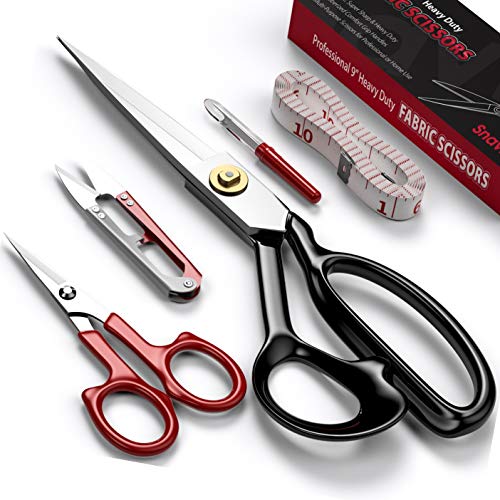
Best for: crafters needing premium steel with titanium coating and the ability to cut 32 layers of fabric. The ergonomic soft-grip handle is designed for comfort over long projects. Caution: titanium coating may wear with abrasive materials or improper sharpening.
Buying Guide
What materials will you cut most often? For leather and denim, choose high-carbon or forged blades with strong edge retention. For lightweight fabrics like chiffon or silk, a lighter model or finer edge may be preferable to avoid hand fatigue.
Blade material and edge: Carbon steel provides durability and sharpness; stainless steel resists corrosion but may dull quicker with heavy leather work. Look for blades ground on both sides for clean cuts.
Handle design: Ergonomic grips, rubberized handles, and bendable or offset handles help keep materials flat and reduce hand fatigue. Consider your left- or right-handed cutting style when selecting a model.
Maintenance: Sharpening may be required over time, especially with heavy fabrics. Wipe blades after use and avoid cutting non-fabric materials to preserve edge quality.
Usage scenarios: If you regularly switch between heavy fabric and precise embroidery, you may benefit from a set that includes both heavy-duty and detail-oriented scissors, like a bundle. If you primarily cut leather or denim, select models explicitly marketed for those tasks.
Frequently Asked Questions
- What makes a sewing scissor “professional”?
- Are carbon steel scissors better than stainless steel?
- How should I care for my fabric scissors?
- Can I use heavy-duty sewing scissors for all fabrics?
- What is a bent handle good for?
- Is a bundle of scissors worth it?
Professional scissors typically use high-carbon or forged steel, have precision-ground blades, and offer ergonomic handles designed for long cutting sessions.
Carbon steel blades generally hold a sharper edge longer and are easier to sharpen, but they can rust if not dried properly. Stainless steel resists rust but may require more frequent sharpening.
Keep blades dry after use, wipe away adhesive residues, and store in a dry place. Periodically sharpen or have them professionally sharpened for best performance.
Heavy-duty scissors cut most fabrics well, but for delicate fabrics, a lighter, precision model may yield better control and prevent fraying.
A bent handle keeps fabric flat on the cutting surface, improving accuracy and reducing fabric snagging during long cuts.
Yes, if you frequently switch tasks (cutting fabric, embroidery, detail work). Bundles provide specialized tools for different cutting needs.
Leave a Reply