Best Rated Serger Sewing Machines for Quick, Professional Edges
Discover top-rated serger sewing machines ideal for fast edge finishing, durable seams, and versatile threading options. This guide highlights machines suited for beginners upgrading from a basic machine and seasoned sewers tackling thicker fabrics. Read on to find out which model matches your projects, whether you mainly sew knits, denim, or lightweight fabrics. The table below summarizes five strong choices and who they’re best for.
| Product | Best For | Key Benefit |
|---|---|---|
| Brother 1034D | Beginners to intermediate, versatile home sewers | Heavy-duty metal frame, up to 1300 SPM |
| VEVOR 1250 SPM | Projects with stretchy fabrics | 3/4-thread flexibility, adjustable differential feed |
| SINGER X5004-HD | Durable, high-volume serging | Heavy-duty metal frame, 1300 SPM, LED lighting |
| SewLaVie 360 | Beginner-friendly with open threading | Wide-open threading area, 1300 SPM |
| SINGER S14-78 | Comprehensive starter kit with basic tools | 2/3/4 stitch capability, free arm |
Brother Serger 1034D: Durable Metal Frame, 3/4 Thread Capability

The Brother 1034D Serger offers a robust metal frame and interior components designed for long-term use. It can operate as a 3- or 4-thread serger with speeds up to 1,300 stitches per minute, helping you complete projects quickly. An underslung looper threader simplifies setup, and it comes with three accessory feet for different finishes. Best for sewers expanding into heavier fabrics like denim or multiple-layer projects. Caution: thread management on a busy project may require practice with the adjustable tensions.
VEVOR 1250 SPM Serger: 2/3/4-Thread Versatility

VEVOR’s serger provides flexible 2/3/4-thread options with adjustable stitch length and a differential feed of 0.7–2.0. It delivers up to 1,250 stitches per minute and includes a trim trap plus tool storage, keeping your workspace organized. This model is better for projects involving stretchy fabrics and edges that require a neat finish. Limitation: as a high-speed machine, it may require careful threading alignment to prevent mis-stitches.
SINGER X5004-HD: Heavy-Duty Metal Frame, 1300 SPM

The X5004-HD from SINGER uses a heavy-duty metal frame designed for durability and stability. It supports 2/3/4-thread stitches with up to 1,300 stitches per minute and features adjustable differential feeding for a range of fabrics. The built-in LED lights enhance visibility during edge finishing. Best for crafters and home sewers tackling frequent projects with thicker fabrics. Limitation: the included accessory set is practical, but extended heavy-use may benefit from additional feet for specialty finishes.
SewLaVie 360: Open Threading & 12 Stitches
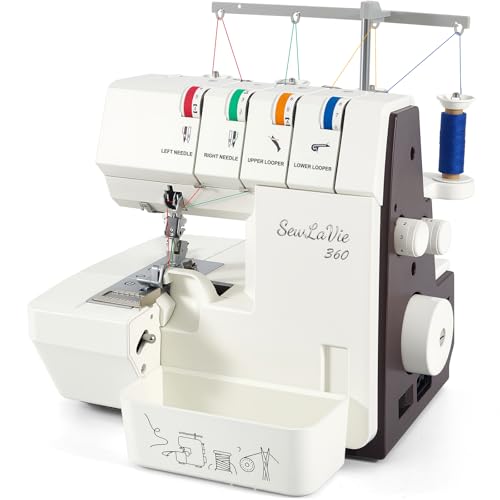
SewLaVie 360 emphasizes accessible open threading and a straightforward setup. It offers 2/3/4-thread capability with 1,300 stitches per minute and a differential feed for knit and woven fabrics. The wide threading area supports quick troubleshooting as you learn. Choose this if you want an approachable entry into serging with clear threading paths. Caution: some users may prefer more advanced features or a larger accessory kit for complex projects.
SINGER S14-78: Starter Kit With Free Arm

The SINGER S14-78 provides 2/3/4-thread stitching with a comfortable free arm to reach cuffs and sleeves. It includes essential accessories like tweezers, a needle set, and a screwdriver, making it a practical starter option. Best for new sergers who want a complete kit and straightforward threading. Limitation: while versatile, its bundled features may not satisfy users who need higher-end differential feed for complex fabrics.
Buying Guide: Key Purchase Considerations
- Thread capability: Decide whether you need 2, 3, or 4-thread options for your typical fabrics and finishes.
- Metal frame vs. plastic: Metal-framed machines generally offer greater durability and steady stitching on thick fabrics.
- Differential feed: Important for knit fabrics and preventing puckering; look for a model with adjustable differential feed.
- Speed: Higher stitches-per-minute speeds improve workflow on larger projects but may require practiced hands for control.
- Open threading and accessibility: Helpful for beginners; consider machines with intuitive threading paths and guides.
- Included accessories: A robust accessory kit, extra feet, and helpful tools save setup time.
- Footprint and noise: Ensure the machine fits your workspace and operates at a comfortable noise level.
Frequently Asked Questions
- What is a serger used for? A serger finishes fabric edges, prevents fraying, and can create rolled hems or decorative edges.
- Do I need a 4-thread serger? A 4-thread setup is best for strong seams on heavy fabrics, but 2- or 3-thread models handle many projects well.
- Is a metal frame worth it? Yes, for durability, less vibration, and steadier stitching on thick materials.
- What is differential feed? It adjusts fabric feed rate to minimize stretching or puckering, especially with knits.
- Should I buy an open-threading model for beginners? Open-threading models simplify setup and reduce threading errors for new users.
- Do sergers require special needles? Yes, use needles designed for sergers to achieve clean cuts and precise seams.
Leave a Reply