Best Recycled Paper Lunch Bags for Eco-Friendly Packing
Choosing recycled paper lunch bags helps reduce waste and support sustainable packaging. This guide highlights five top options, focusing on durability, recyclability, and versatile use—from school lunches to crafts and small businesses. Each product review includes practical features to help you pick bags that stand up to everyday packing while aligning with eco-friendly goals.
| Product | Brand | Notes |
|---|---|---|
| AJM Brown Paper Lunch Bags | AJM | 40-count; flat bottom; durable; good for everyday lunches |
| Stock Your Home Kraft Lunch Bags | Stock Your Home | 100-count; 4 lb capacity; stands upright; versatile for crafts |
| DURO Dubl Life Self-Opening Bags | DURO | 500-count; 60% post-consumer recycled kraft; compact size |
| Reli. Brown Paper Bags | Reli. | 500-count; 4 lb capacity; durable kraft paper |
| Perfect Stix Brown Bags (4 lb) | Perfect Stix | 100-count; sturdy; ideal for lighter items and crafts |
Below are detailed product sections to help you compare features, durability, and best-use scenarios. Each section includes a direct link to the product on Amazon, a visual, and the key features you might rely on for choosing the right bags for your needs.
AJM Brown Paper Lunch Bags
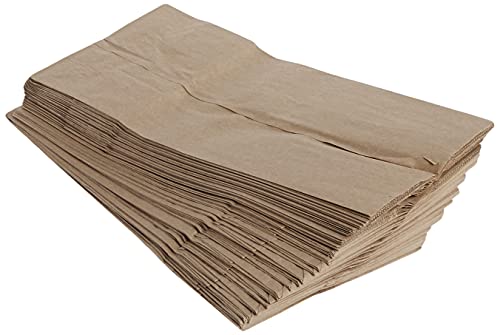
These AJM lunch bags come in a 40-count pack with a flat bottom design that allows the bag to stand up on its own. The paper is strong and easy to fold over, making them reliable for everyday use. The value-packed set is suitable for schools, offices, or households that want practical, disposable packaging that leans toward sustainability. The bags are designed for simple filling and storage, ideal for dry snacks, sandwiches, or small lunches without extra adornments.
Perfect Stix Brown Bags 100 Count

This 100-count pack offers 2 lb kraft bags sized for compact portions and desserts. They are proportioned to hold small side dishes or a drink and feature a gusset for added volume. The bags have a modest weight capacity and a simple, uncoated surface suitable for craft projects or light food items. Ideal for cafés, bakeries, or lunch service where compact, disposable packaging is preferred.
Stock Your Home 4 Lb Kraft Bags

These 100-count bags are crafted from kraft brown paper rated for up to 4 lb. They feature a flat square bottom that helps them stand upright, making packing and display straightforward. The bags are recyclable and microwave/ freezer-safe, offering versatility for snacks, sandwiches, or crafts. The undecorated surface also supports DIY customization for events or small businesses.
DURO Dubl Life 500 Count Mini Bags

These 60% post-consumer recycled kraft bags are compact and suited for snacks, coffee, or small treats. At 3.50 x 2.37 x 6.87 inches, they fit sandwiches, baked goods, or drinks in a small format. They are certified for food contact and can be used as eco-friendly lunch sacks, treat bags, or compact packaging for retail and schools. Their size makes them a practical option for portion-controlled packaging.
Reli. Brown Paper Bags 500 Count

Reli. offers a bulk 500-count option with 4 lb capacity and durable kraft paper. The flat bottom supports upright loading, and the bags are designed to resist tearing for daily use in classrooms, offices, or food-service settings. The blend of capacity and durability makes them suitable for take-home lunches or small snack packaging where sturdiness is a priority.
Perfect Stix 4lb Brown Bags 100 Count

This 100-count option features a 4 lb capacity with a fold-top closure, making it convenient for daily use in cafés and schools. The sturdy brown paper is suitable for lighter grocery items and small order packaging in bakeries or markets. The fold-top design helps secure contents during transport and display, providing a simple, eco-friendly packaging solution.
Buying Guide
Key purchase considerations help you compare recycled paper lunch bags across scenarios:
- Material and sustainability: Look for bags made from post-consumer recycled kraft paper or third-party certified sustainable sources. Higher post-consumer content often indicates a stronger environmental benefit.
- Durability and capacity: Consider bag weight limits (e.g., 2 lb vs 4 lb) and the presence of a flat bottom or gusset. These features affect stability and how much you can pack.
- Size and usability: Match bag dimensions to typical items (sandwiches, cookies, snacks). Smaller bags are great for crafts or samples, larger ones for full lunches.
- Food safety and microwave/freeze compatibility: If bags are used for food, verify food-grade status and whether they’re microwave or freezer safe for reheating or storage.
- Reusability and end-of-life: While designed for disposal, some bags can be recycled with curbside programs. Check local guidelines and consider compostable options when possible.
- Packaging variety: Bulk options (500-count, 1000-count) save per-unit cost for businesses or schools, while smaller packs offer flexibility for home use or occasional events.
- Customizability: Uncoated or undecorated surfaces enable DIY branding, logos, or labels for events, classrooms, or small shops.
Consider the typical use case when choosing between bags with higher capacity and those designed for compact items. For households prioritizing recyclability and easy disposal, the mid-range sizes with flat bottoms often provide the best balance of durability and convenience. For schools, offices, or small businesses, bulk packs offer cost-effective options that still meet food-safety guidelines when properly used.
Leave a Reply