Best Rotary Cutter for Quilters: Top Picks for Precision Cutting
Looking for the best rotary cutter for quilting? This guide highlights five top options that balance sharp blades, comfortable handles, and safe blade changes. It helps quilters choose by cut feel, thickness handling, and ergonomics. The selections are ideal for serious quilters, hobby sewists, and crafts enthusiasts who regularly cut fabric, felt, and multiple layers.
Buyer notes:
– If you frequently cut multiple fabric layers, prioritize models marketed for multi-layer cutting and durability.
– Ergonomic grips help reduce fatigue on longer sessions.
– Quick-change blades are a safety and convenience feature worth prioritizing.
| Product | Brand | Blade Size | Best For |
|---|---|---|---|
| OLFA 45mm Ergonomic Rotary Cutter (RTY-2/DX) | OLFA | 45mm | General quilting, precise single- to multi-layer cuts |
| Fiskars 45mm Rotary Cutter | Fiskars | 45mm | Versatile fabric cutting, multi-layer projects |
| Fiskars 45mm Rotary Cutter with Ergonomic Loop Grip | Fiskars | 45mm | Comfortable cutting with loops for long sessions |
| OLFA 45mm Quick-Change Rotary Cutter (RTY-2/C) | OLFA | 45mm | Easy blade changes, safe handling for frequent projects |
| OLFA 60mm Ergonomic Rotary Cutter (RTY-3/DX) | OLFA | 60mm | Thicker materials and bulk cuts, larger quilting projects |
OLFA 45mm Ergonomic Rotary Cutter RTY-2/DX

Best for: quilters who want a traditional, reliable 45mm cutter with an easy-squeeze trigger. This model ships with a high-quality RB45-1H blade and a safety-focused handle design. The curved grip and anti-slip rubber reduce hand fatigue during longer sessions, making it suitable for beginners upgrading from scissors to a rotary cutter.
Why chosen: The RTY-2/DX emphasizes edge retention and clean cuts, with a simple blade-change mechanism and a safety lock that can be engaged when the blade is open or closed. For quilters who cut multiple layers occasionally, it offers predictable performance without added bulk.
Caution: blade changes require careful handling to avoid contact with the sharp edge. Ensure your grip remains steady during blade replacement.
Fiskars 45mm Rotary Cutter

Best for: quilters who want a dependable, general-use cutter capable of cutting through multiple layers. Fiskars emphasizes precision and durability, making this cutter a solid all-around option for standard quilting tasks.
Why chosen: The 45mm blade is precision-ground for clean edges, and the blade change process is designed to be straightforward. Pairing with a self-healing cutting mat helps protect work surfaces and maintain long-term blade life.
Caution: for very thick fabrics, consider a larger blade option to reduce effort and increase control on bulk layers.
Fiskars 45mm Rotary Cutter with Ergonomic Loop Grip

Best for: quilters who value long-session comfort and a steady grip. The ergonomic loop grip supports controlled cutting, especially when working with repetitive motions across multiple fabric layers.
Why chosen: The combination of a 45mm blade with an ergonomic loop grip and a reliable blade-change system makes this cutter a strong choice for daily quilting routines. It suits left- and right-handed users through its balanced design.
Caution: blade changes require attention to the blade’s sharp edge; store safely when not in use to prevent accidental cuts.
OLFA 60mm Ergonomic Rotary Cutter RTY-3/DX
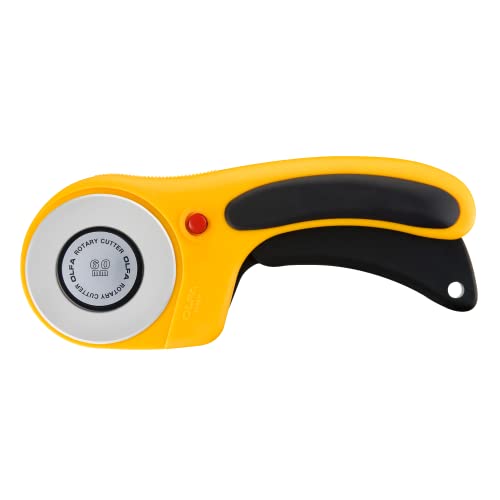
Best for: quilters tackling thicker fabrics, batting, and bulk layers. The larger 60mm blade offers more material-cutting power for big projects and thicker textiles.
Why chosen: The RB60H blade promises extended life and sharper edges, paired with a squeeze-trigger handle for safety and comfort. It’s a practical option when speed matters on large quilts.
Caution: larger blades require extra awareness around the cutting line; ensure your mat and surface can support broader cuts without edge damage.
Buying Guide
Blade Size And Material
Choose blade size based on project type. 45mm blades are versatile for most quilting tasks, while 60mm blades excel at thick fabrics and bulk layers. Look for tungsten or high-grade steel for edge retention.
Ergonomics And Comfort
Ergonomic handles reduce fatigue. If you work long sessions, prioritize squeeze-trigger designs, loop grips, or contoured shapes to maintain control and reduce strain.
Blade Change And Safety
Prefer models with quick-change systems and safety locks. Proper blade covers and retractable blades minimize risk during storage and replacement.
Durability And Longevity
Models marketed for multi-layer cutting or with titanium coatings tend to last longer on tougher fabrics. blades that stay sharp longer lower replacement frequency and maintenance needs.
Comfort With Different Hands
Right- or left-handed users should consider blade orientation, grip texture, and whether the design supports ambidextrous use.
Practical Buying Tips
- For frequent quilting of multiple fabric layers, a 60mm cutter can increase efficiency.
- For beginners, a 45mm cutter with a straightforward blade-change system helps ease the learning curve.
- Always pair cutters with a protective mat to maximize blade life and material accuracy.
FAQ
- Q: What blade size should I start with for quilting?
A: A 45mm blade is the standard starting point for most quilters, offering a balance of precision and ease of use. - Q: Are quick-change blades safer?
A: Quick-change systems reduce handling during blade swaps, but follow safety steps and keep blades covered when not in use. - Q: Can I cut through multiple fabric layers with these cutters?
A: Yes, many models are designed for multi-layer cutting, but performance varies by blade size and material density. - Q: Is an ergonomic grip essential for quilting?
A: Ergonomic grips help with comfort during long sessions and can improve control, especially on repetitive cuts. - Q: How do I maintain blade sharpness?
A: Use the appropriate blade for the material and replace when dull; avoid forcing cuts that can dull blades faster. - Q: Should I buy both 45mm and 60mm cutters?
A: If you work with a range of fabrics, owning both sizes can optimize efficiency for different tasks.
Leave a Reply