Best Scissors for Cutting Material: Durable Fabric Shears for Any Project
Visible and precise fabric cutting is essential for quality results. This guide highlights five top fabric scissors that suit different buyers—from hobby crafters to professional tailors. Each selection explains who it’s best for, why it was chosen, and any limitations to consider. Use the buying guide below to compare key factors like blade material, handle comfort, and cutting capacity.
Summary Table of Selected Products
| Product | Best For | Key Benefit |
|---|---|---|
| Fabric Scissors Professional, 8″ (Wteehn) | Professional sewers and leather work | 45° blade angle for precise cuts and durable construction |
| Fiskars RazorEdge Fabric Scissors | General fabric cutting with smooth action | Ultra-sharp blades with advanced pivot for smooth cuts |
| LIVINGO Premium Tailor Scissors (9.5″) | Multi-layer fabrics and heavy-duty tasks | Titanium coating and forged stainless steel for longevity |
| iBayam 3-Pack 8″ Heavy Duty Scissors | Classroom, office, and home versatile use | Three pairs with comfort grips and varied colors |
| JINJIAN Fabric Scissors 9″ Heavy Duty | Precision tailoring and crafting | High-carbon steel for strong edge retention |
Fabric Scissors Professional, 8″ Heavy Duty Scissor

Best for professional sewists and leather crafters. The Wteehn Fabric Scissors feature galvanized manganese steel and an exquisite hand-forged build for high hardness, rust resistance, and long-term durability. The 45° blade angle focuses on precise cutting with less fatigue, aided by an ergonomic aluminum handle wrapped in non-slip plastic. An adjustable bolt lock helps maintain cutting accuracy. Caution: cutting extremely thick materials beyond typical multi-layer fabrics may still require a heavier-duty option.
Fiskars RazorEdge Fabric Scissors, 8”

Best for clean, smooth cuts with minimal effort. Fiskars RazorEdge features ultra-sharp premium stainless blades engineered for a continuous edge and a pivot design that yields exceptionally smooth cutting through fabric. The soft-grip ergonomic handle supports comfortable use during longer projects. Caution: for very thick materials, cutting may require multiple passes or a heavier-duty alternative.
LIVINGO Premium Tailor Scissors (9.5 Inch)
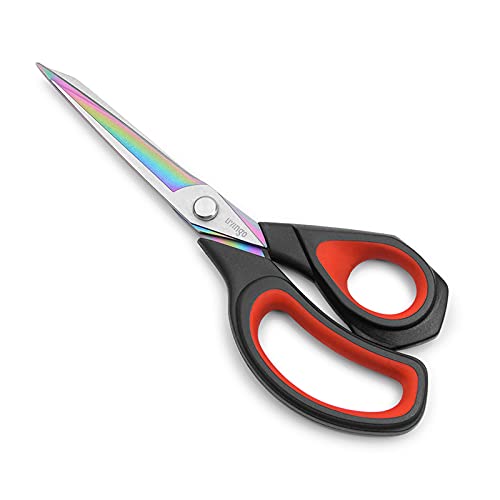
Best for multi-layer fabrics and heavy-duty tasks. LIVINGO uses forged stainless steel with a titanium coating to deliver three times the hardness of standard stainless steel and resistance to rust and adhesives. The longer 9.5-inch blade length helps cover large patterns and reduces the need for re-cutting. The ergonomic, multi-colored coating also helps differentiate tasks. Caution: weight and balance may feel different if you switch from lighter scissors; test comfort before extended use.
iBayam 3-Pack 8″ Heavy Duty Scissors

Best for classrooms, offices, and varied household projects. The 3-pack includes three color-differentiated, 8-inch scissors with sharp blades and comfort-grip handles. They are designed to cut a range of materials from burlap to fabric and light leather. Caution: not all blades are equal across the set; some pairs may perform differently with thick leather compared to fabric.
Fabric Sewing Scissors 9 Inch by JINJIAN

Best for professional tailoring and crafting with a focus on edge retention. JINJIAN’s 9-inch fabric scissors use high-carbon steel for sharp, durable blades capable of cutting cotton, denim, canvas, leather, and more. The package includes a measuring tape for precise planning. Caution: high-carbon steel requires careful maintenance to prevent corrosion if not dried after use.
Buying Guide
What to consider when choosing fabric scissors:
- Material and hardness: High-carbon steel and forged stainless blades offer longer edge life. Consider the tasks you perform most often (delicate fabrics vs. thick leather).
- Blade geometry: A 45° blade angle helps reduce effort and improve accuracy for fabric cutting. Some scissors have built-in sharpening considerations in the design.
- Handle comfort: Ergonomic handles with non-slip grips reduce fatigue during extended use. Consider whether you prefer lightweight or balanced weight distribution.
- Size and cutting capacity: 8–9.5 inches is common for fabric work. Longer blades cover more area but may require better control for small patterns.
- Durability and maintenance: Rust resistance and ease of cleaning extend life. Some blades tolerate adhesives and glue residues better than others.
Frequently Asked Questions
- What should I use fabric scissors for first?
– Use fabric scissors only for fabric cutting to maintain blade sharpness. Avoid cutting paper, cardboard, or plastic with the same blades to extend edge life. - Are heavier scissors better for thick fabrics?
– Heavier blades can handle thicker materials, but balance and comfort matter. Choose a tool with a comfortable grip and a blade suited to your typical thickness. - What is the advantage of a 45° blade angle?
– A 45° angle provides a smoother, more controlled cut and reduces hand fatigue during long cutting sessions. - How do I maintain fabric scissors?
– Wipe blades dry after use, store in a dry place, and avoid cutting non-fabric materials. Occasional light lubricants can help preserve movement. - Is a 9-inch scissor better than an 8-inch scissor?
– A 9-inch blade covers more material per stroke, which can speed up cutting on larger patterns. Smaller sizes offer more precision on intricate shapes.
Leave a Reply