Best Self-Healing Cutting Mat for Sewing: Top 5 Picks for Fabrics, Quilting and Crafting
Interested in protecting your workspace while keeping fabric and craft projects precise? A self-healing cutting mat designed for sewing offers a durable, reusable surface that handles rotary cutters and straight blades with minimal blade dulling. This guide highlights five strong options from Idemeet, Fiskars, Aneuzs, and Tujurich, explaining which buyers each mat serves best. Whether you’re into quilting, garment sewing, or scrapbooking, these mats help you cut accurately while preserving your table.
| Product | Size | Best For |
|---|---|---|
| Idemeet Density-upgraded 24″ x 36″ Large Self Healing Sewing Mat | 24″ x 36″ | Large projects, full-width fabric cutting, home sewing studios |
| Idemeet Density-upgraded 18″ x 24″ Self Healing Sewing Mat | 18″ x 24″ | Medium projects, quilting and leather cutting |
| anezus Self Healing Sewing Mat, 12″ x 18″ | 12″ x 18″ | Small to medium hobby cuts, craft detail work |
| Fiskars Self Healing Cutting Mat with Grid, 24″ x 36″ | 24″ x 36″ | Quilting and large fabric projects with precise grids |
| Tujurich Self Healing Cutting Mat, 23″ x 35″ | 23″ x 35″ | Quilting, sewing, scrapbooking with double-sided grids |
Density-upgraded 24″ x 36″ Large Self Healing Sewing Mat — Idemeet

This large Idemeet mat is designed for big sewing and crafting surfaces. Its high-density core and multi-layer build aim to extend cutting life and blade sharpness while absorbing cuts. Best for serious sewers and quilters who work with wide fabric panels or long garments. The thicker interlayer adds blade buffering, reducing damage to your desktop.
- Best for: Professional or home studios cutting wide fabrics and long strips
- Key benefit: Higher density improves self-healing and durability
- Limitations: Heavier mat may be less portable for small spaces
Density-upgraded 18″ x 24″ Self Healing Sewing Mat — Idemeet

The 18″ x 24″ Idemeet mat balances cutting space with portability. Its dense, multi-layer construction supports rotary cutters and straight blades, making it a practical choice for quilting and fabric studies in smaller studios or classrooms. The durable interlayer protects work surfaces from blade impact.
- Best for: Medium-sized sewing projects and portable crafting spaces
- Why chosen: Good compromise of size, durability, and portability
- Limitations: Not ideal for full-width fabric cutting on large projects
anezus Self Healing Sewing Mat, 12″ x 18″

The anezuS mat provides a compact 12″ x 18″ cutting surface with a five-layer PVC build. It’s well-suited for hobbyists, crafters, and beginners who need a reliable mat for small sewing projects, scrapbooking, and stencil work. Its double-sided use expands layout flexibility.
- Best for: Beginners or crafters doing small-scale projects
- Why chosen: Lightweight, affordable, and versatile for desk setups
- Limitations: Smaller cutting area may require more repositioning for large patterns
Fiskars Self Healing Cutting Mat With Grid — 24″ x 36″

Fiskars pairs this large mat with clear grids and bias lines to simplify angle cuts and straight-line layouts. The mat’s self-healing surface supports long-term use in quilting, garment construction, and crafts. It pairs well with Fiskars rotary cutters for comfortable, precise cutting.
- Best for: Quilters and garment sewers who rely on angle-guided cuts
- Why chosen: Reliable grids and long-lasting surface
- Limitations: Some users may prefer thicker mats for heavy-duty lancet cuts
Fiskars Self Healing Cutting Mat With Grid — 24″ x 36″

This Fiskars mat emphasizes easy-to-read grids and essential bias lines for precise cutting. It suits sewing, quilting, and craft tasks that require consistent measurements and repeatable layouts. It’s a durable choice for active crafting tables and classrooms where multiple users cut fabrics.
- Best for: Shared crafting spaces needing clear measurement guides
- Why chosen: Grid clarity and long-lasting self-healing surface
- Limitations: Grid wear can occur with heavy use; replace if markings fade
Tujurich Self Healing Cutting Mat, 23″ x 35″
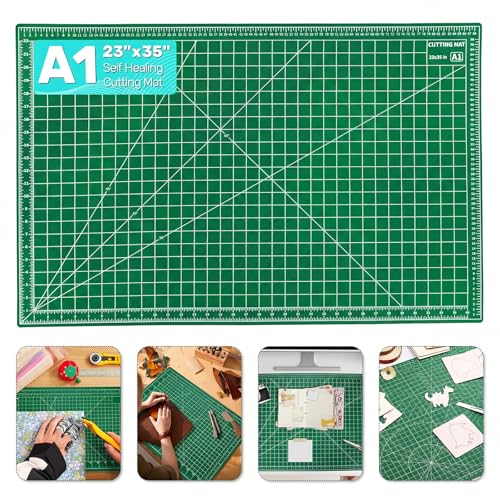
The Tujurich mat offers a nearly full-coverage cutting area with double-sided grids and alignment guides. It’s a solid option for quilters and crafters who need precise measurements on both sides for complex patterns. The self-healing layer helps maintain a smooth cutting surface after repeated blade passes.
- Best for: Quilters and detailed crafters needing double-sided layouts
- Why chosen: Double-sided grids enhance accuracy for varied projects
- Limitations: Might be heavier than smaller mats; consider space availability
Buying Guide: Key Purchase Considerations
- Size and workspace: For large fabric projects, choose 24″ x 36″ mats. Smaller studios or desks benefit from 12″ x 18″ or 18″ x 24″ options.
- Grid and angle guides: Look for clear grids and 30/45/60-degree lines to simplify precise angle cuts and layout alignment.
- Material and durability: A multi-layer PVC self-healing surface with a supportive interlayer reduces blade wear and protects work surfaces.
- Blade compatibility: Most mats accommodate rotary cutters and straight blades. Ensure your tools are compatible with the mat’s surface.
- Portability vs. stability: Thicker mats provide robust cutting surfaces but weigh more. Balance space, frequency of move, and storage needs.
- Surface protection: A high-density mat protects desks, tables, and cutting tools, increasing longevity for both the blade and the workspace.
FAQ
- What size mat should I choose for quilting? A 24″ x 36″ mat works well for full-width fabric handling and long seams.
- Do self-healing mats wear out quickly? Self-healing layers seal over minor cuts, but heavy, frequent use will gradually show wear and grid fading.
- Are double-sided grids useful? Yes, they offer flexibility for different patterns and both sides can be used for layout and measurement.
- Can I use these mats with leather or vinyl? Many mats are compatible with rotary cutters used for fabric, leather, and vinyl, but confirm blade type with your mat’s specs.
- Is portability important for my workspace? If you frequently move your cutting station, lighter mats like 12″ x 18″ or 18″ x 24″ are easier to relocate.
- Should I buy a premium-density mat? Higher density mats typically offer longer service life and better blade buffering, ideal for heavy-duty crafting.
Leave a Reply