Best Sewing Dress Forms for Accurate Fitting and Draping
Answering the buyer’s search for a sewing dress form, these options cover adjustable, pin-friendly forms that suit different bust, waist, and hip measurements. Each form is designed for precise fitting, easy pinning, and stable draping, making them ideal for hobbyists, home sewers, and aspiring designers. Below you’ll find five top picks, who they’re best for, and why they stand out.
| Product | Best For | Key Benefit |
|---|---|---|
| Dritz Sew You Adjustable Dress Form (Small/Medium) | Beginners to intermediate sewers needing precise torso adjustments | 12 dials, 360 hem guide, height-adjustable |
| Dritz Sew You Adjustable Dress Form (Medium/Large) | Standards and pattern work for sizes 12-18 | 12 dials, 360 hem guide, neck adjustment |
| FDW 60”-67” Adjustable Female Dress Model | Display, photography, or decor with height versatility | Wide height range, durable materials |
| Adjustoform Sew Simple FG306 Black S-M | Seamstresses needing neck, back length, and height control | 8-part body with 12 wheels, fabric-covered |
| Dritz Twin-Fit Adjustable Dress Form (Petite) | Petite sizing and detailed torso adjustments | 13 dials, 360 hem marker, extended torso |
Note: The following sections highlight five top options with clear best-use cases and practical cautions to help you choose the right dress form for your sewing workflow.
Dritz Sew You Adjustable Dress Form – Small/Medium
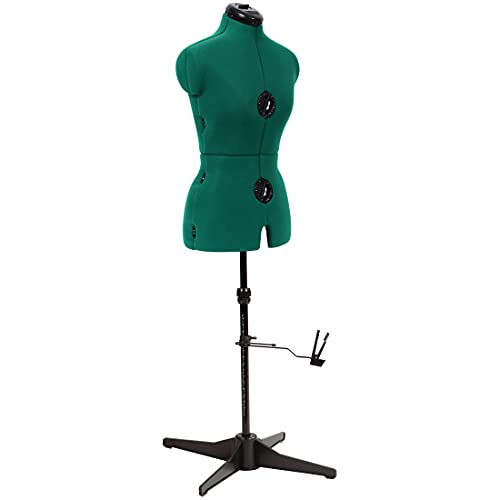
- 12 multi-point body adjustments plus a 360-degree hem guide and height-adjustable center pole for balanced draping.
- Fingertip control with 9 wheels and 2 front auto-set dials for precise expansion or contraction.
- Best for: sewers starting to build custom-fitted garments who want reliable top-to-bottom fit with real-life proportions.
- Limitation: Max height and torso length may be less suited for very tall frames compared to larger models.
Dritz Sew You Adjustable Dress Form – Medium/Large
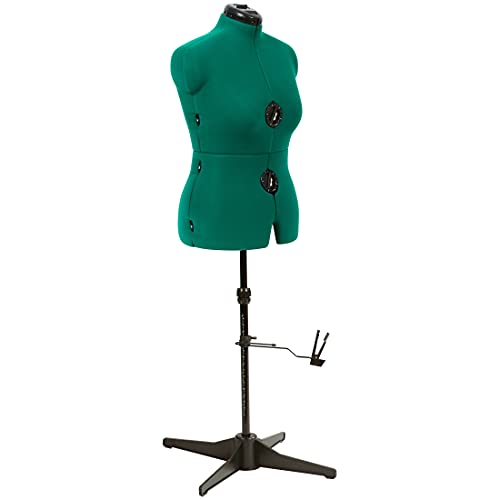
- Exact custom fit with 12 adjustment points, height-adjustable pole, and 360 hem marker for draping and pattern work.
- Fingertip control includes 9 wheels plus 2 front auto-set dials and a neck adjustment dial.
- Best for: pattern-makers and crafters working in sizes 12-18 who need precise mid-to-torso adjustments.
- Limitation: Slightly taller max height compared to petite-focused forms; verify your shoulder-to-floor measurement.
FDW 60”-67” Adjustable Female Dress Model

- Height range from 60 to 67 inches makes it versatile for display, photography, and wearer height variety.
- Durable construction with a foam and wood/metal mix for stability and realistic form feel.
- Best for: studios and home spaces needing a tall, adaptable dress form for tall models or decor displays.
- Limitation: Primarily a display form; fabric pinning capability may be less consistent than fabric-covered forms.
Adjustoform Sew Simple FG306 Black S-M

- Eight-part body with 12 adjustable thumb wheels to customize bust, waist, hips, neck, back length, and height.
- Suitable measurements accommodate bust 33-41″, waist 25.5-33″, hips 35-43″, neck 15-18″, and height up to 6’3″.
- Best for: more detailed torso customization in a compact S-M size, with a fabric-covered body for easy pinning.
- Limitation: May require additional care for fabric wear with frequent pinning; ensure fabric backing is suitable for your projects.
Dritz Twin-Fit Adjustable Dress Form – Petite

- 13-dial system with 360-degree hem marker and adjustable torso length; extends to 64 inches max height.
- Two side wheels plus ten auto-set dials for precise fit across shoulder-to-floor measurements.
- Best for: petite to small-framed projects requiring precise neck, bust, and hip adjustment at a compact size.
- Limitation: Petite range may not cover taller or fuller figures as effectively as larger models.
Buying Guide: How to Choose The Right Dress Form
What size range do you typically sew for? Match the form to the most common measurements in your project set (bust, waist, hips). If you sew for a range of sizes, a form with many adjustable dials offers greater flexibility.
Do you need a pin-friendly surface? Fabric-covered, foam-backed exteriors hold pins well for patterning and draping, while display-focused forms may prioritize height and stability over pinning ease.
Is height adjustment important? If you work with long gowns or tall models, a form with a higher maximum height ensures accurate shoulder-to-floor measurements and drape fidelity.
How important is stability? A sturdy stand and a balanced base prevent wobble during pinning and draping. Look for a heavy base, supportive center pole, and a wide stance.
What’s your workspace like? Consider the form’s footprint and weight. Slim, lighter forms fit small studios, while larger forms suit dedicated sewing rooms or classrooms.
Tips for Getting The Most From Your Dress Form
- Start with the primary measurements (bust, waist, hips) and adjust gradually to match your pattern blocks.
- Use the hem guide to mark hemlines and ensure even draping around the garment—especially for hemlines that curve or flare.
- Pin fabric patterns at low-tension areas first to prevent fabric distortion during fitting.
- Regularly recheck measurements as you progress through a project to maintain accurate fit across stages.
Frequently Asked Questions
- What is a dress form used for? It provides a three-dimensional surface to pin, drape, and fit garments during sewing and design.
- Do dress forms come in petite, standard, and tall heights? Yes, options vary by height range and torso length; pick one that aligns with your height and project needs.
- Can I pin directly into the dress form fabric? Fabric-covered forms accept pins well for pattern placement and adjustments.
- Is a higher number of dials better? More dials offer finer control over measurements, but consider your workflow and how often you adjust each area.
- Are dress forms suitable for display or photography? Some models are designed with display stability and aesthetic finishes for decor or photoshoots.
- Can I use a dress form for both sewing and design? Absolutely; a well-adjusted form helps achieve accurate draping, fit, and style decisions.
Leave a Reply