Best Sewing Machines for Plush Toys
Answering the question “which sewing machine is best for plush toy projects?” this guide highlights beginner-friendly options ideal for creating soft toys, stuffed animals, and felt creatures. Designed for kids and beginners, these picks focus on safety, portability, and simple setup. Ideal buyers include parents shopping for kids’ crafts, teachers preparing classroom projects, and crafters seeking easy-start options for plush toy sewing.
Preview of top picks:
| Product | Best For | Why It Stands Out |
|---|---|---|
| Made By Me My Very Own Sewing Machine for Beginner | Young beginners | Kid-sized, pre-threaded, safety features, ready out of the box |
| TUZT Mini Sewing Machine Toy Kit | Mini projects & kits | All-in-one starter kit with multiple accessories and projects |
| deAO Kids Sewing Machine Toy Beginners Kit | Creative craft learning | 22-piece set, light, finger guard, visual instructions |
| CiyvoLyeen Puppy Sewing Kit | Felt plush crafting | Complete themed felt puppy kit for hands-on plush making |
| AXE YAMAZAKI Hug Yarn Sewing Machine | Kids’ learning and crafts | Junior-friendly, safe, basic embroidery capability |
Made By Me My Very Own Sewing Machine for Beginner
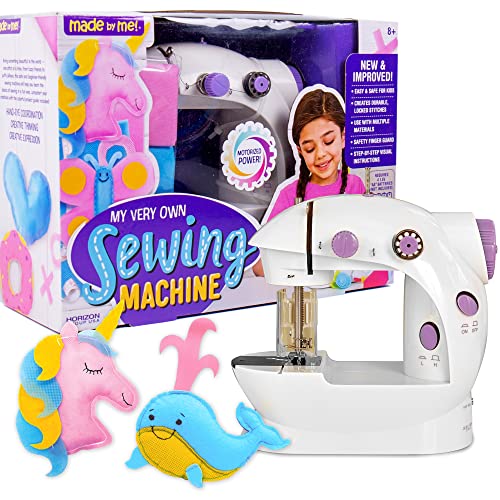
Best for absolute beginners, especially kids ages 8 and up. This battery-powered, two-speed machine is designed to simplify sewing with intuitive controls, a pre-threaded bobbin, and a safety light. It comes with a full beginner kit including fabric, thread, measuring tape, and stuffing. The included picture-based instructions support independent learning. Choose this if you want a compact, kid-friendly introduction to plush toy sewing with clear guidance and safe operation.
Limitation to note: as a beginner-targeted model, it may offer fewer advanced stitches or heavy-duty capability for larger plush projects. It’s best for light projects and learning fundamentals.
TUZT Mini Sewing Machine Toy Kit for Kids

The TUZT kit is ideal for beginners seeking a portable, all-in-one starter set. It includes a compact sewing machine, two cloth bags, multiple fabrics, threads, and a manual. This option is best for children who benefit from hands-on, self-contained kits that teach basic stitching and assembly. The built-in light and finger guard enhance safety, making it a natural first step into plush toy crafting. Best for: kids who want a complete starter experience with guided visuals and multiple mini-projects.
One limitation: the machine footprint is small, so larger plush projects may require planning or upgrading later for more fabric space and heavier stitching.
deAO Kids Sewing Machine Toy Beginners Kit

This 22-piece kit is designed for young learners to explore sewing with light and a finger guard for safety. It includes fabrics, threads, scissors, and decorative items, supporting about 10+ craft projects. It’s a strong choice for families or classrooms where kids want to produce multiple small plush accessories or decorations. Choose this if you want a structured, safe, and visually guided learning path with plenty of materials to practice different stitches.
Limitations to consider: the emphasis is on simple crafts; it may lack heavier-duty capabilities and advanced machine features found in adult models.
CiyvoLyeen Puppy Sewing Kit for Kids

This kit focuses on felt plush crafting, offering a complete set to create a felt puppy plush with multiple decorations. It’s best for kids who prefer hands-on, decorative plush projects and want a ready-to-create kit without requiring a working sewing machine. It can be used alongside a basic machine or as a stand-alone craft. Choose it for guided, toy-specific projects that build confidence through completion and gift-ready creations.
Note: It’s a craft kit rather than a full sewing machine experience, so plan for alignment with any other sewing tools you may have.
AXE YAMAZAKI “Hug” Yarn Sewing Machine for Kids

The AXE YAMAZAKI Hug Yarn Sewing Machine targets beginner sewers with a junior-friendly design. It emphasizes safety and straightforward operation, supporting basic sewing tasks and simple embroidery concepts with yarn. Best for younger kids beginning their plush toy journey or for classrooms introducing sewing as a craft. Choose this if you want a compact, approachable option that emphasizes safe, light-duty stitching.
Caution: as a beginner tool, it may not handle heavy fabrics or long sessions; plan simple plush toy projects with light fabrics and small pieces.
Buying Guide
- Who should buy a plush toy sewing machine?
– Beginners, especially kids and first-time crafters, who need safety features, simple setup, and guided projects. - What features matter most for plush toy projects?
– Safety guards, finger protection, clear visual or picture-based instructions, compact size, and adjustable stitch options for different plush fabrics. - Should I choose a kit or a machine for plush toys?
– Kits are great for complete starter projects and quick results, while beginner machines enable ongoing sewing practice with various fabrics and patterns. - What fabrics are best for beginner plush toy sewing?
– Lightweight felt, cotton, fleece, and other soft, non-stretch materials are ideal for beginners; heavier fabrics may require stronger machines later. - How important is portability?
– High, for crafters who want to sew in small spaces, on the go, or as a classroom tool. Look for lightweight units with simple power options (battery or USB). - What’s a realistic expectation for durability?
– These machines are designed for starting projects and light use. Expect simpler stitch options and shorter sessions before upgrading to more capable models.
FAQs
What age is appropriate for these machines?
Most models target ages 6–12 for kids, with older children and teens suitable for beginner-friendly adult machines.
Do these machines require prior sewing experience?
No—these are designed for beginners with guided instructions and safety features.
Can I use these for felt plush projects?
Yes, many kits and machines support felt and lightweight fabrics common in plush toy making.
Are there safety concerns I should know?
Look for finger guards, low heat, and age-appropriate use guidance; supervise younger children as needed.
Is a power source important for plush projects?
Battery-powered or USB-powered options offer more flexibility for small spaces and portability.
Leave a Reply