Best Silicone-Style Filament Alternatives for Flexible 3D Printing
When exploring flexible, rubbery finishes for 3D printing, many users look for silicone-like properties in filaments such as TPU. This guide highlights top flexible filaments that mimic silicone behavior—offering elasticity, durable layer adhesion, and smooth finishing for functional parts and creative designs. Each pick is evaluated for printability, drying needs, and overall performance on common FDM printers.
Summary of chosen products
| Product | Brand | Filament Type | Diameter | Approx. Spool Weight | Key Strengths |
|---|---|---|---|---|---|
| Geeetech TPU Filament 1.75mm (Black) | Geeetech | TPU | 1.75 mm | 1 kg | High elasticity, strong layer adhesion, clog-free printing |
| SUNLU TPU 3D Printer Filament 1.75mm (Black) | SUNLU | TPU | 1.75 mm | 1 kg | Fast printing capability, reliable adhesion, 95A hardness |
| Geeetech TPU Filament 1.75mm (Black) | Geeetech | TPU | 1.75 mm | 1 kg | Elastic, durable, clog-free extrusion |
| OVERTURE TPU Filament 1.75mm | OVERTURE | TPU | 1.75 mm | 1 kg | Excellent layer adhesion, designed to avoid jams |
| Geeetech TPU Filament 1.75mm (Clear Blue) | Geeetech | TPU | 1.75 mm | 1 kg | Clear finish with similar elasticity and durability |
Geeetech TPU Filament 1.75mm Black, 95A Elastic TPU

Geeetech’s 95A TPU filament blends high elasticity with wear resistance, making it suitable for flexible accessories like phone cases, insoles, watch bands, and lightweight robotics parts. The material tolerates daily wear and mild bending without cracking, and its formulation supports both creative designs and functional flexible components. A patented clog-free formula and a 24-hour pre-drying process minimize jams and bubbles, promoting smoother extrusion. The spool arrives vacuum-sealed for moisture control, with recommended drying for humidity exposure. Strong interlayer adhesion helps prevent delamination, delivering smooth surfaces and durable flexible parts.
SUNLU TPU 95A 1.75mm Filament — Black
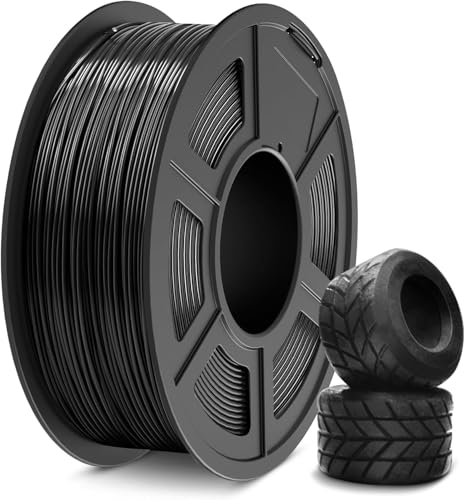
SUNLU’s 95A TPU filament is designed for fast printing while retaining flexibility and resilience. The higher printing speed is balanced with robust layer adhesion, contributing to strong, slightly elastic parts that can absorb impacts in daily use. The material’s Shore hardness supports flexible components and wear-worthy prototypes, and prints typically exhibit a smooth finish with reduced risk of delamination. This filament is well-suited for robotics, soft grippers, or wearable accessories where a combination of toughness and flexibility matters.
Geeetech TPU Filament 95A Black, 1 kg
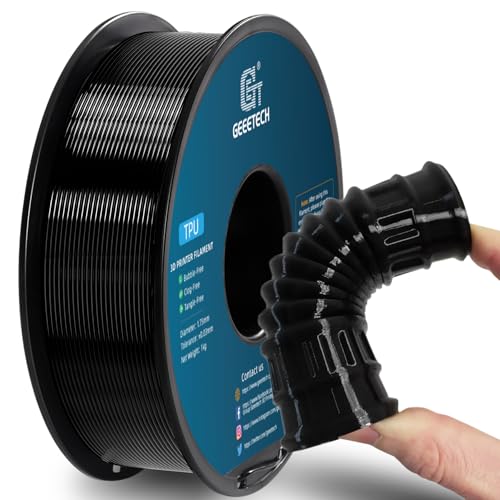
This Geeetech TPU variant emphasizes high elasticity with wear resistance at a practical 95A hardness. The filament’s design targets flexible applications including fashion items, protective gear, and soft tooling. Aimed at minimizing jams through a cured, pre-dried spool and a clog-free recipe, it supports clean extrusion and consistent surface quality. The 0.03 mm dimensional accuracy helps maintain predictable prints, especially for assemblies requiring reliable fitment of flexible parts.
OVERTURE TPU Filament 1.75mm — 95A

OVERTURE’s TPU 1.75mm filament emphasizes high-quality flexibility with a focus on strong layer adhesion and a smooth finish. The product is packaged to minimize moisture exposure, and the material is described to perform well across a broad range of FDM printers. Its clog-free design and careful drying process aim to deliver reliable, consistent extrusion. This makes it a solid option for flexible parts such as gaskets, seals, and soft-touch housings where dimensional stability matters.
Geeetech TPU Filament 95A Clear Blue
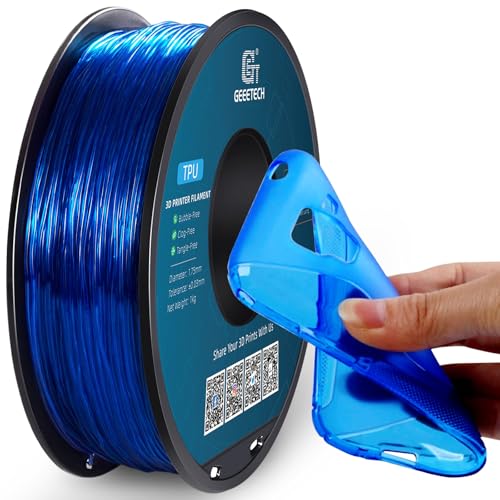
This variant mirrors Geeetech’s 95A TPU formulation with a visually clear blue finish. The material preserves elastic properties and layer adhesion while delivering a translucent appearance that can be useful for aesthetic prototypes or parts where visibility of internal features aids inspection. As with other TPU blends, a humid environment calls for drying and proper storage to prevent issues during printing. The result is a flexible, durable part with a sleek see-through look.
Buying Guide
Key purchase considerations
- Filament material and hardness: Most flexible filaments labeled TPU with 95A hardness offer a balance of softness and durability. If you need higher resistance to deformation, consider a slightly tougher formulation; for softer grippy parts, 85A–90A varieties may be preferable.
- Print settings and drying: TPU typically requires slower print speeds and longer extrusion times to maintain stable layers. Many brands recommend drying after opening (65–70°C for several hours) to minimize bubbles from moisture.
- Printer compatibility: Ensure your extruder supports flexible filaments, with a direct-drive setup being more forgiving than a Bowden configuration. A heated bed helps adhesion for some geometries, though TPU often sticks well to PEI or similar builds surfaces.
- Dimensional accuracy and finish: Look for tolerances around ±0.03 mm to predict fit between flexible parts, especially when assembling multi-component designs. Surface finish varies by brand and printer calibration; some filaments feature stronger layer adhesion for smoother results.
- Storage and packaging: Vacuum-sealed bags with desiccants help minimize moisture uptake. Re-seal spools after use and store in a dry environment to preserve print quality over time.
Texture, print quality, and use-case comparisons
- Elasticity vs. durability: Higher hardness TPU (around 95A) tends to be more durable but slightly stiffer, suitable for wear-resistant components. Softer TPU variants yield more compliant parts but can be prone to deformation under load.
- Adhesion and clog resistance: Brands offering a clog-free formula and pre-drying reduce extrusion errors and print defects, especially for complex geometries.
- Finish and clarity: Clear or translucent TPU prints can be advantageous for visibility in assemblies or artistic pieces; color choices also influence perceived elasticity and surface feel.
- Ease of use: Pre-dried spools and vacuum-sealed packaging simplify setup and storage, contributing to reliable first-layer adhesion and consistent layers across prints.
These selections emphasize flexible, silicone-like performance in filament form, prioritizing consistent extrusion, good layer bonding, and durable finishes for everyday flexible parts. Each option is suitable for hobbyists and professionals seeking reliable elasticity without sacrificing print quality.
Leave a Reply