Best Silicone Paper for Heat Press: Top Picks for Safe, Clean Transfers
Finding the right silicone or non-stick protective paper is essential for clean, consistent heat transfers. The products below are focused on silicone-coated sheets, PTFE/Teflon alternatives, and heat-resistant parchment options designed for heat press or iron use. This guide highlights five well-suited options, including their primary benefits and how they fit different transfer tasks. Use this selection to compare durability, reusability, and heat resistance for your projects.
| Product | Brand | Size / Type |
|---|---|---|
| PPD Silicone Protective Paper for Heat Transfer | PPD | 8.5×11” sheets; silicone-coated, reusable up to 10 times |
| TransOurDream 30 Pack Mix Teflon/ Silicone Paper | TransOurDream | 16×11.7″ and 8.5×11″ mix; heat resistant, Teflon/silicone coated |
| HTVRONT PTFE Sheets for Heat Press | HTVRONT | 3-pack; 12×16″ PTFE sheets; heat resistant to 600° |
| YRYM HT PTFE Sheets | YRYM HT | 3-pack; 16×20″ non-stick PTFE sheets |
| Cohpoh Heating Press Paper Pre-Cut Parchment | Cohpoh | 8×12″ sheets; two sides silicone coating; 100 sheets |
TransOurDream 30 Pack Mix Teflon/Silicone Paper

The TransOurDream set combines Teflon paper with silicone-coated layers designed to minimize sticking during heat transfer. Its silicone-oil coated surface provides an isolation layer, enabling continuous transfers without impacting subsequent results. The mix is positioned as cost-effective for small businesses and beginners who want a reusable option. The product notes emphasize durability at typical heat-transfer temperatures and compatibility with common heat press tasks.
Key attributes include a broad temperature tolerance suitable for medium to lower temperature transfers such as standard apparel and plastic goods. Because the paper can be cut to fit shapes or larger items with simple tools like scissors, users gain flexibility for on-site adjustments. The coating helps protect your metal plates from ink transfer and reduces the need for frequent sheet replacement in routine projects.
PPD Silicone Protective Paper for Heat Transfer

PPD’s silicone-coated protective sheet is designed to shield transfer papers and garments during heat transfer. It acts as a non-stick barrier between the iron or heat press and the transfer paper, helping prevent sticking, scorching, or damage to designs. It’s explicitly presented as a reusable option, compatible with both light and dark transfer papers. The sheet is marketed as 57 gsm silicone-coated paper and claims reuse up to 10 times, adding value for ongoing projects and reducing consumable costs.
Design-wise, these sheets are versatile for use with irons or heat presses and are suitable on either side. The non-stick surface helps maintain design integrity while protecting fabrics. Ideal applications include detailed logos, bold prints, and small designs where precise heat application matters. As a protective layer, it extends the life of your transfer paper by limiting ink transfer onto the protective surface itself.
HTVRONT PTFE Sheets For Heat Press
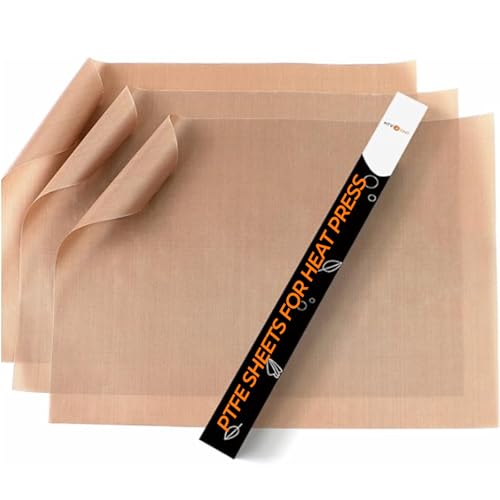
HTVRONT offers a 3-pack of PTFE sheets designed to withstand high heat during transfers. PTFE sheets provide a non-stick surface and are reusable, supporting a long lifespan for repeated use. The sheets can serve multiple roles beyond heat pressing, including baking or other crafting tasks that require a clean, non-reactive surface. The product highlights emphasize heat resistance up to 600° and compatibility with a variety of transfer methods, including sublimation and other DIY projects.
Durability is a central claim, with the sheets described as sturdy enough to be used many times. The non-stick quality helps protect vinyl and garments from scorching and prevents transfer materials from sticking to the pressing surface. Users prioritizing high-temperature safety and longevity will find these sheets suitable for ongoing heat-press workflows.
YRYM HT PTFE Sheets, 16×20″ (3 Pack)

YRYM HT provides a three-pack of PTFE sheets sized at 16×20 inches, designed as a non-stick barrier for heat transfer tasks. The sheets offer high-temperature resistance and are described as tear-resistant and durable for repeated use. This size accommodates larger garments or transfers, reducing the need for multiple sheets when working with big panels or blankets. The PTFE surface helps maintain clean transfer results by reducing sticking and scorching on fabrics.
Users should note that PTFE sheets are typically used as a protective barrier between the heat source and the transfer medium. The YRYM HT offering emphasizes toughness and recyclability, aimed at ongoing projects that require reliable non-stick performance over many cycles. Their larger format is particularly helpful for bulk transfers or larger print areas.
Cohpoh Heating Press Paper Pre-Cut Parchment

This Cohpoh parchment option features pre-cut parchment sheets with a silicone coating on both sides. The kit includes multiple sizes (4×6, 6×8, 8×12) and provides heat resistance up to 425–450°F. Reusability is listed as 2–4 uses per sheet, making it a practical option for sporadic users or those who want a flexible, affordable layer during press tasks. The double-sided silicone coating helps keep designs clean and prevents sticking during pressing.
The parchment approach offers a familiar alternative to PTFE-coated options, with a balance of heat resistance and cost. It’s particularly suited to users who prefer parchment in their workflow and want a simple method to protect designs during transfers. Its pre-cut format saves time on sizing for common project dimensions.
Buying Guide: Key Considerations For Silicone Paper And Related Sheets
- Heat resistance and temperature range: Choose sheets that tolerate your typical transfer temperatures. PTFE sheets often handle up to 600°F, while parchment options vary by coating and thickness.
- Non-stick performance: A reliable non-stick surface reduces sticking, scorching, and transfer smudges. Silicone-coated, PTFE-coated, and parchment options each offer distinct performance profiles.
- Reusability and cost per use: Reusable sheets lower long-term costs but may require cleaning. Consider how many times you expect to reuse each sheet before replacement.
- Sheet size and compatibility: Ensure the sheet dimensions fit your transfer items and machine bed. Larger sheets are ideal for wide panels; smaller sheets suit detail work.
- Durability and tear resistance: Heavier-duty PTFE sheets tend to be more tear-resistant, helpful for frequent or heavy-duty projects.
- Intended use: Some sheets are optimized for heat presses, others for irons or baking. Match the product to your primary tool and transfer method.
- Maintenance and cleaning: Some sheets wipe clean easily; others require gentle washing. Consider maintenance requirements in your workflow.
- Fabric and transfer compatibility: Check whether the sheet is better for light or dark transfer papers and whether it supports sublimation, vinyl, or other media.
Leave a Reply