Best Sketchbook for Painting: Top Mixed Media Pads for Artists
Answering your search for a versatile sketchbook for painting, these five picks offer strong mixed media capability, sturdy paper, and adaptable formats for beginners to professionals. The best choice depends on whether you prefer spiral bindings, heavier paper for acrylics, or easy tearing for class projects. This guide highlights who each product suits best and why, plus practical cautions. The quick table below helps compare core details at a glance.
| Product | ||||
|---|---|---|---|---|
| MOFUNY Mixed Media Sketchbook 9″ x 12″ | 98 lb / 160 gsm | 60 Sheets | Spiral | Artists who want durable mixed media paper and 360° rotation |
| Hapikalor Sketch Book 9″ x 12″ | 98 lb / 160 gsm | 30 Sheets | Top Spiral | Students and beginners seeking easy tear-out pages |
| Canson XL Mix Media Pad 7X10 | 160 gsm | Not specified here (pad format) | Spiral | All-around artists exploring dry and wet media |
| Soucolor 9″ x 12″ Sketch Book | 68 lb / 100 gsm | 100 Sheets | Top Spiral | Beginners and kids, versatile for dry media |
| Ohuhu Mix Media Pad 10″ x 7″ | 78 sheets / 156 pages total | 120 lb / 200 gsm | Spiral | Artists wanting double-sided pages and durable paper |
MOFUNY Mixed Media Sketchbook 9″ x 12″

The MOFUNY sketchbook uses recyclable 98 lb/160 gsm mixed media paper with a hard cover and bottom reinforcement. It prevents bleed-through and preserves color integrity. The spiral binding allows 360-degree rotation, maximizing drawing space and making it easy to work with both hands. Best for artists who need a sturdy, portable pad for pencils, ink, markers, and light washes. A potential limitation is that heavy watercolors may still show through on the back of pages.
Hapikalor Sketch Book Mixed Media Pad
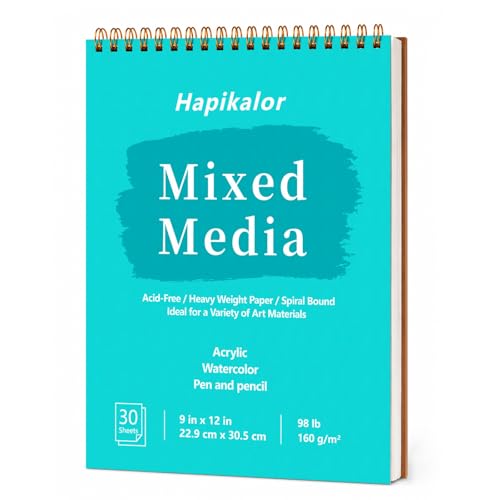
This top-spiral pad holds 30 thick 98 lb/160 gsm sheets with micro-perforations for easy tearing. It lays flat for comfortable drafting and benefits beginners who want clean edges when sharing work. The paper resists bleed-through and is suited for dry media as well as light wet media. Choose this for a budget-friendly, beginner-friendly option with simple removal of pages as a portfolio or class handout. Caution: not ideal for heavy watercolor washes.
Canson XL Mix Media Pad 7X10
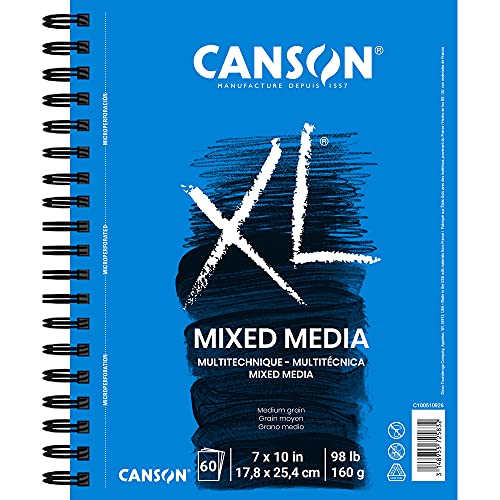
The Canson XL pad offers 160 gsm acid-free sheets designed to handle dry and wet media with minimal bleed-through. Its textured surface helps pigments lift and layer, making it suitable for beginners and students. It is best for artists who work across pencils, markers, and light washes while avoiding heavy watercolor on thin stock. Limitation: not optimized for bold, high-water pigment applications on every sheet.
Soucolor 9″ x 12″ Sketch Book

Soucolor offers 100 sheets in a 9 x 12 format with 68 lb/100 gsm acid-free paper. It is well suited for kids and beginners using dry media such as pencils, pens, and pastels. Not recommended for alcohol markers or watercolor due to paper weight and composition. It remains a strong starter option for those focusing on line work and light shading.
Ohuhu Mix Media Pad 10″ x 7″
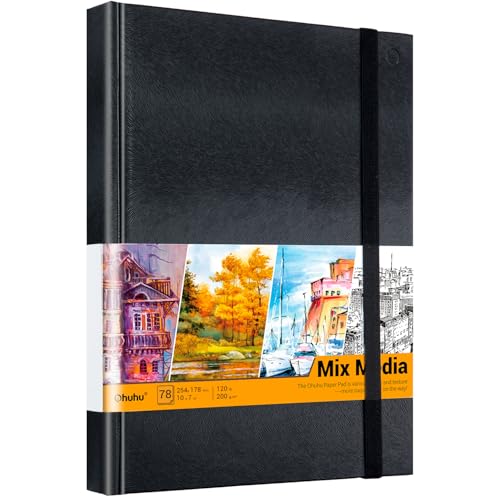
Ohuhu’s pad features 120 lb/200 gsm heavyweight paper with a textured surface, totaling 156 pages across 78 sheets. It supports multiple media types—from marker and pencil to light acrylics—without excessive warping. Best for artists who want a durable, double-sided surface and a robust pad for ongoing projects. Caution: not all media types are suitable for every page; plan a testing phase to identify supported techniques.
Buying Guide: How To Choose The Right Sketch Book For Painting
What paper weight suits your painting style?
Heavier weights (eg, 160 gsm or more) resist warping when using wet media like watercolor or light acrylics. Lighter weights (around 100 gsm) are ideal for dry media and everyday sketching but may bleed with ink or markers.
Should you choose spiral or top-bound?
Spiral bindings allow the pad to lay flat and rotate, which is helpful for both right- and left-handed artists. Top-bound books can be more compact and sturdy, and some users prefer tearing pages from perforated edges for clean disposal.
How many sheets do you need?
Beginners may opt for 30–60 sheets for practice, while students and professionals often need 100–200 sheets for longer projects. Consider whether you want removable pages for portfolios or assignments.
Are there limitations to media types?
Some pads are optimized for dry media only, while others handle light washes or marker work. Check whether the paper is acid-free to prevent yellowing over time, and note any markers or paints that are not recommended by the manufacturer.
What’s the best choice for beginners?
Look for a balanced option with a forgiving price, good bleed-through resistance, and easy-to-remove pages. A 68–100 gsm range is common for beginner pads, but prioritize 98–160 gsm for versatility with multiple media types.
Practical tips for use
- Test a scrap section of paper with your typical media before committing to a large piece.
- Store finished drawings flat to avoid warping in humid environments.
- Use a separate pad for ink sketches and watercolor studies to minimize cross-media issues.
FAQ
- What is the main difference between a mixed media pad and a watercolor pad?
Answer: Mixed media pads are designed to handle both dry and light wet media, while watercolor pads prioritize water-based pigments and higher absorbency. Choose mixed media for versatility; watercolor for more robust washes. - Can I use acrylics on all the listed pads?
Answer: Some pads tolerate thin acrylic layers, but thicker applications may warp thinner stock. Check individual paper weight and finish before heavy acrylic use. - Is acid-free paper important for painting?
Answer: Yes. Acid-free paper resists yellowing and deterioration over time, preserving artwork longevity. - Are perforated pages better for gifting or class work?
Answer: Perforated pages simplify removal and presentation, making them ideal for portfolios and school assignments. - Which pad is best for beginners who want to test multiple media?
Answer: A 98 lb/160 gsm mixed media pad with a spiral binding provides durability and flexibility across pencils, inks, markers, and light washes. - Do thicker pads mean better quality?
Answer: Not necessarily. Paper quality and weight determine media compatibility and durability more than sheer thickness. Look for appropriate weight, surface texture, and bleed-through resistance.
Leave a Reply