Best Slab Rollers for Pottery: Top Manual Machines for Consistent Clay Sheets
Pottery artists seeking precise, even slabs often turn to manual slab rollers. These devices provide consistent thickness without electric power, making them ideal for classrooms, studios, and hobby work. Below is a curated selection of five slab rollers and related tools designed to help you manufacture uniform clay sheets, shape plates, and streamline your workflow. Each option highlights reliability, ease of use, and build quality to suit a range of budgets and skill levels.
Summary of chosen products:
- Hand Cranked Ceramic Slab Machine by JIAYOFWCHI — manual, folding design, precise scales
- JARYANNIX Manual Clay Plate Machine Slab Roller — large table footprint, easy operation
- 12 Pcs Pottery Tools Set with Slab Roller by Buhobha — complete teaching set with linen tablecloth
- 12 Pcs Pottery Tools Set by AHIER — 17-inch slab roller with thickness guides
- HQHAOTWU Ceramic Clay Plate Machine — durable iron frame, adjustable thickness
Hand Cranked Ceramic Slab Machine

The Hand Cranked Ceramic Slab Machine by JIAYOFWCHI is designed for artisans who prefer a completely manual workflow. It relies on a turning mechanism rather than electricity, reducing noise and energy use while still delivering consistent slabs. The folding design makes storage straightforward, and built-in scales help ensure uniform thickness across projects. This model is suitable for producing plates, tiles, or slabs used in decorative or functional pottery. Durability comes from a sturdy construction intended for regular studio use, with a focus on operator control and repeatable results.
Key features include a manual clay plate making capability, smooth slab creation, and a design that accommodates varying project sizes. The device supports steady clay movement, enabling even pressure distribution and reliable slab thickness. Overall, it provides a practical balance of simplicity and precision for hobbyists and instructors who value straightforward, hands-on control over the rolling process.
Ideal for classrooms or personal studios where power limits or noise considerations matter, this slab roller emphasizes portability without sacrificing performance. It is a solid entry point for beginners exploring slab-based pottery techniques while also offering enough reliability for more seasoned users who want a low-tech, dependable tool.
JARYANNIX Manual Clay Plate Machine Slab Roller
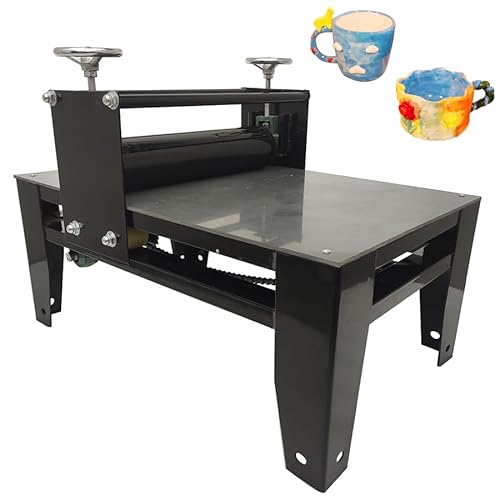
The JARYANNIX slab roller offers a robust iron framework designed for stability during operation. With a large handwheel, users can obtain uniform thickness across a wide clay sheet. The design emphasizes ease of use—manual, power-free operation—while still delivering consistent output. The frame and panel are modular, allowing disassembly for transport or storage. A key benefit is improved efficiency: the larger roller area increases contact with clay, reducing the time needed to produce uniform slabs. This makes it well-suited for teaching environments and studios that require repeatable results.
Users benefit from a simple, labor-saving process without electrical components. The machine’s durable construction supports regular use, and the accessible thickness control helps beginners learn slab-making fundamentals quickly. For instructors, the device offers a reliable platform to demonstrate even rolling and thickness management, a core skill in many ceramic courses. Overall, it combines sturdy build quality with practical features that translate to better classroom and studio productivity.
Buhobha 12 Pcs Pottery Tools Set With Slab Roller

This 12-piece set from Buhobha pairs a 17-inch slab roller with a selection of rolling and shaping tools, designed for classroom use and studio work. The wood rolling pin provides traditional control, while dual-purpose mud stick guides support consistent thickness during rolling. A linen tablecloth completes the setup, helping to manage moisture and protect work surfaces. The assortment is particularly useful for teachers who need versatile tools for multiple students, as well as for hobbyists who want an all-in-one kit for clay projects, including polymer and ceramic slabs.
Highlights include a complete workflow package, durable wooden components, and calibrated thickness guides that facilitate uniform results. The combination of tools with the slab roller helps users practice slab-making, texture impressing, and patterning in a structured manner. While it suits educational settings, its thoughtful design also benefits individual artists who appreciate a comprehensive starter kit for clay production and experimentation.
AHIER 12 Pcs Pottery Tools Set With Slab Roller
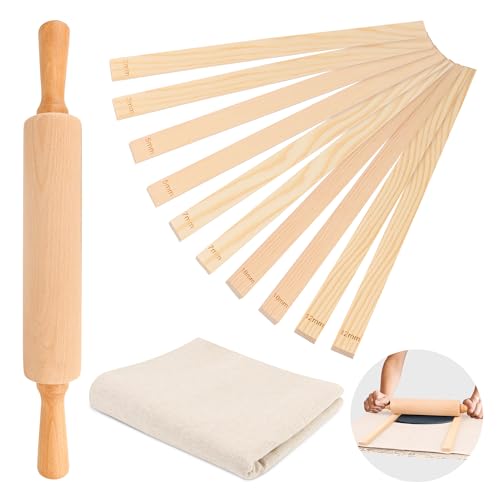
The AHIER 12-piece set focuses on precision thickness control with five calibrated rolling guides. The included linen tablecloth aids moisture management, ensuring smoother rolling and less surface cracking. The wooden rolling pin and guides are designed to minimize clay distortion, helping students and artists achieve consistent slab thickness. This kit supports a straightforward workflow for teaching rolling techniques and for DIY ceramics projects that require reliable, repeatable results. The combination of wooden tools and an integrated slab roller makes it a practical choice for beginner-friendly studios and home classrooms alike.
Key advantages include the five thickness options offering flexible project possibilities, a durable wooden construction, and an easy, hands-on process that reduces fatigue during longer sessions. Educators will appreciate the clear thickness guidance, while individual crafters can rely on stable performance for consistent slabs across multiple pieces. The set provides a balanced mix of tool variety and functional slab-rolling capability.
Creative Hobbies Hardwood Pony Roller
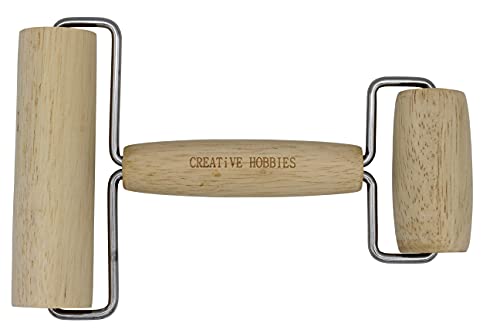
The Creative Hobbies Hardwood Pony Roller is a versatile two-in-one tool that adapts beyond pottery. Its dual-roller design supports smooth clay rolling with a larger roller for bulk flattening and a smaller roller for detailing. The solid hardwood construction provides a comfortable grip and durable performance through repeated use. This tool is particularly useful for artists who work on intricate textures or require precise control in smaller spaces. It complements slab-rolling workflows by enabling rapid, nuanced shaping and texture work in a single hand-friendly instrument.
Benefits include ergonomic design, durable materials, and a flexible approach to shaping clay. While not a dedicated slab roller in the traditional sense, its dual-roller function adds value for studios seeking multipurpose equipment. It’s especially appealing for hobbyists who appreciate a compact, well-made tool that can handle both flatwork and detailed texture in one pass.
HQHAOTWU Ceramic Clay Plate Machine

The HQHAOTWU Ceramic Clay Plate Machine combines a robust iron frame with adjustable rollers for controlled thickness. Its manual operation avoids power consumption, aligning with energy-conscious workflows. The frame is designed for stability during high-pressure rolling, and the detachable components simplify transport and setup. A handwheel governs forward and backward roller movement, enabling precise control over slab thickness. This model is well-suited for studios that need consistent thickness across larger sheets, as well as instructors seeking reliable demonstrations of slab rolling techniques.
Strengths include energy efficiency, durable construction, and a straightforward assembly. The adjustable thickness feature supports a wide range of project requirements, from thin plates to thicker slabs. For beginners, the large handwheel offers intuitive operation, while experienced users will appreciate the smooth rolling action and dependable results in everyday ceramic practice.
EQCOTWEA Manual Ceramic Clay Slab Roller

The EQCOTWEA slab roller emphasizes effortless manual operation with a large 7.5-inch handwheel for precise control of the forward and backward motion. Built on an iron frame with a sprayed finish, the unit promises durability and wear resistance. Its detachable construction makes assembly, disassembly, and relocation straightforward, which is beneficial for studios with limited space or frequent reconfiguration. The dual top wheels support adjustable thickness, enabling slabs up to 1.77 inches thick for diverse ceramic projects. This model suits both makers and tutors who require reliable performance without electrical components.
Key perks include ease of use, durable build, and adjustable thickness for thick or thin slabs. The machine’s modular design supports flexible setups and transport, which is helpful for artists who relocate between classrooms or galleries. While it may not be as compact as some handheld tools, its robust construction and precise control make it a solid option for serious slab work and craft education.
Buying Guide: Key Purchase Considerations
- Power source and environment: Choose manual slab rollers to avoid electricity use, noise, and cords. Electric options may offer faster operation but require outlets and maintenance.
- Platform size and capacity: Consider your typical clay sheet dimensions. Larger slabs require broader rollers and more stable frames to prevent warping.
- Thickness range: Look for adjustable or calibrated thickness guides that match your project needs, from thin sheets to thicker slabs.
- Build quality: An iron or hardwood frame provides durability for frequent use. Detachable components aid cleaning and transport.
- Ease of use and ergonomics: A large handwheel and smooth rolling action reduce fatigue during extended sessions. Folding designs help with storage in small studios.
- Educational value: If teaching, a kit with multiple tools or a full set of thickness guides supports structured demonstrations and student practice.
- Maintenance: Consider tools with removable panels for easy cleaning and minimal downtime between projects.
- Portability vs. stability: Weigh the need for a mobile setup against the requirement for a consistently flat working surface.
- Accessories compatibility: Linen tablecloths, guides, and additional rolling tools can enhance consistency and protect slabs.
In sum, the right slab roller depends on space, budget, and intended use. For classrooms and studios focused on consistent thickness across multiple pieces, equipment with calibrated guides and sturdy frames tends to yield the most repeatable results. For hobbyists prioritizing portability and manual control, compact, foldable models offer practical versatility. When evaluating options, prioritize build quality, ease of operation, and the ability to achieve uniform slabs with minimal fatigue or setup time.
Leave a Reply