Best Soldering Irons for Stained Glass Projects: Precision, Power, and Tips
Choosing the right soldering iron is essential for stained glass work, where precise heat control and reliable performance influence the durability and appearance of each joint. The following picks balance temperature range, tip options, portability, and safety features to help you tackle fine detailed work or larger panel projects with confidence.
The summary below highlights five top options designed for stained glass enthusiasts. Use the table to compare key attributes at a glance.
| Product | Brand | Key Strengths | Notes |
|---|---|---|---|
| Hakko FX601-02 | Hakko | Dial temperature control; compatible with T19 tips; portable reach | High heat capacity; precise control for small joints |
| YIHUA 928D-III | YIHUA | 110W power; digital display; °F/°C; portable | Great for detailed work with clear readouts |
| Weller W100PG | Weller | Closed-loop temperature control; multiple presets | Reliable for consistent results across projects |
| Weller WLIRPK8012A | Weller | Ergonomic grip; quick tip changes; versatile tips | Good for long sessions and varied tasks |
| Androssa Soldering Kit (Hakko FX-601-02) | Androssa | 4-in-1 kit; Hakko FX-601-02 67W; Amerway solder; flux and brush | All-in-one starter set for stained glass |
Hakko FX601-02 Soldering Iron With High Heat Capacity

The Hakko FX601-02 offers a compact, high-heat design with adjustable temperature control. It supports a wide range of T19 tips, which is beneficial for stained glass work that requires both precision and solid bonding across varied bead sizes. The dial temperature selection enables quick adjustments when switching between delicate glass joints and larger section seams. Its mobility and longer reach suit studio setups and field repairs alike, making it a strong option for hobbyists and professionals who value consistent heat delivery without sacrificing control.
YIHUA 928D-III Soldering Iron

This 110W high-power, fully digital soldering iron blends performance with portability. A clear digital display shows temperature adjustments, complemented by a sleep mode and automatic shutoff for energy efficiency and safety. With a temperature range from 90℃ to 480℃ (194°F–896°F), it accommodates a wide spectrum of stained glass tasks, from delicate lead-free joints to larger beadwork. The lightweight design (about 197 g) makes it convenient to move between workstations, while the included stand supports steady operation during long sessions.
Weller W100PG Farenheit Heavy Duty Soldering Iron
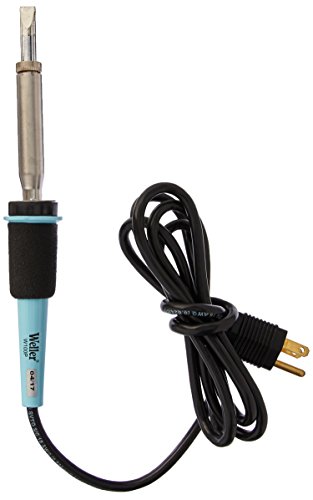
The Weller W100PG includes a robust closed-loop control to guard against tip overheating, with preset engagement to guard both user and workspace. It offers multiple temperature states around 600–800 degrees Fahrenheit, allowing rapid toggling between mid-range joints and high-heat melts for heavier beads. A quick heat-up time with a reliable nichrome element helps reduce downtime, making it suitable for stained glass panels that involve repetitive soldering cycles and longer sessions.
Weller 80W/120V Soldering Iron Kit – WLIRPK8012A

This kit emphasizes comfort and versatility. The ergonomic Power Grip supports longer soldering sessions with reduced hand fatigue, while a quick-tip-change system makes it easy to switch between chisel, screwdriver, and bent screwdriver tips. For stained glass work, this flexibility helps shape joints, adjust bead width, and handle thicker lead came more efficiently, ensuring smoother lines across panels and repairs.
Androssa Soldering Kit For Stained Glass

This multi-component kit pairs a Hakko FX-601-02 based iron with Amerway 60/40 solder and flux essentials. It is designed as a one-stop starter package for stained glass projects, combining strong heat control and reliable bonding with accessories that support precise flux application and bead formation. The included 60/40 solder alloy melts at a comfortable range for glass work, promoting smooth, consistent joints and reduced cold joints for finished panels with clean lines.
Buying Guide: Key Purchase Considerations
When selecting a soldering iron for stained glass, consider heat capacity, temperature control, tip compatibility, ergonomics, and safety features. Higher wattage irons like 110W or 300W models deliver rapid heat for larger sections but require careful temperature management to avoid scorching glass. Irons with adjustable temperature ranges and clear digital displays help maintain consistent joints across varied bead sizes and copper or lead came thickness.
Tips and accessories influence outcomes as much as the iron itself. A versatile kit with multiple tip shapes (chisel, screwdriver, bent variants) supports diverse joints and solder bead profiles. For stained glass, stability during use is essential—look for solid stands, anti-tip bases, and a comfortable grip to reduce hand fatigue during long sessions. Flux selection and solder composition (lead vs. lead-free options) affect bead flow and bonding strength; choose a kit that aligns with your preferred workflow and safety standards.
Portability may matter if you work on panels in different spaces. Some irons are lighter and include sleep modes or auto-off features, which protect both the user and project while saving energy. If you handle large pieces or require rapid heat dissipation, a higher wattage station with a robust tip range can minimize downtime between joints. Finally, ensure compatibility with common stained glass tips (like T19 variants) to maximize tool longevity and performance.
For beginners, a complete kit with a reliable iron, a selection of accessible tips, and flux accessories can streamline the learning curve and improve results. For seasoned crafters, a dual-iron setup (one for detail work and another for larger seams) can optimize efficiency and accuracy across projects.
Leave a Reply