Best Sponges for Acrylic Painting: Texturing, Blending, and Versatile Art Tools
Acrylic painters rely on sponges to create textures, blend colors, and add expressive patterns. This guide highlights top sponge sets that work well with acrylics while offering durability, absorbency, and ease of use for artists at any level. Each product below is selected for performance, versatility, and value, with quick notes on best use cases to help you choose the right tool for your technique.
| Product | Brand | Best For |
|---|---|---|
| NARO A Artist Natural Sea Sponges 8 Pack | Naroa | Texturing, glazing, color loading |
| 30 Pcs Round Sponges Brush Set | vivinin | Kids projects, versatile sizes |
| Penta Angel Round Sponges 6pcs | PENTA ANGEL | General painting, crafts, clay |
| FolkArt Synthetic Sponge Set, Small | FolkArt | Small-scale textures, beginners |
| Lullingworth Natural & Synthetic Sponges 7pc | Lullingworth | Mixed textures, professional projects |
Note: The table above summarizes the selected products and their primary use cases to help readers compare at a glance.
Naroa Artist Natural Sea Sponges For Painting

Naroa sponges are designed for hawk-eye precision and smooth blending when working with acrylics. The natural fibers offer high absorbency, allowing for extended application time and a richer color load. Their textured surface helps create natural-looking textures that are difficult to replicate with synthetic tools. Ideal for acrylic layering, glazing, and subtle tonal transitions, these sponges provide versatility across textures from soft blends to more pronounced patterns.
Vivinin 30 Pcs Round Sponges Brush Set

This set provides 30 wooden-handle round sponge brushes in four sizes, ideal for acrylic, watercolor, and mixed-media applications. The sponges are designed for high absorption with multiple uses, reducing the need for frequent dips. The wooden handles are sturdy and comfortable, offering good control for details, washes, and large color-block applications. Reusability and easy cleaning make them a practical addition to routine painting sessions.
Penta Angel Round Sponges 6pcs

Round sponges from PENTA ANGEL are a compact option for quick acrylic coatings and precise texture work. The yellow sponges are firm and dense, with a smooth texture that suits even tight color application. Their size and shape make them convenient for both broad coverage and controlled stippling, used across painting, crafts, pottery, and general art projects.
FolkArt Synthetic Sponge Set, Small

This compact set from FolkArt offers five small synthetic sponges designed for sponging across arts and crafts. The smaller size makes them ideal for accent work, stenciling, and adding nuanced textures to acrylic surfaces. The sponges are durable and reusable after cleaning with soap and water, supporting repeated use in ongoing projects.
WAFJAMF 12 Pcs Round Painting Sponges
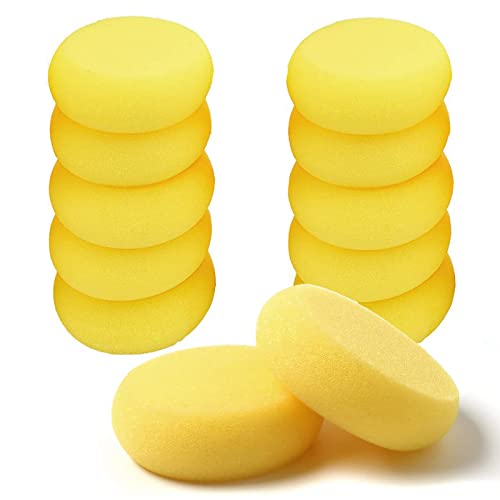
Packaged as 12 round painting sponges with a 2.96-inch diameter, these sponges are designed for easy grasp and versatile use in painting, watercolor, handicrafts, pottery, and clay. They offer strong water absorption and a soft yet durable surface, making them suitable for layering, stippling, and large area coverage while maintaining control over the paint flow.
WAFJAMF 30 Pcs Assorted Size Round Sponges

This set delivers a broad range of round sponge sizes with wooden handles, offering flexible options for acrylic painting. The assortment supports various techniques—from broad washes to detailed stippling—and the wood handles provide durability and ergonomic comfort for longer sessions. Suitable for both beginners and seasoned artists exploring texture variety.
Lullingworth Natural Sea & Synthetic Sponges 7pc

The Lullingworth 7-piece value pack blends natural sea sponges with synthetic options to offer varied textures and finishes. These sponges are suited for acrylic texturing, faux finishing, and decorative painting. Their porous structure supports paint load and release, enabling both soft blending and more expressive textures across different surfaces, including canvas and ceramics.
Buying Guide: Key Considerations For Selecting Acrylic Sponges
- Material and texture: Natural sea sponges provide irregular textures ideal for organic patterns, while synthetic sponges offer consistent, controllable textures suitable for precise work. Decide which look aligns with your style.
- Absorbency and load capacity: High-absorbency sponges allow longer color loading and smoother blending, but may require more careful control to avoid over-application. Consider your typical painting approach and cleanup routine.
- Shape and size: Round sponges are versatile for broad washes and controlled dots; larger sizes cover more area quickly, while smaller sizes enable detail work. A mixed pack expands capability across projects.
- Durability and reuse: Look for sponges that hold their shape after cleaning and resist tearing. Reusable sponges reduce ongoing costs and waste.
- Handles and ergonomics: Wooden handles provide a comfortable grip for longer sessions. Some sets omit handles, which can be lighter and cheaper but may wear more quickly.
- Cleaning and care: Most sponges should be washed with soap and water after use and air-dried to extend life. Avoid harsh cleaners that could degrade the material.
- Compatibility with mediums: Sponges can work with acrylics, watercolors, and inks, but consider the paint load and drying time. Larger loads work well for acrylics, whereas thin washes might benefit from foam textures.
- Budget and value: Sets with multiple sizes and a mix of natural and synthetic sponges offer broad versatility at a reasonable price. If you’re new to sponges, a starter kit with several textures is a prudent investment.
Sponges are a practical addition to any acrylic painter’s toolkit, enabling textured finishes, delicate blends, and expressive marks. The products listed here provide varied textures, control, and durability to support a range of acrylic techniques—from soft gradients to bold stippling. When choosing, consider your typical projects, preferred textures, and how often you clean your tools to determine which combination best fits your studio workflow.
Leave a Reply