Best Spray Adhesives for Rubber: Durable, Quick-Setting Solutions for Every Project
Choosing the right spray adhesive for rubber surfaces can be challenging, especially when you need a clean, strong bond without damaging the material. This guide highlights top-rated options designed to bond rubber with various surfaces, from fabric to metal, across indoor and outdoor projects. Each product below is selected for versatility, reliability, and clear-drying formulas that resist yellowing and bricking. Use this resource to compare dries-time, VOC ratings, and recommended applications to find the best match for your rubber bonding needs.
Summary of Selected Products
| Product | Brand | Key Points |
|---|---|---|
| Gorilla Heavy Duty Spray Adhesive | GORILLA | Heavy duty, versatile, comfort nozzle, dries clear |
| 3M Hi-Strength 94 ET | 3M | Low VOC, long open time, strong bonds for rubber |
| 3M Max Strength 90 | 3M | Max bond, heat & water resistant, adjustable spray |
| Gorilla Contact Adhesive Ultimate | GORILLA | Web spray, high strength, adjustable nozzle |
| 3M Super 77 (various) | 3M | Fast drying, versatile for light-duty materials |
Gorilla Heavy Duty Spray Adhesive

The Gorilla Heavy Duty Spray Adhesive is designed for multipurpose use, including rubber. It offers a comfortable nozzle for controlled application, enabling a fine mist that helps prevent overspray. The formula dries clear, reducing visibility once applied to rubber surfaces and maintaining the project’s clean look. This adhesive supports bonding glass, plastic, wood, metal, ceramic, leather, paper, and more, making it a versatile choice for mixed-material projects.
3M 80 Yellow Rubber and Vinyl Spray Adhesive
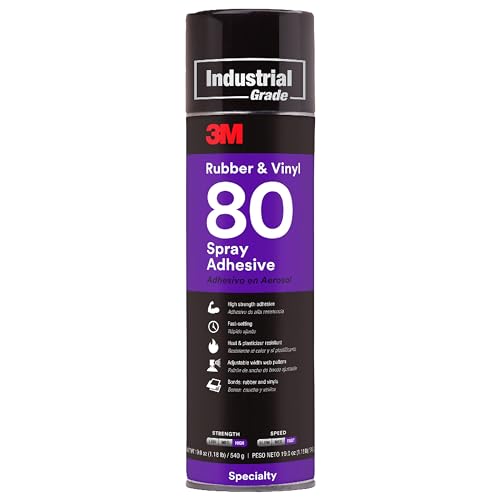
Engineered for industrial use, the 3M 80 Yellow Rubber and Vinyl Spray Adhesive delivers fast-setting bonds ideal for rubber and vinyl components. Its high-strength adhesion is designed to endure demanding conditions, making it suitable for rubber applications that require quick tack and durable hold. Note that this product is intended for industrial environments and may require ventilation considerations during use.
3M Hi-Strength 94 ET Spray Adhesive

3M Hi-Strength 94 ET is a robust spray adhesive with low VOC emissions and GREENGUARD certification, which may support LEED-related considerations. It offers longer open time and stronger tack than many comparable products, making it suitable for rubber applications that require careful placement before bonding. The formula is designed for woodworking, laminations, and large surface bonding, providing reliable performance on rubber-backed assemblies.
3M Max Strength 90 Multi-Surface Contact Adhesive

Max Strength 90 provides a strong bond across multiple surfaces, including rubber. It combines heat and water resistance with adjustable spray control to help achieve a reliable bond in varying environmental conditions. This option is well-suited for rubber parts that encounter moisture or temperature changes, such as automotive or outdoor equipment components.
Gorilla Contact Adhesive Ultimate

Gorilla Contact Adhesive Ultimate is a 12.2 oz web spray with a white finish and a permanent bond. It features a low VOC profile that aligns with California CARB/OTC VOC standards and offers three spray options via an adjustable anti-clog nozzle. For rubber projects that require a strong, long-term bond across irregular surfaces, this adhesive provides reliable performance with controlled application.
3M Super 77 Multi-Surface Spray Adhesive (7.35 oz)

3M Super 77 is a versatile, quick-drying option suited for light-duty materials including foils, plastics, papers, cardboard, fabric, insulation, and leather. Its fast bond and clear finish make it a practical choice for rubber projects that require an unobtrusive adhesive layer while handling varied substrates around the rubber piece.
3M Super 77 (Variant 77 NAT)

This 14.1 oz version of 3M Super 77 offers fast drying for a broad range of materials. It is particularly effective for light-duty bonding tasks on rubber projects that require a quick, reliable set. The clear finish helps maintain the appearance of the bonded assembly without discoloration or visible adhesive lines.
Buying Guide: Key Purchase Considerations For Rubber Bonding
- Bond Strength and Surface Compatibility: Rubber bonds well with many substrates, but check that the adhesive supports rubber-to-rubber, rubber-to-plastic, rubber-to-wood, or rubber-to-metal as needed. High-tack formulas are useful for larger rubber components, while lighter-duty sprays suit fabric-backed rubber parts.
- Open Time and Workability: Some adhesives offer longer open times for precise positioning, while others set quickly for rapid assembly. Choose based on your workflow and the complexity of the rubber piece.
- VOC and Indoor Air Quality: Low-VOC formulas are preferable for indoor use and projects in enclosed spaces. Certifications like GREENGUARD can indicate lower emissions and better air quality compliance.
- Finish and Visibility: Clear-drying formulas help maintain a clean appearance, especially on visible rubber parts or when bonding translucent materials.
- Application Method: Nozzle design and spray pattern influence control. Adjustable nozzles reduce overspray and allow targeted bonding on curved or irregular rubber surfaces.
- Temperature and Moisture Resistance: For outdoor or automotive applications, choose adhesives with heat and moisture resistance to prevent delamination or weakening bonds over time.
- Drying Time vs. Flexible Handling: Some products offer faster dry times but may require clamping or securing the piece during cure. Consider whether brief clamping is feasible in your setup.
- Regulatory Considerations: Industrial-grade adhesives may have usage restrictions or ventilation requirements. Be mindful of local regulations and safety data.
When selecting a spray adhesive for rubber, match the product’s intended substrates, outdoor durability, and working time to the specifics of your project. The listed options provide a spectrum from rapid, light-duty bonds to heavy-duty, multi-substrate applications. Always follow the manufacturer’s instructions for surface prep, spray distance, and curing conditions to achieve the best results.
Leave a Reply