Best Rubber Cement Thinner and Cleaner Guide for Artists and Crafters
When thinning rubber cement or cleaning up spills, choosing the right thinner or cleaner makes a big difference. This guide highlights five top products that suit different needs—from professional studio use to classroom projects. If you work with lightweight paper mounting, scrapbooking, or large-scale collage, you’ll find options that balanceease of use, control, and clean removal. The top picks include a dedicated solvent for thinning and cleanup, plus several versatile rubber cements ideal for mounting and adhesion.
Summary of chosen products
| Product | Best For | Why It Stands Out |
|---|---|---|
| Bestine Solvent and Thinner for Rubber Cement | Professional artists and architects | Thins rubber cement and cleans ink, adhesives, and parts; easy label removal |
| Best-Test Rubber Cement 4OZ Jar | Office and school use | Temporary and permanent bonding; great for mounting and scrapbooking |
| Best-Test Rubber Cement 8OZ Jar | General craft and classroom projects | Similar formulation with larger volume for ongoing projects |
| Best-Test Rubber Cement Adhesive with Brush, 16 oz | Detailed layouts and frisket work | Excellent for paper pasting; adds brush-on versatility |
| Best-Test One Coat Rubber Cement 32OZ Can | Commercial and fine art installations | Repositionable hold; easy removal and reapplication |
Bestine Solvent And Thinner For Rubber Cement
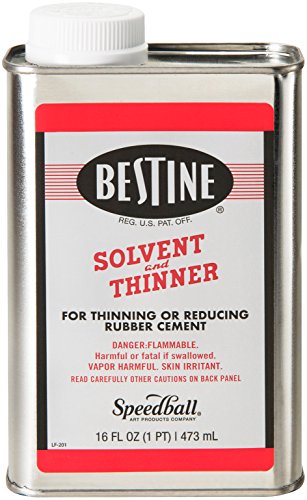
Bestine Solvent is a specialized thinner for rubber cement. It is favored by professional artists and architects who require consistent thinning for precise adhesion. The solvent also acts as a versatile cleaner, useful for removing ink and spray adhesives from tools and surfaces. It helps with label removal, leaving less residue on labels, stickers, or decals. Best for projects that require clean edges and easy cleanup, such as drafting plans or archival mounting. Caution: use in a well-ventilated area to avoid strong fumes.
Best-Test Rubber Cement 4OZ Jar

Best-Test Rubber Cement 4OZ is designed for office and school settings. It provides temporary but reliable bonding of paper products, making it ideal for mounting, collage, and scrapbook work. It’s a compact choice for beginners or classrooms with limited storage space. Best for short-term projects where edges may need adjustment during layout. Limitation: smaller jar means more frequent restocking for large projects.
Best-Test Rubber Cement 8OZ Jar

This 8OZ jar offers similar office and school compatibility as the 4OZ option but in a larger volume, making it better for ongoing or larger projects. It supports temporary and permanent bonding of paper products, and it’s well-suited for mounting, collage, and scrapbooking. Best for teachers or hobbyists who produce multiple pieces in a single session. Caution: ensure cap is tightly closed to prevent drying out between uses.
Best-Test Rubber Cement Adhesive With Brush, 16 oz

This rubber cement adhesive comes with a brush, expanding its use to applications that require controlled placement of pasted elements. It is an excellent choice for mounting drawings, sketches, and dummies, as well as for layouts and frisket work. Best for artists who value brush-on precision and quick setup. Limitation: brush applicator may require cleaning after heavy use to maintain smooth adhesion.
Best-Test One Coat Rubber Cement 32OZ Can
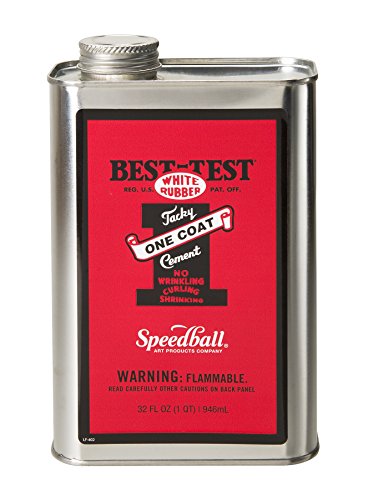
The 32OZ can is designed for commercial and fine art applications that require larger volumes with consistent performance. It holds artwork in place while allowing repositioning, and the layer can be peeled off and reapplied multiple times. Best for studios or large-format projects where durability of adhesion matters. Caution: thicker layers can take longer to dry, so plan laydowns accordingly.
Buying Guide
What should you consider when choosing a rubber cement thinner or cleaner?
- Intended use: For professional mounting or classroom projects, select products with clear thinning and cleanup capabilities; for artwork layouts, a brush-on option may enhance precision.
- Bond strength and repositionability: If you need temporary holds, look for products marketed as repositionable. For final mounts, choose stronger or longer-lasting formulas.
- Volume needs: Larger cans are cost-effective for ongoing projects, while smaller jars suit occasional or beginner use.
- Ease of cleanup: Solvents that clean ink and adhesives help keep tools clean and projects neat.
- Application method: Brushes or sprayable options affect control and speed; plan around your workflow and preferred technique.
- Ventilation and safety: Many thinners and solvents emit fumes; ensure proper ventilation and follow handling guidelines.
Practical buyer tips
- Choose a thinner primarily for thinning rubber cement and cleaning tools, not just for scent or color.
- For mounting and scrapbooking, prioritize repositionable formulas with clean removal.
- Keep lids tightly closed to prevent drying and maintain adhesive consistency.
Frequently asked questions
- What is rubber cement thinner used for?
To adjust viscosity for easier spreading and to help clean up after use. - Can I use solvent thinner on all rubber cements?
Not always; check product directions, as some formulas may require specific thinners. - Is repositionable rubber cement suitable for all mounting tasks?
It works well for temporary placements but may not be ideal for long-term bonds. - Do these products contain harsh fumes?
Many thinners contain solvents; always use in a well-ventilated area. - Which size is best for beginners?
Smaller jars (4 oz or 8 oz) are easier to handle and store for learning projects. - Is brush-on cement necessary for intricate layouts?
For detailed work, a brush can provide precision that a bottle-dip method may not offer.
Leave a Reply