Best Watercolor Palette Tray for Artists: Top 5 Picks for Travel and Studio
Answering the common buyer question: which watercolor palette tray offers reliable mixing spaces, durable construction, and practical design for both travel and studio use? The top picks below are chosen for their well-organized wells, lids or folding designs, and user-friendly features. Best for students and hobbyists, best for professionals needing portability, and best for outdoor painting alike. The table at a glance helps compare core traits quickly.
| Product | Ideal For | Wells / Mixing Areas | Notes |
|---|---|---|---|
| Mr. Pen Airtight Palette | Travelers, compact studios | 18 wells, 2 mixing areas | Airtight lid helps keep paints moist |
| Sweaty Pony 20-Well Palette | Large mixing and plein air | 20 wells (8 squares, 4 large circles, 8 small) | Large size, lightweight |
| Junreox 24-Well Palette | Professional and students | 24 wells, 5 mixing areas | Thumb hole for single-hand use |
| MEEDEN 12-Well Round Palette | Smaller setups, travel | 12 wells | Ceramic, durable, stable |
| Xinjincang White Porcelain Palette | Clean color blending | Multiple wells and mixing areas | Non-stick surface, porcelain |
Below you’ll find practical details about five top options. Each entry covers who it’s best for, why it stands out, and a succinct caution to consider before buying.
Mr. Pen Airtight Palette With Lid

The Mr. Pen palette offers 18 wells plus two large mixing areas, packed in a sturdy white plastic case with an airtight lid. This design helps keep paints moist between sessions and reduces cleanup time. It’s best for artists who value travel-friendly reliability and easy maintenance. Ideal for students, hobbyists, and painters who need a simple, organized setup on the go.
- Best for: Travelers and small-space studios where keeping paints moist matters.
- Why chosen: Airtight seal minimizes drying and makes cleanup straightforward.
Caution: The lid’s seal effectiveness depends on fitment; ensure it closes tightly to prevent air exposure. May be less ideal for large color-mixing sessions compared to bigger palettes.
Sweaty Pony 20-Well Large Palette

This large square palette measures about 13 x 10 inches and includes 20 wells arranged in a mix of square and circular shapes. The lighter weight (0.35 lb) and single-hand usability make it a strong option for on-site painting or classroom settings. It’s better for artists who need ample mixing space without carrying bulky gear.
- Best for: Plein air painting or classrooms where you need plenty of mixing room.
- Why chosen: Large mixing space reduces color creep between wells during blends.
Caution: The sheer size may not suit ultra-compact travel kits. Choose this if you want maximum mixing area rather than extreme portability.
Junreox 24-Well Palette With Folding Design

Junreox’s upgraded palette opens flat with deep wells and five mixing areas, plus a dedicated brush compartment and a thumb hole for single-handed use. This makes it a strong pick for professionals who need efficient, travel-friendly access to color. It combines durability with practical travel features that support on-the-go artists.
- Best for: Artists who travel frequently and want quick access to brushes.
- Why chosen: Deep wells help prevent paint from spilling into mixing zones during use.
Caution: The palette is plastic and may wear with heavy use; light cleaning is recommended to preserve the surface texture for smooth mixing.
MEEDEN 12-Well Round Porcelain Palette

This round porcelain palette emphasizes durability and weight stability, making it suitable for studio use or fieldwork. Its ceramic surface ensures a smooth paint flow with easy cleanup, though it’s heavier than plastic options. Best for artists who value a premium feel and stable, easy-to-clean surfaces for precise color work.
- Best for: Studio use or on-location painting where a stable surface matters.
- Why chosen: Porcelain offers a non-porous, easy-to-clean surface with lasting durability.
Caution: Heavier than plastic palettes; not ideal for ultra-compact travel kits.
White Porcelain Palette With Non-Stick Surface
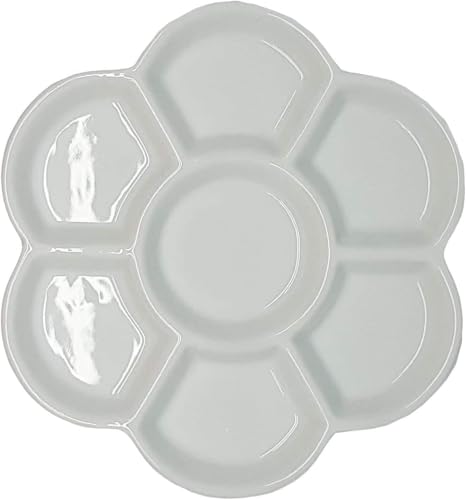
This porcelain palette emphasizes a non-stick surface to keep colors pure and cleanup quick. The design supports multiple wells and blending areas, making it a solid choice for artists who blend frequently and want clean color separation. The premium material and non-stick features help maintain color fidelity over time.
- Best for: Clean color blending without staining or bead formation.
- Why chosen: Non-stick surface reduces color migration and makes cleanup simple.
Caution: Porcelain is brittle if dropped; handle with care during travel.
MEEDEN 8-Well Ceramic Palette

A compact, eight-well ceramic palette designed for all major painting media, including watercolor, gouache, and acrylic. The white ceramic surface minimizes bead formation and offers easy cleaning, making it a practical choice for students and hobbyists who work in limited spaces but still want reliable blending.
- Best for: Small studios or classrooms with limited space.
- Why chosen: Durable ceramic with smooth mixing surface helps color blending stay controlled.
Caution: Fewer wells means more frequent rinsing or color reuse when completing complex palettes.
Buying Guide: What To Consider When Choosing A Watercolor Palette Tray
What size palette fits my space?
Consider the space you typically paint in. For travel or small studios, lighter, compact options with 18–24 wells may be ideal. For home studios or classrooms, larger palettes with 20 wells or more can provide ample blending space.
What materials affect cleaning and color purity?
Plastic palettes are lightweight and affordable but may stain over time. Ceramic or porcelain palettes offer easy cleanup and a non-sticky surface, which helps maintain color fidelity. Porcelain is more durable but heavier and more prone to breakage if dropped.
Do I need an airtight lid or folding design?
Airtight lids help keep paints moist between sessions, which is useful for long painting breaks or travel. Folding designs save space when traveling and can unfold to full size for large projects.
How important is portability versus capacity?
Choose based on usage. If you paint on location often, prioritize lighter weight and portability. If you paint at a fixed workspace, you can opt for a larger palette with more wells and mixing areas.
Are special features worth it?
Thumb holes, brush compartments, or dedicated mixing zones can improve efficiency for on-the-go painters. Evaluate if these features align with your workflow and whether they justify any extra weight or cost.
Cleanup and maintenance considerations
Non-stick finishes, smooth surfaces, and the ability to wipe clean with a tissue or water are practical. Porcelain palettes often clean well but require careful handling to avoid chipping. Plastic palettes are simpler to rinse but may require more effort to remove stubborn stains.
Usage perspective: studio vs outdoor painting
For studio use, ceramic palettes with deep wells help manage blending with less spillage. Outdoor painting benefits from lighter plastic options and lids that seal well, preserving paint moisture in fluctuating temperatures.
Frequently Asked Questions
- What should I look for in a watercolor palette tray? Look for enough wells to separate colors, a reliable mixing area, and a material that matches your cleanup preference (plastic for easy cleaning, ceramic for durability and non-stick surfaces).
- Are airtight palettes better for travel? Yes, airtight lids help prevent paint from drying out during transit and long sessions away from a studio.
- Is a folding palette more portable than a fixed tray? Folding palettes save space when traveling and can expand for larger projects, offering flexibility for varying workloads.
- What’s the advantage of porcelain over plastic? Porcelain provides a non-stick surface, cleaner color mixing, and durable handling, though it is heavier and breakable compared with plastic palettes.
- How many wells should I start with? Beginners often benefit from 12–24 wells to separate common colors, with additional mixing areas for blending and testing shades.
- Do I need any extra accessories? A brush holder, a dedicated mixing area, and a lid or cover can streamline workflow and keep colors organized.
Leave a Reply