Best Wood Laser Cutting Machines for Crafts: Top Picks
Craft enthusiasts often seek reliable laser engraving systems to transform wood into intricate art, personalized gifts, and small-batch products. This guide highlights five high-precision wood laser cutters and engravers that balance power, accuracy, and ease of use. Each product features multi-material capabilities, beginner-friendly setup, and strong performance for DIY projects or light professional work. Below you’ll find quick-reference specs, plus detailed sections to compare capabilities and suitability for various crafts.
| Product | Brand | Laser Power | Working Area |
|---|---|---|---|
| ACMER S1 3500mW | ACMER | 3.5W | 130×130 mm |
| ACMER S1 6000mW | ACMER | 6.0W | 130×130 mm |
| ACMER S1 2500mW | ACMER | 2.5W | 130×130 mm |
| LONGER RAY5 3500mW | Longer | 3.5W | 130×140 mm |
| Twotrees TTS-55 Pro | Twotrees | 5.5W | 300×300 mm |
All five options emphasize precise laser engraving, solid build quality, and beginner-friendly setup. If you’re unsure which model best fits your craft projects, the sections below break down core strengths, suitable materials, and what to expect during operation.
ACMER S1 3500mW — High Precision for Wood and More

The ACMER S1 3500mW model offers ultra-fine accuracy with a 0.04 mm spot size and a 2 mm focal length. It supports engraving and cutting on wood, acrylic, metal, glass, and more, with speeds up to 10,000 mm/min and repeatable positioning accuracy around 0.01 mm. This dual-function device is designed for DIY projects and small businesses needing quick setup and reliable results. The unit arrives mostly preassembled, making it accessible for beginners and seasoned users alike.
ACMER S1 6000mW — Deeper Cutting Power

This 6.0W ACMER S1 variant provides higher output with similar precision, enabling deeper cuts into wood and thicker acrylics. It maintains a 130×130 mm working area, 0.04 mm laser spot, and 2 mm focal length, delivering up to 10,000 mm/min engraving speed. It is suitable for users pursuing more demanding craft projects, including small production runs, while preserving ease of use with quick assembly and reliable results.
ACMER S1 2500mW — Compact, Versatile
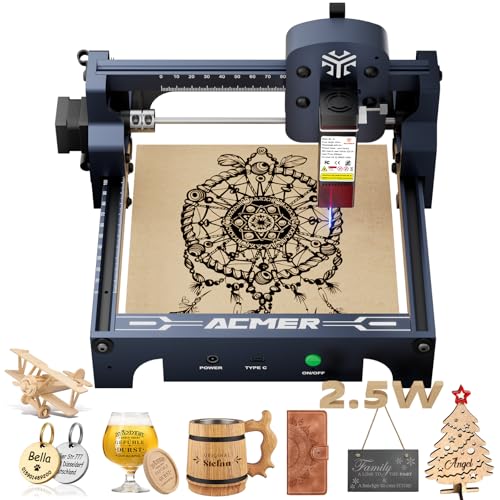
The 2.5W ACMER S1 model offers a balanced option for crafters needing a compact, capable machine. With the same 130×130 mm working area and 0.04 mm spot size, it provides reliable engraving on wood, leather, plastics, and more. Its 1-minute head installation and mostly preassembled design make it a practical entry point for hobbyists and small workshop setups.
LONGER RAY5 3500mW — Large Work Area, Portable
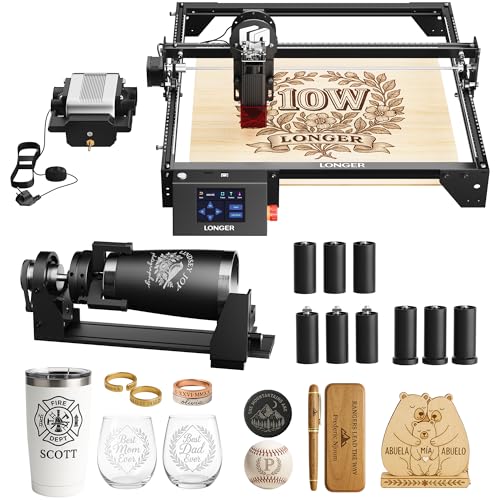
The LONGER RAY5 Model focuses on a portable design with a 400×400 mm working area and a 0.06 mm spot size. It supports various materials and includes an air assist rotary kit for cylindrical objects. Its ESP32-based processor and multiple connection options (USB, Wi-Fi, TF card, app) support flexible workflows, while the built-in touchscreen enhances on-device control for fast adjustments during projects.
Twotrees TTS-55 Pro — High Power for DIY to Small Biz

The Twotrees TTS-55 Pro focuses on a robust 5.5W laser with a 0.08×0.46 mm spot and speeds up to 30,000 mm/min. It handles wood, leather, acrylic, paper, and more, with a 300×300 mm working area. Features include an air-assisted nozzle, digital controls, and compatibility with common software. The device is well-suited for hobbyists expanding into small-batch production or more ambitious craft projects requiring cleaner cuts and finer detail.
Buying Guide: Key Purchase Considerations for Wood Laser Cutters
- Laser Power and Cutting Depth: Higher wattage enables deeper cuts and faster material removal, especially on thicker wood. Consider your typical project thickness and whether you need cutting or primarily engraving.
- Working Area: Larger beds support bigger panels or multiple pieces, but require more space and may be less portable. Match the bed size to your most common project dimensions.
- Spot Size and Focal Length: A smaller laser spot size yields finer detail; check the focal length to ensure crisp results on your material thickness.
- Material Compatibility: Look for machines designed to cut or engrave wood, bamboo, leather, plastic, PCB, aluminum oxide, ceramics, and glass, as needed for crafts.
- Ease of Assembly and Software: Preassembled units speed setup. Confirm compatibility with common software such as LaserGRBL or LightBurn for streamlined workflows.
- Air Assist and Safety Features: Air assist improves cutting depth and quality; built-in safety features (enclosures, eye protection, shutdown on open door) are important for safe home use.
- Connectivity and Control: USB, Wi-Fi, and offline card options help integrate the device into various workstyles. A touchscreen can simplify on-device adjustments.
- Community and Support: Access to tutorials, spare parts, and responsive customer service helps minimize downtime during learning curves.
Material Coverage and Craft Scenarios
Engravers with higher wattage excel at thicker plywood, hardwoods, and dense plastics, enabling more ambitious signage, customized gifts, and small-batch products. For intricate, fine-line designs on thin woods or delicate veneers, models with smaller spot sizes and precise positioning are preferred. If portability and quick setup are priorities, compact units with preassembly and light frames offer convenience, though you may trade off maximum cutting depth.
Operational Considerations
Consider ventilation and space requirements, as higher-power lasers can emit more fumes and require appropriate exhaust or air filtration. Regular calibration and maintenance, including lens cleaning and focal length checks, help sustain engraving quality. Finally, assess total cost of ownership, including replacement parts, consumables, and software licenses, to plan for long-term use in craft projects.
Leave a Reply