Best Yellow Wood Glues for Fast, Strong Bonds in the Shop
Yellow wood glues remain a staple for woodworking, furniture repair, and DIY projects. This guide highlights top-rated options that cure quickly, form sturdy bonds, and ease sanding and finishing. We evaluate common yellow adhesives for indoor use, durability, heat resistance, and cleanup. The table below summarizes five reliable choices to help you pick the right glue for your project.
Summary of Chosen Products
| Product | Brand | Notable Benefit | Typical Use |
|---|---|---|---|
| Titebond Original Wood Glue 5063 | Titebond | Industry standard for wood bonding | Furniture, construction, modeling |
| Titebond 5066F Original Wood Glue | Titebond | Durable yellow glue—easy to use | General woodworking |
| Titebond III Ultimate Wood Glue, 16 oz | Titebond | Stronger bond; water cleanup when wet | Finishing and repairs |
| DAP Weldwood Original Wood Glue, Yellow, 8 oz | DAP | Heat, water, and solvent resistant | Professional repairs |
| Gorilla Wood Glue, 8 oz | GORILLA | Water-resistant; indoor/outdoor versatility | Hardwoods and softwoods |
Titebond Original Wood Glue 5063

Titebond Original 5063 is a classic aliphatic resin wood glue designed for reliable bonds in woodworking and furniture repair. It provides strong adhesion for porous wood substrates and dries to a durable bond that sands smoothly. This product is made in the United States and is widely used in hobbyist and professional shops for projects ranging from small repairs to larger assemblies.
Titebond 5066F Original Wood Glue

Titebond 5066F is another yellow glue option in the Titebond lineup, noted for durability and user-friendly handling. It’s marketed as easy to apply and suitable for a variety of woodworking projects, including assemblies and repairs. Made in the USA, this product is a common choice for consistent performance across wood types.
Titebond III Ultimate Wood Glue

Titebond III offers a higher-strength bond and improved heat resistance compared with standard yellow glues. It sands easily after curing and cleans up with water when wet. This glue is suitable for projects that require stronger performance, exposure to moderate heat, or easy cleanup during assembly.
DAP Weldwood Original Wood Glue

DAP Weldwood Original Wood Glue is a professional-grade option noted for resistance to heat, water, and solvents. The aliphatic resin formula yields strong bonds for porous and semi-porous materials and remains sandable after curing for quick repairs. It’s a frequent choice in more demanding repair or construction scenarios.
Gorilla Wood Glue
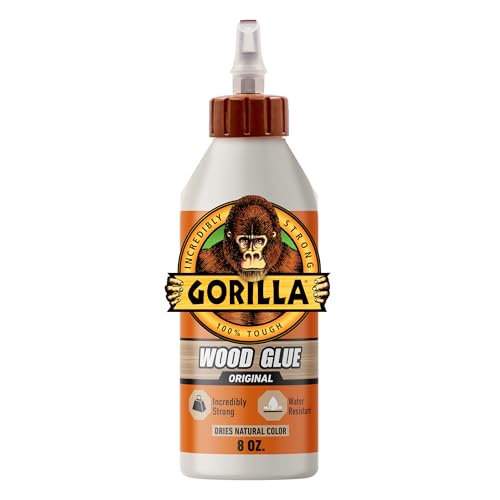
Gorilla Wood Glue provides a natural wood color and a strong bond suitable for both indoors and outdoors. It offers a relatively long open time for precise alignment and cures to a durable bond that resists water exposure. This glue suits both hardwoods and softwoods used in general woodworking projects and repairs.
Buying Guide: Key Considerations For Yellow Wood Glue
- Open time and clamp time: If you need precise positioning, choose glues with longer open time and adequate clamp windows. Quick-setting formulas can be convenient for small repairs but may require fast, confident alignment.
- Bond strength: For high-stress joints or exposed furniture, prefer glues with higher shear strength and good impact resistance. Titebond III generally offers stronger bonds than standard yellow glues.
- Moisture and temperature resistance: Indoors vs. outdoors matters. Some PVA glues are water resistant (ANSI/HPVA Type II or Type I), expanding the range of projects they can support outside of a controlled shop.
- Water cleanup and sanding: If you anticipate drips or need to adjust joints after initial set, glues that clean up with water when wet are helpful. Sandability after cure reduces finishing effort.
- Substrate compatibility: Most yellow glues work well with common woods, but some formulations perform better on hardwoods vs softwoods and on natural wood composites. Test on scrap if unsure.
- Brand and availability: Reputable brands like Titebond and Gorilla offer consistent quality and wide distribution. Availability in gallons or ounces can affect long-term project planning.
- Safety and cleanup: Follow label directions for curing times and ventilation. After curing, sanding and finishing should be compatible with the glue’s resin type.
Leave a Reply